The first battle of Lechfeld on June 12th, 910, was pivotal during the early Hungarian invasion of Europe. The Hungarians were in their third year of invading the Kingdom of East Francia. HistroyMarche on Youtube has a very nice video and summary of the battle with preludes and after effects.
The battle turns out to be a very nice wargame. We start the game with the Francia army beginning to feel confident and the horse archers tired.
Ruleset DBMM Table 6×4 Terrain Trees and Forests on the outskirts, the battle should be played lengthwise rather than widthwise. Models Needed (see below)
3 C in C 57pts 10 Milities Irr Kn 90 pts 72 Spearmen 216 pts 12 Archers Irr BW 36pts
Hungarians (Maygar) DBMM 3-30
No defined commander 8,000 Light Horse Archers
3 C and C or Sub Generals 57 pts 86 Bases of Irr Light Horse 344 pts
Set Up
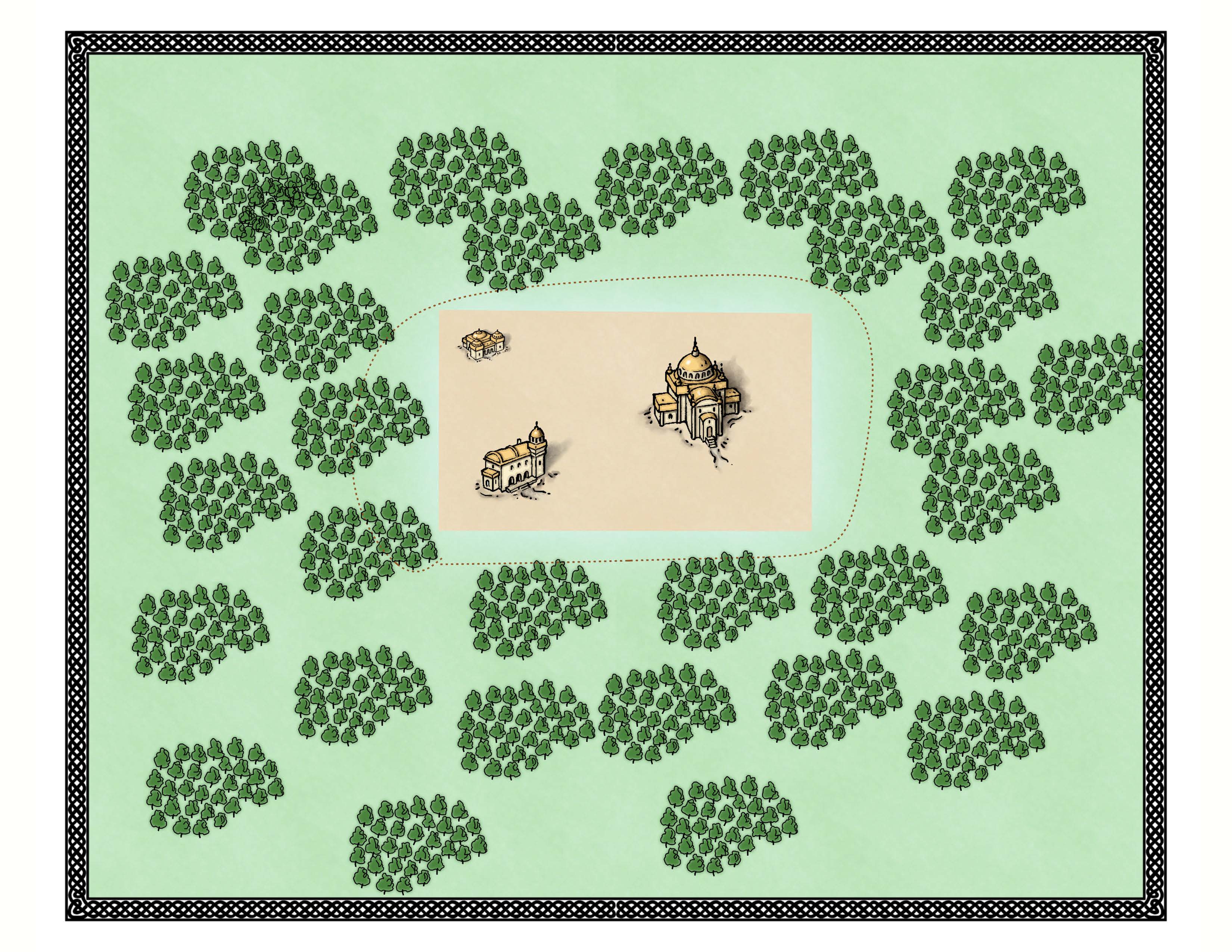
The Francis army should be set up entirely on the field in a formation of the players’ choosing. The Hungarian army should have 50% of its army deployed near the Francia lines, with the remaining 50% hidden in the trees. The trees should gradually close in. The Hungarian player should select a point between 18″ and 12″ from his table edge, so that once the Francia player crosses that point, he can spring his ambush. Once the Francia player crosses that point, the other 50% of Hungarian forces will appear on either long table edge.
Objectives
The Francis army should do everything it can to win the battle before being ambushed. The Hungarian player must try to draw the Francis player in.
Today, I want to discuss the most expensive aspect of wargame terrain. Premium options. These come in several flavors.
Overall, I have enjoyed writing this series. If you want more in-depth reviews of any products, let me know.
Games Workshop Kits
Why am I putting GW kits here? I think they are overpriced. They look absolutely stunning on the tabletop, but the amount of detail that goes into a simple GW kit you have to paint is astounding. Price per item, GW is the worst option.
The simple GW landing pad, as simple as it gets, is $80. The same terrain piece can be 3D printed from Etsy or another source and shipped to you for $30. GW has to be careful or they will price themselves out of the hobby altogether.
Enough on my rant now, to other premium options I actually use.
Instead of buying overpriced GW crap, I love using the fully modular Rampart terrain system. It can be magnetized, has nearly as much detail as GW kits, and is far more functional. The biggest challenge with Rampart is using your imagination to create amazing builds.
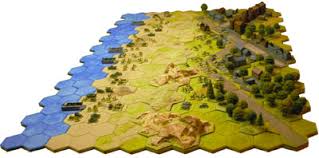
You can’t go wrong with the Kallistra system for creating historical battle boards. It’s a custom hex battlefield with numerous surface types: hills, mountains, rivers, craters, roads, and bridges. I use Kallistra hexes in most of my historical conflicts and am happy to do so. I have an epic D-Day battle planned one day, and Kallistra Terrain will be the star.
It is the cream of the crop for terrain. Its modularity is fantastic, and it is stunning on the table. However, I can’t recommend it for most wargames. The scale is just a little off. It is wildly expensive. I have, I think, every set they ever produced. I love my Dwarven Forge. Price is getting to be an issue with their latest sets.
A custom terrain building from Canada. I have personally commissioned 5 projects from Green Leaf. His creations are often shown on MiniWargaming. They are some of the best custom terrain set-ups around. Send him a project and he will make something special.
It’s not as diverse as some of the other options. The creators at Tabletop World put together some stunning resin pieces. Unfortunately, they are no longer producing models. If you can find them, buy them.
Custom Etsy Creators
The rise of Etsy has been huge for the wargaming hobby. I use Etsy for many of my unique pieces. You can spend as much or as little as you want. You can acquire whatever you want. It also helps small hobbyists like ourselves. Just be aware that sometimes what is sold isn’t what you expected.
The first of two pop-up terrain options. I prefer Acidhouse for its modularity. But there is a place for a fully functional battlefield in a few seconds that packs beneath a bed. I personally own every single set and enjoy using them on the table.
My other flatpack option for wargame terrain. It is highly modular, but durability can be questionable. I think I own every set they have ever produced.
On June 11th, 1865. Brazilian forces on the Parana River turned the tide of the Paraguayan War with a decisive naval victory. Panama attempted a surprise naval attack, but failed to account for the conditions of the battle.
Order of Battle
Paraguay Ignacia Meza
2 Corvettes 6 Steamboats 7 Barges Total 44 Naval Guns
Brazil Francisco Barroso
1 Frigate 4 Corvettes 4 Gunboats 58 Total Naval Guns
Intended Rule Set- Steamer Wars Models Needed: 24 plus coastal batteries River style water terrain with many small islands
Set Up
The Brazilian fleet should set at anchor near one table age. The Paraguayan fleet should be positioned to sail past the Brazilians.
Objectives
The Brazilian fleet must catch and deal significant damage to the Paraguayans. Paraguayans must sink at least one Brazilian ship and flee the table with their slower fleet. Barges should not count for losses to the Paraguayans.
During the 100 Years’ War, French peasants attempted to rise up and remove the nobles in the Northeast of Paris. 4,000- 5,000 lightly armored peasants attacked noble houses and castles, stealing their wealth. The Nobles of the region responded in force. In real life, the French killed the peasant leader, and the lines broke nearly instantly. What if they hadn’t?
Wargame; Game System DBMM Players 2 Table Size 4×4 Models Needed Peasants 30 Elements of horde, 8 elements of archers 1 command (cavalry), for the nobles 10 elements men at arms 4 elements dismounted knights 2 commanders, and 4 elements crossbows.
Set-Up The peasants should be at the top of a hill, with archers in front, infantry behind, and the cav unit acting as a reserve. They should be in a strong position.
The French should set lines and approach as necessary.
On June 9th, 1965, in the late night hours, the Viet Cong made an assault on the Special Forces Camp of Dong Xoai. The camp was assaulted by a barrage of mortars and artillery, followed by an infantry assault. Per the United States, 29 soldiers were killed with an additional 13 wounded, while they claim 126 enemies were killed inside the compound and several hundred more were said to be outside.
Wargame
Ruleset: FNG Second Tour Players 2 Table Size 6×4 Models Needed 60 to 80 Americans with a Helicoptor Gunship 140 or so Viet Cong Terrain, lots of jungle and trees, barbed wire, minefields, and a central military compound with trenches and military buildings.
Objective: The Viet Cong should attempt to destroy the buildings within the compound and kill American personnel. The American job is to survive the night.
Set-Up:
Place the American forces inside the compound, they should have access to MMGs mortars, and all other heavy equipment. The only vehicle should be a gunship helicopter.
The Viet Cong should be located off the table and come in starting turn 1. They have no vehicles but do have access to all other infantry style weapons.
Rules;
The Viet Cong should begin the game with an artillery barrage.
On June 8th, 793, three Viking ships landed on the coast of the remote island of Lindisfarne. Lindisfarne was famed for its library and riches, making it a prime target for Viking raiders. The island was relatively undefended. This raid marked the beginning of the Viking Age in England.
Wargame Scenario should work nicely with the Barons War or even Warcry style games.
2 Players 50 Viking Raiders 20 Defending Men-at-Arms 40 Defenseless monks Flat grassy terrain with a stone building and a central monastery.
Objective
The Vikings’ goal is to steal as many treasures as possible. Their secondary goal is to kill as many monks as possible who are hiding treasures.
The defender aims to save everything they can, fleeing to the opposite edge of the table as the Viking raiders.
Set-Up,
Place a large monastery in the center of the table with a surrounding wall. The only gate should face the shoreline from which the raiders are arriving. Place a village outside the walls near the coastline. The rest of the table should be covered in random fields and orchards. There should be 10 defenders in the village itself and 10 more in the monastery. All 40 monks should be in the monastery.
The monks must flee from the gate and run to the opposite edge of the Viking raiders. Five holy relics should be placed on the field. Three in the monastery and two in the village. The monks are the only defenders who can move the relics. The Vikings will know who carries the treasures.
On June 7th, 1917, the British Second Army, led by General Herbert Plumer, began a costly assault on fortified German positions near Messines in Belgium. The British objective was to cut the Germans off from many ports they were using for resupply.
The British began the assault by detonating mines beneath the German lines, followed by a crawling artillery barrage. The infantry advanced with support from tanks, airplanes, and cavalry.
British Commander
Herbert Plumber 12 Divisions of 16,000 men each Cavalry, Air Patrols, Tanks
German Friedrich Sixt von Armin 5 Divisions of 18,000 men each.
Wargame
For use with Bolt Action WW1 or any other WW1 Wargame
Players: 2-4 Forces Needed: 1200 points or 2 platoon equivalents for the British and 800 points or 1 reinforced platoon equivalent for Germany. The British should have one tank, and both sides should have access to artillery and machine guns. Terrain Needed: A small hill with no man’s land before it. Table Size: 8×4
Set-Up
Place the small hill in the center of the table near one of the long edges. Fortify the hill with trenches, craters, barbed wire, and broken ground. That hill and that side of the table will be the Germans.
All forces should be placed on the table; the British should have the opposite table edge. Broken ground, crags, etc., should provide some cover for advancing British forces. All German troops should be dug in.
Objective
The British must take the hill, the Germans must defend it.
Special Rules
The British should get one artillery barrage at some point during the game.
If you are a wargamer, you know about D-Day. We aren’t going to wargame the most famous invasion in world history. We will wargame a special operation, the assault on the Merville gun battery by the 9th British Parachute Battalion.
Wargame
Rules Bolt Action or Command Decision Players: 2 Models Needed: (bolt action) 1,000 points of British Infantry. No tanks or other vehicles are allowed, but they do get their free artillery observer. 650 points of Germans, again, no tanks, only 2 MMGs are permitted, no mortars. Table 4×4 Terrain, a German bunker with trenches surrounding it, barbed wire, and an antitank ditch
Objective: The Germans must hold the gun battery inside the bunker, while the British must capture and destroy it. The game should last 6 turns. After turn 6, roll a D6 on a 4+, and we play a 7th turn.
Set Up: The British forces should be randomly distributed using a dice. This signifies the scattered nature of the parachute drop. For each unit, roll a D6. On a 1, remove one model at random from that unit.
The German forces should be dug into the trenches and prepared for battle.
The terrain should have the bunker surrounded by trenches, barbed wire, and an antitank ditch, then open ground with small bits of scattered cover, such as a shed, a small hedge, some rocks, etc. The bunker should face one edge with a semicircle of trenches surrounding it.
If you are struggling as the British player, add more troops or subtract a few Germans. Historically, the British could never capture this battery, and the Germans occupied it until they withdrew from France.
On June 5th, 1967, Israeli air forces launched a surprise attack against Egyptian airfields. The initial attack resulted in 338 aircraft destroyed for Egypt, and 19 Israeli planes downed. They also led with an armoured assault against entrenched Egyptian armoured forces. One of the war’s most contested areas was the 11km long Jiradi defile, a narrow pass defended by the 112th infantry brigade.
Wargame:
Ruleset: Team Yankee or other modern game Players 2-4 Models Needed: 30-40 Israeli tanks and armoured vehicles, plus two fighter jets, 10-15 Egyptian tanks and tank killers, 10 anti-tank batteries, 20-30 infantry. Table 8×4 Terrain: Two ridges are crucial to this, as the Israeli forces race through
Objective,
The Israelis must reach the end of the pass, preferably at the long end of the table, and the Egyptians must destroy 60% of the Israeli forces.
Setup,
The Israeli forces should be lined up in a column, and the pass should be wide enough for four to five tanks to be lined up abreast. The Egyptian troops should be dug around the ridges with some scattered infantry and AT guns in the trench.
Special Rules
Air Strikes: At this point in the war, the Israelis had air superiority. They could call in airstrikes throughout the battle to destroy various Egyptian emplacements.
On June 4th, 1859, during the Second War of Italian Independence, Napoleon III of France crossed the Ticino River to force the Austrian army under Gyulay to retreat. The Austrians had 68,000 men available and established defensive positions around the town of Magenta, securing four bridges.
The French, noticing the Austrian weakness, built a pontoon bridge to the south on the river, outflanking the entrenched Austrians and forcing their retreat.
The Wargame
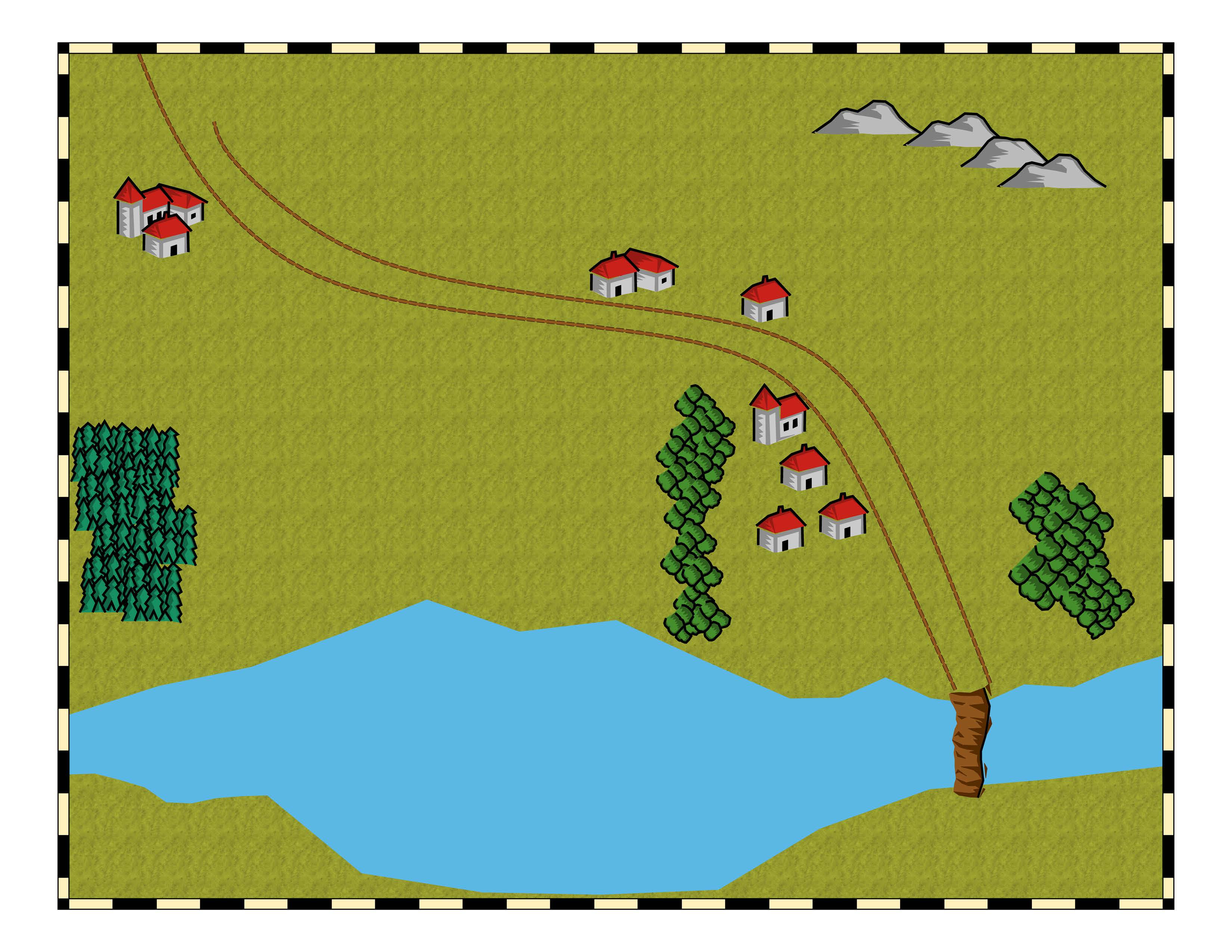
RuleSet Blackpower or Other similar Game Players 2 Austrians 12 Battalions, 2 Cavalry Squadrons, 2 Cannon Batteries, 2 Battalions Garrisoning the Town French 16 Battalions, plus 1 new battalion every other turn, 2 dragoon squadrons Set Up. See the map below. Table Size: 8×4
Deployment:
The Austrians were surprised by the maneuver and were not in an adequate position. Most troops should be stationed in the field to the south of the road in the center of the map between the two sets of trees. The French should have half their units across the bridge, with the rest crossing. It takes one turn to cross the water. Only two units at a time can cross. Additional French units should arrive every other round or turn (however, your rules describe both forces getting to act as one turn). So total if the French never lose a unit, there would be 16 battalions, 2 dragoon squadrons, and an additional 12 French battalions.
Objectives:
The Austrians are fighting a rearguard action to hopefully prevent the complete destruction of their army. By nightfall, they must keep the French from reaching the town on the top left of the map. The attack took place at 2:00, so the French have six hours to reach that point. This amounts to approximately 24 turns for most games. The French want to get the town and surround the Austrians. The French must have forced back the Austrians; if the Austrians are fighting to the city at nightfall, it is still an Austrian victory. Losses do not matter here.
Special Rules;
The Austrians can garrison any building with half a battalion. The building becomes fortified and difficult for the French to move past.
The fastest route of travel should be the road. The area around the road is heavily wooded.




 stonewalljackman