June 3rd 1098 Fall of Antioch Scenario Wargame

On June 3rd, 1098, following an 8-month siege led by Raymond IV of Toulouse, modern-day Turkey’s Seljuk-held city of Antioch fell to the crusaders during the First Crusade. The city fell due to treachery from one of the guard captains.

While a full campaign with 10 battles to capture and Siege Antioch and defend it would be ideal, I think a simple wargame scenario depicting stealth would be more appropriate for this blog.

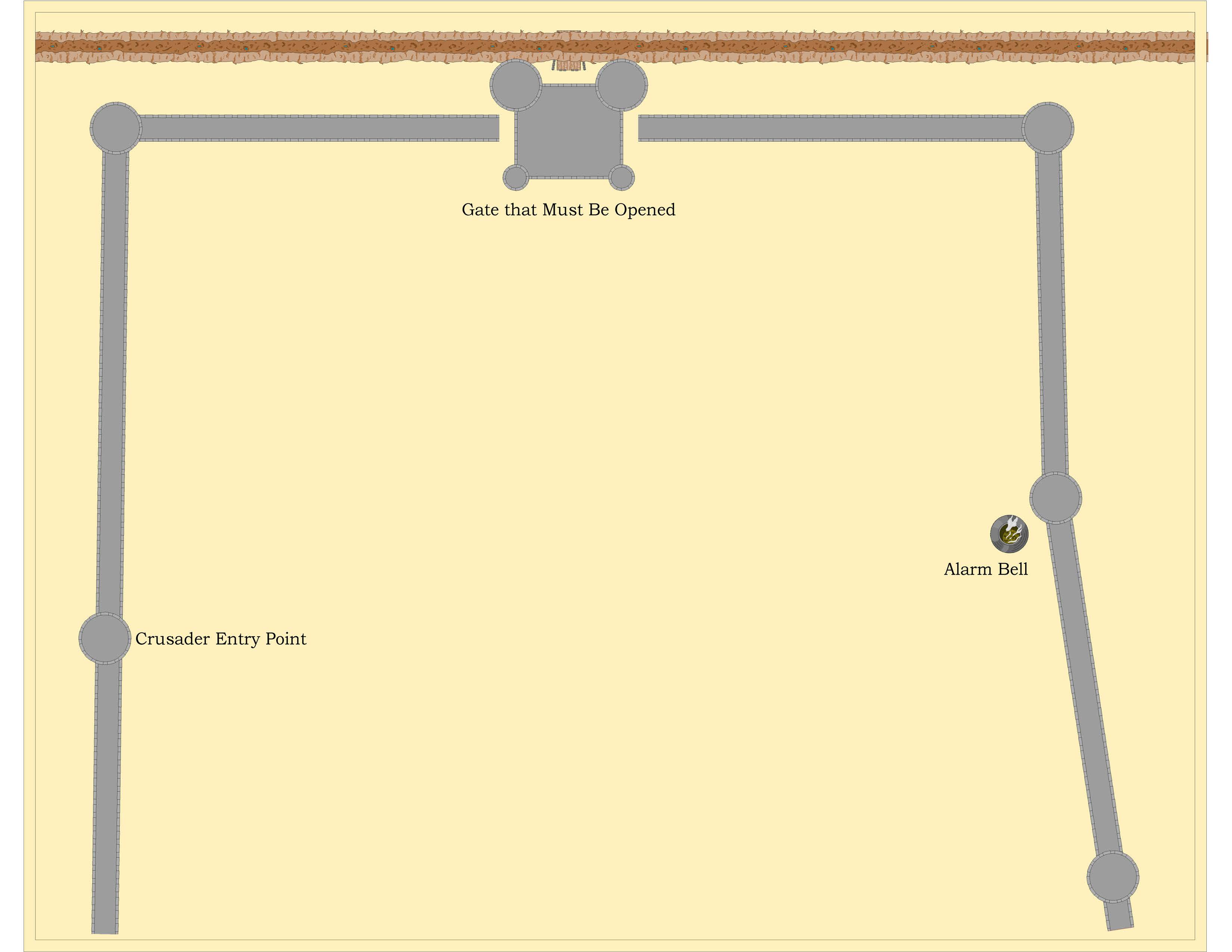
The guards’ goal is to catch the attackers, while the crusaders must successfully reach the gates and open them for the waiting forces.

Wargame

Ruleset Custom
Number of Players 1
Number of Models 25
Play Area 4×4
Scenery Castle Walls and Towers, many small buildings within. The streets should feel crowded and cramped with many turns.

The four crusaders must navigate to the gate without being seen. The defenders should be set up in four patrols of five soldiers in various areas of the setup. I recommend doing a grid and setting up the patrols at random. The soldiers should be governed by a deck of cards; each time a card is drawn, it indicates something.

Red FaceCard Movement directly forward as much as possible
Red Odd Card Turn Right next chance forward
Red Even Card Turn Left next chance forward

Black Facecard Movement moves directly backward as much as possible
Black Odd Card Turn right next chance backward
Red Even Card turn left next chance backward

Thus, the patrol moves randomly through the area. In the event of an encounter with the opposing troops, each group moves towards the combat until they come in contact with the crusaders or the fighting ends.

If a patrol spots the crusaders (6″range) a card is flipped. A red card, the defenders’ attack, a black card, they flee towards the bell.

Combat is resolved simply. Two combatants each roll a D6; the crusaders get +2. The loser is eliminated. The engagement range is adjacent to the models. The crusaders can take crossbows. Lethal hits on 5s. The crusaders should be slightly faster than the defenders.

June 2nd 1676 Battle of Palermo

During the Franco-Dutch War. Dutch and French forces were converging on the city of Messina who was in revolt to its Spanish rulers. The Dutch were allied with the Spanish. The French did far more damage than the Dutch force; however, battered the Dutch were the French pulled off making the victory meaningless.

French

Commander Duke of Mortemart

24 Ships of the line
5 Frigates
25 Galleys
9 FireShips

Dutch-Spanish Force

Commander Jan den Haen, and Diege de Ibarra

14 Ships of the Line
13 Frigates
19 Galleys
4 Fireships

Wargame

RuleSet Black Seas
2-5 Players
Models Needed: 100
Tablesize: 4×8
Terrain: Enough islands or rocks to create a bay.

Set-Up

The Spanish ships should be arrayed in line formation at the mouth of the bay. The Dutch ships should be arrayed in a similar fashion on the opposite side, facing the same direction.

The French should have their ships arrayed in a line approaching from the Spanish side. Frigates and galleys should be in the space between the two lines.

Objectives;

The French must inflict as much damage as possible on both fleets without losing a capital ship. The French must also evade the coastal batteries, which should have the firepower of a first-rate ship of the line.

The Spanish and Dutch forces need to use their screen to avoid losing any ships of the line. They do not need to inflict any damage. The fleet may flee at any time into the bay.

Additional Rules:

Fireships played a significant role in the battle, dealing most of the damage to the French.

Coastal batteries cannot be destroyed and should deal high damage.

June 1st 1917 Battle of Jutland Wargame Scenario

The Battle of Jutland was the largest naval engagement of World War I and the last battleship-on-battleship engagement in history. Like most major naval engagements, it was indecisive. Both sides claimed victory. Germany sank more ships by 2:1 and killed more men by 3:1. The British were able to limit German access to the North Sea.

Order of Battle

Britain

Commander John Jellicoe and David Beatty

28 Dreadnoughts
9 Battlecruisers
8 Armoured Cruisers
26 Light Cruisers
78 Destroyers
1 Minelayer
1 Carrier

Germany

Commander Reinhard Scheer and Franz Hipper

16 Dreadnoughts
5 Battlecruisers
6 Pre-Dreadnought Battleships
11 Light Cruisers
61 Torpedo Boats

Wargaming the Encounter

RuleSet Broadside
Table Size 8×4 or larger.
Number of Players 2-7
Models needed, 100 give or take.

Set-Up

I would advise using 1:1800 scale ships for this encounter. Most ships are available as 3d prints. This scenario should be played on a large table. If a large table is unavailable, reduce the range of various ships. Maybe the maximum range of a battleship is 6″ and the ideal range is 4″.

You do not need most of the destroyers and light cruisers. If you choose to use them, they should be kept in squadrons of 4 to 6 for scouting or anti-submarine activities. The core of the action is the dreadnoughts and battlecruisers.

The main crux of a game like Jutland is to balance the two forces, even with the numerical difference. At Jutland, the British were disorganized and out of formation, while the Germans were prepared for battle.

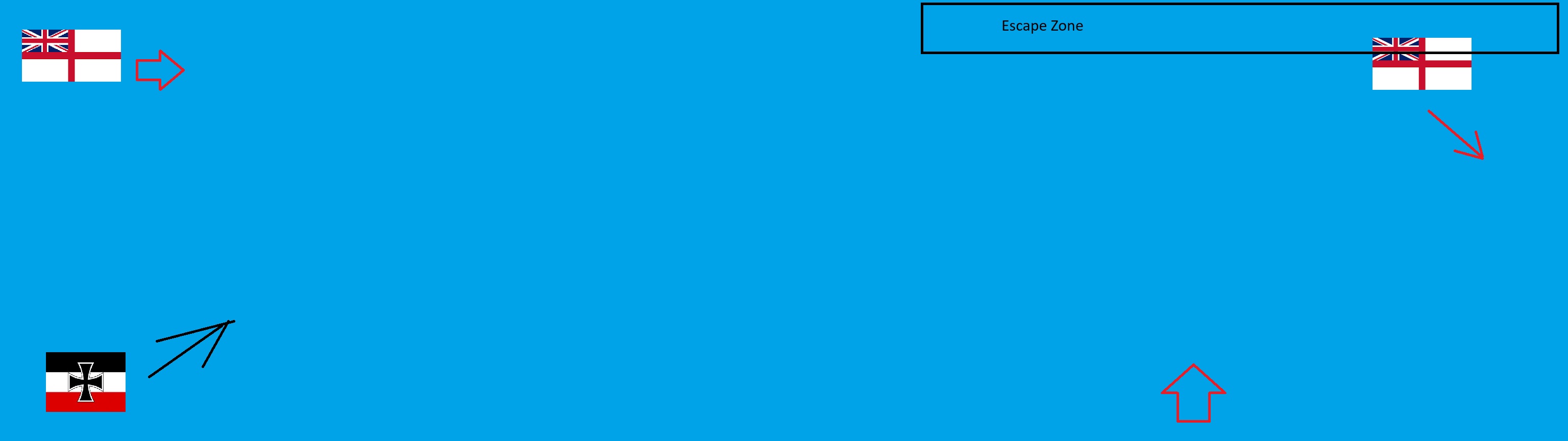
For the setup, the British should be divided into three squadrons of 8 dreadnoughts, and 2 armoured cruisers with support ships, similar to the actual engagement. If you have more players, the British should have up to five commanders while the Germans should stick with two. The Germans should also be broken up into three, eight-ship squadrons with three or four lighter ships each. However, these should enter much closer together in a more traditional Vanguard, Center, Rearguard scenario.

One British squadron should be about 10% away from each edge, with the Germans engaging from the bottom left. One British Squadron should be kept in reserve and begin entering the fray after an adequate number of turns. Depending on your system, it should be the middle of the game, so if a typical game is 20 turns, they should enter around turn 11.

The scenario’s challenge involves doing enough damage to the British squadron nearest the German fleet before the reserve squadrons can turn around and engage. The Germans must also escape the topmost table edge.

The British must quickly bring their forces to bear. Due to their spacing, the British should not allow their commanders to communicate with one another.

Victory;

The British will win if they inflict more damage on the Germans than the Germans inflict on them. The Germans will win if they inflict more damage or cause less damage, but every dreadnought and battlecruiser escapes.

Additional Rules
The Germans had submarines in the area; they could place torpedo markers that forced British ships to change course. British scouts could eliminate these markers if needed.

Fog played a significant role in the battle, as visibility was limited. This can be gamed by having the British reserve commander be in a different room and only communicating with one-line telegrams.

Scout forces also engaged and caused minor damage. Based on the scouting results, a pre-battle scouting game could take place, with the sides getting better positioning.