P3 Master Series Paints Review

I recently received the P3 Master Series Paint Set. My box opening is available here.

I have been working with the paints for about two weeks and have painted 30 or so models using the paints. I did a variety of models, such as Star Wars Legion, Reaper Bones, Warhammer, Marvel Crisis Protocol, Lord of the Rings, 3D prints, and some Flames of War. I used the paints in several ways, direct from the bottle, thinned, airbrushed, and as glazes. I also used wet blending, layering, edge highlights, base coating, etc. There were no scientific comparisons, color matching, or very professional items; I just wanted to give my thoughts on the set.

When I started my hobby, I was almost mystified by the quality of the P3 paints and how hard they were to get. Professional painters swore by the paints. I had to have the Kickstarter to see what all the fuss was about.

Conclusion

As an amateur painter, I did not think these paints were for me. I would pass on rebuying them. I think I could see the appeal for a professional painter, but I don’t have the skill to maximize their potential.

As I stated in the unboxing, there were no mixing mediums, primers, or washes, so I would expect to come with a set like this.

The paints themselves were pretty thick. I mixed every paint in the bottle using a vortex mixer for about 45 seconds before using. Many paints broke on my wet palette after 15 or 20 minutes. When the paints were thinned too much, instead of just being thin and needing a second layer, the brush strokes were obvious and hard to hide, especially when wet blending.

I tried about 70 of the colors included in the box. They all had a lovely, rich hue and good coverage when appropriately thinned. The ratio to thin the paints differed with every color, and it took four or five tries to get the correct ratio. Many of the paints finished with a semi-gloss sheen. I prefer my paints to finish matte, but I could be incorrectly using them.

The P3 paints are a step below Army Painter and Vallejo, but a step up from Reaper and two steps higher than Citadel. I would still consider Two Thin Coats the top brand for amateur use.

First Experience

I first tried a DND Reaper Bones model I had already primed. I wanted to see what the paints could do directly from the bottle—no thinning, no wet palette, just paint.
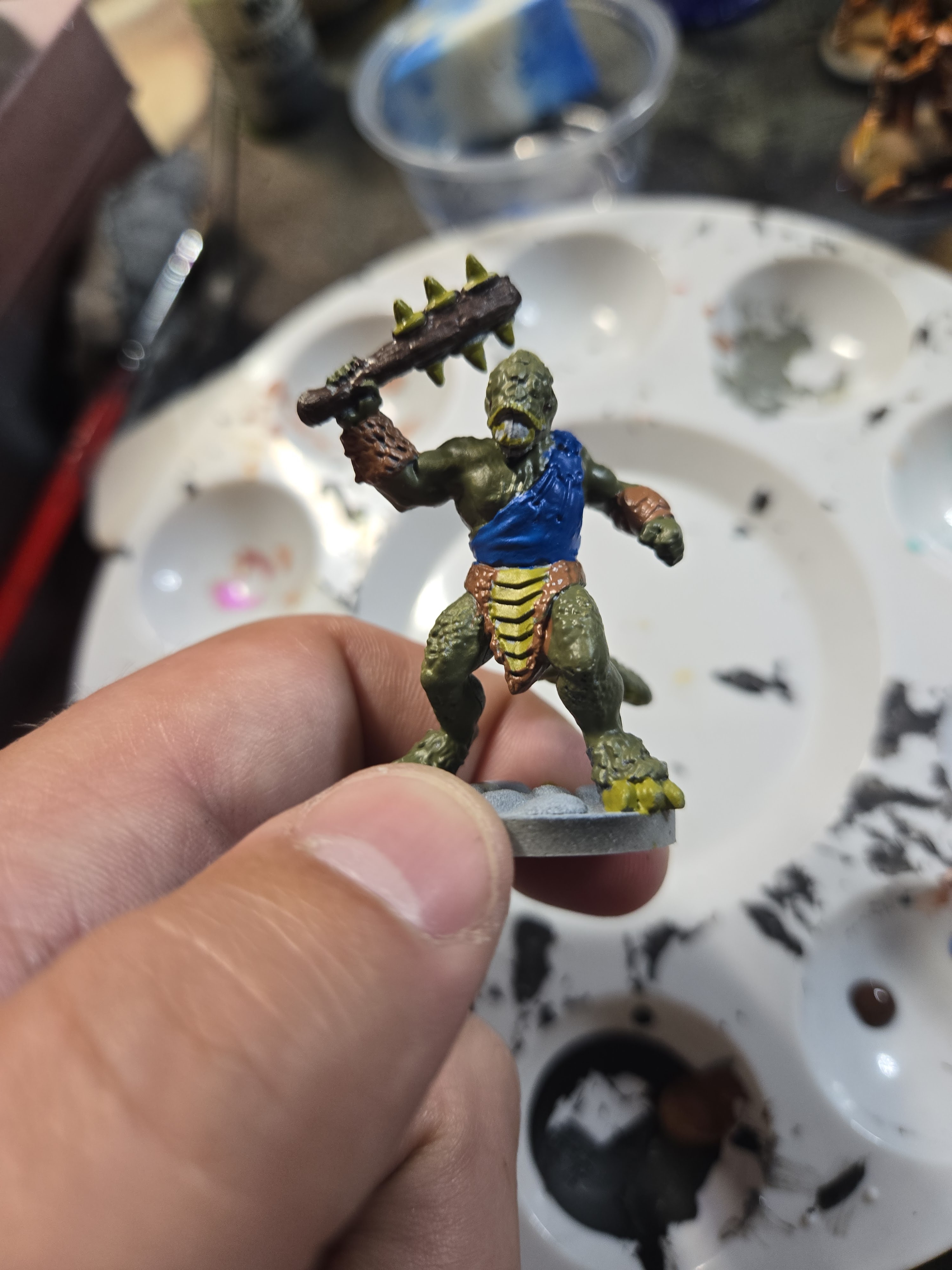
You can see the rich color and bright hues, but you can also see how thick the paint was when it came from the bottle and how it muddled many details.
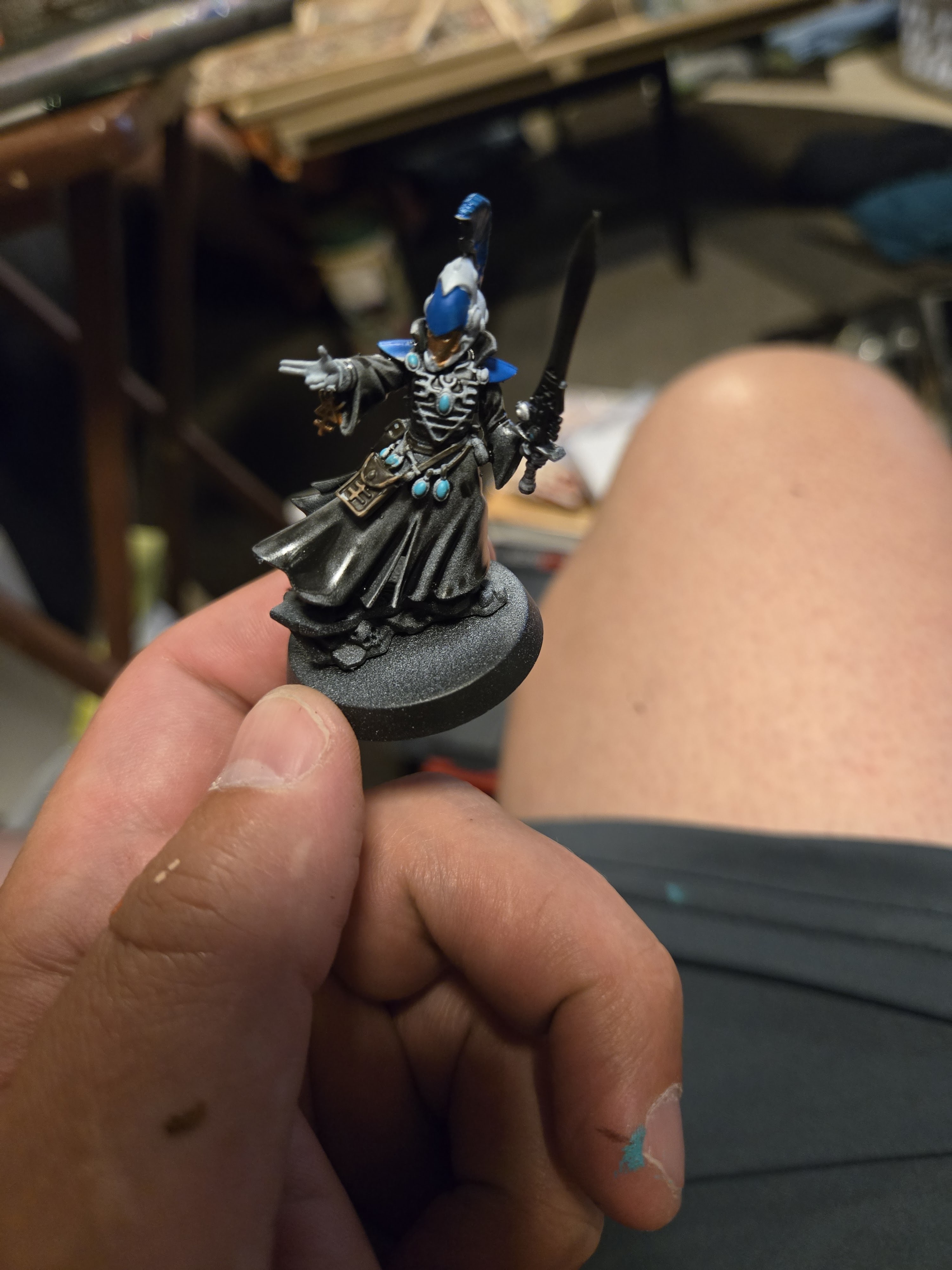
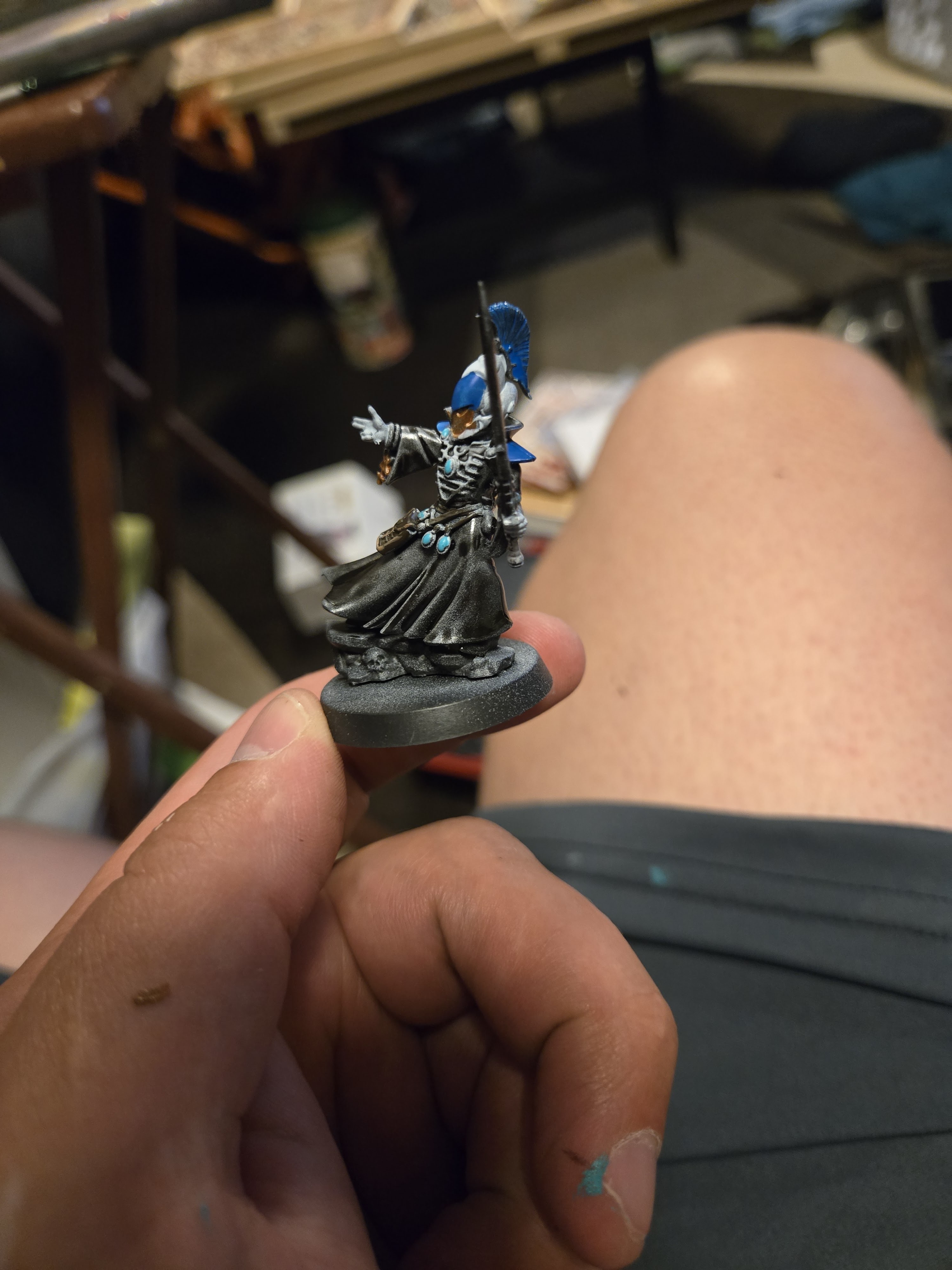
My next model was a simple Aeldari Warlock. This time, I thinned the paints and used the black as a glaze for the bottom robe, which turned out nicely. The unthinned paint made a very nice edge highlight. You can see it on the satchel and the model’s chest piece. The metallic visor didn’t work well; it was gloppy and hard to control.

You can see the stark difference between the unthinned and thinned paint. I don’t see much difference between thinned and unthinned in my usual paints like Reaper, Armypainter Air, and Vallejo Air. This was a big step in seeing so much difference.
My next model was Fulgrim, also for the Aeldari. (I am in a league and picked Aeldari as my army.) I had already done some airbrush work on the model, which you can see below. For my P3 test, I simply did detailed work.
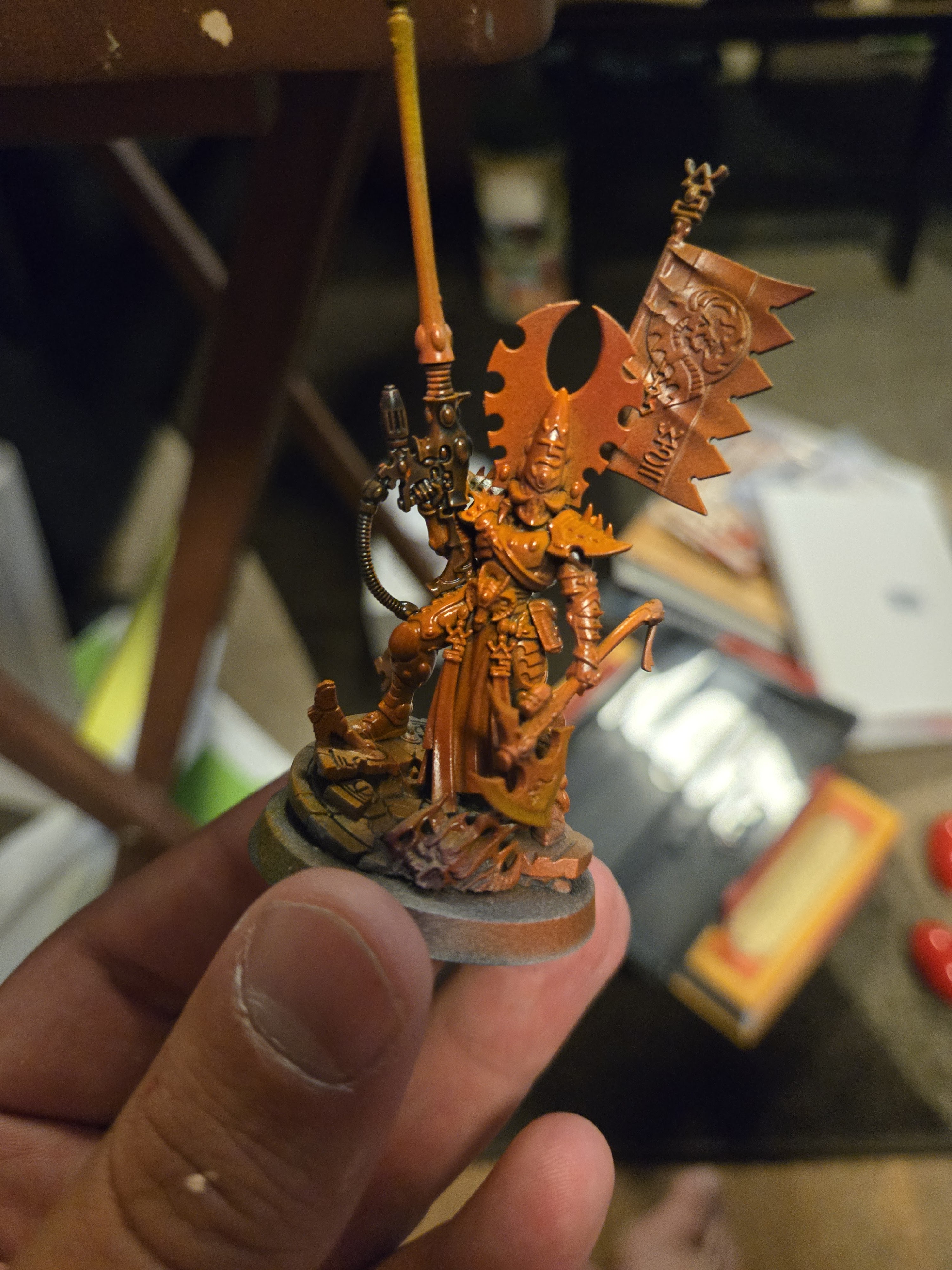
Below is the finished product after my detailed work. I won’t do bases until all models are ready.
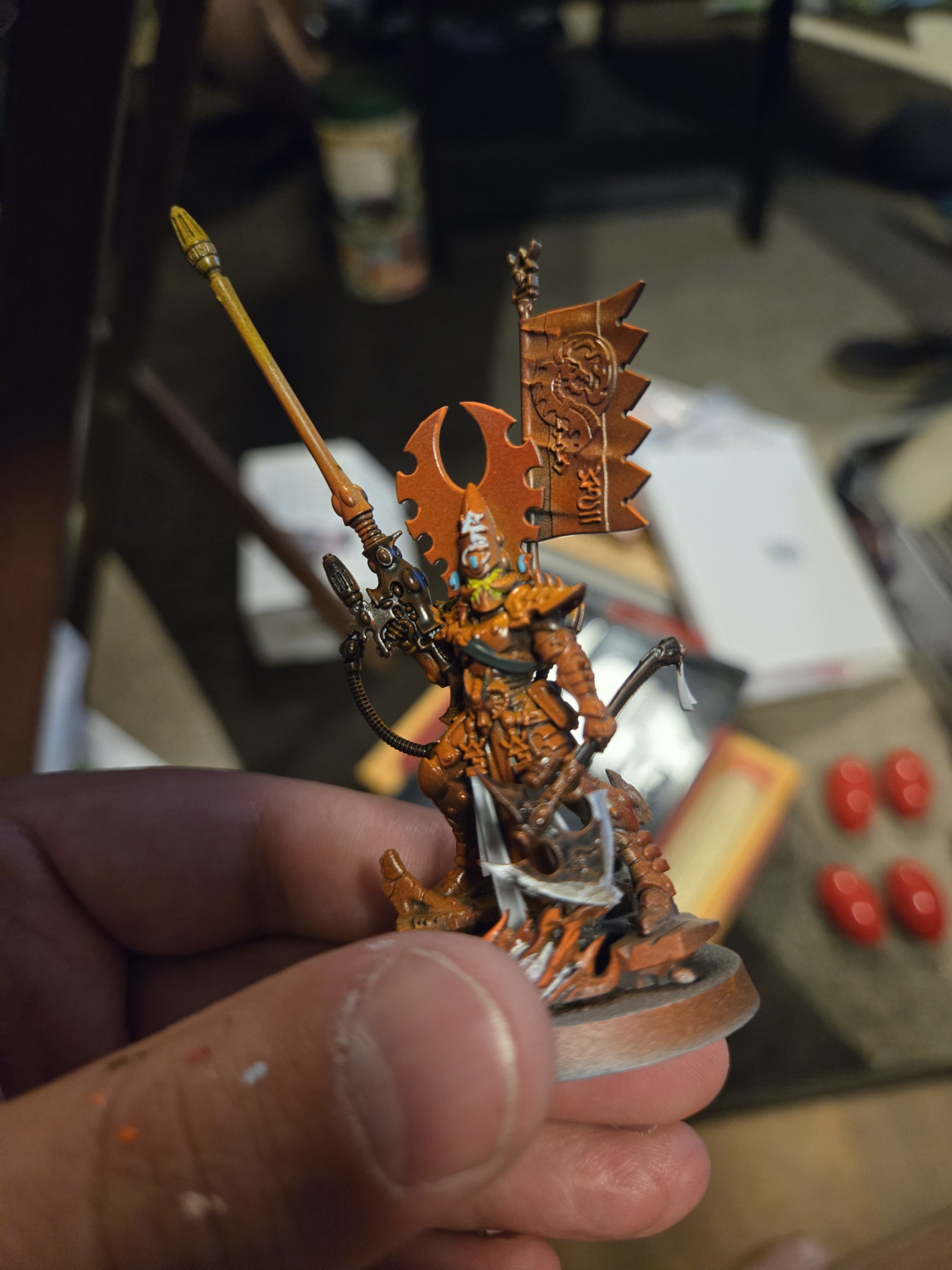
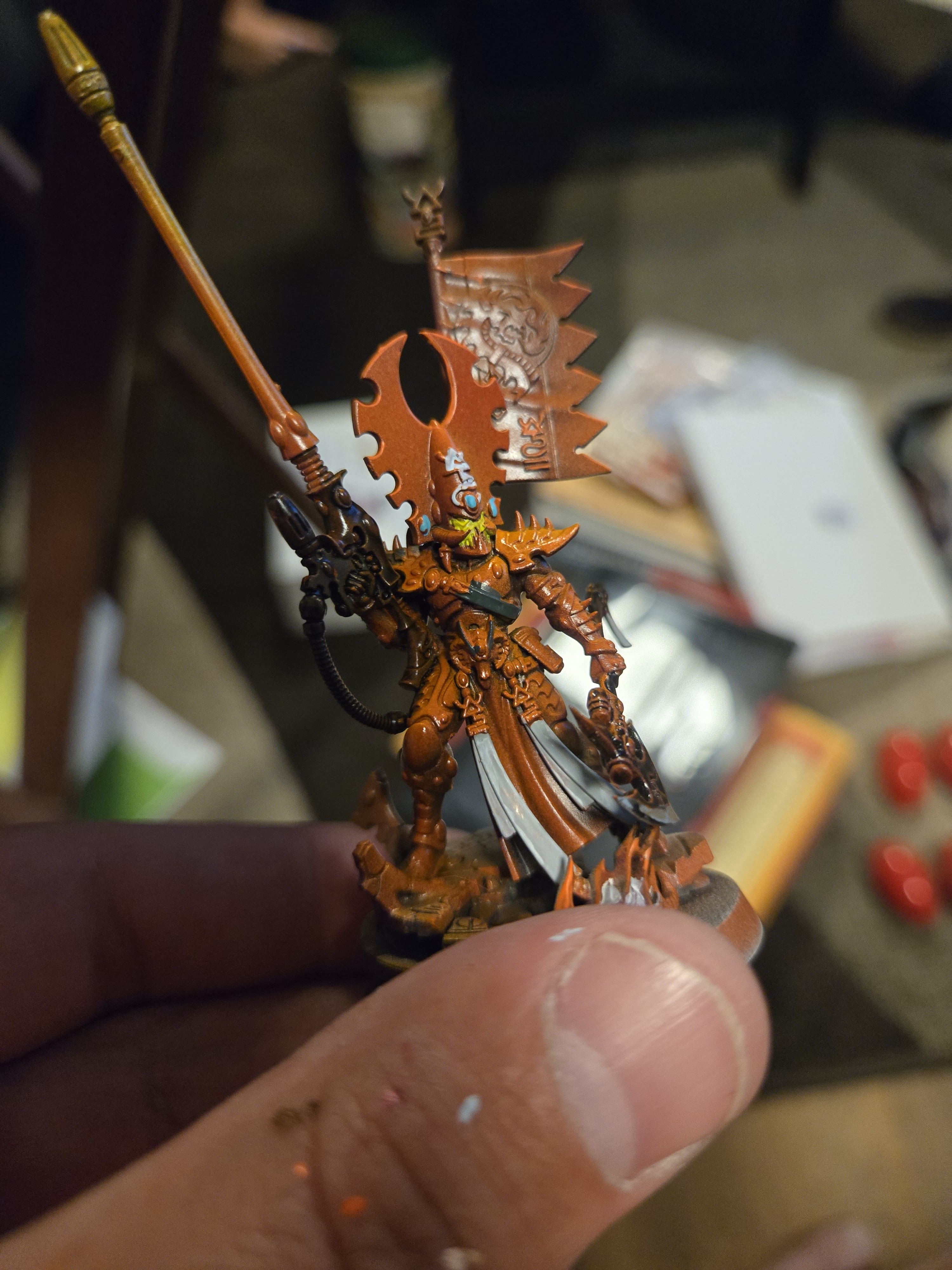
The paints were difficult to control in tight areas unless the mix was perfect, especially in the face area. This is just something to be aware of as an amateur painter.
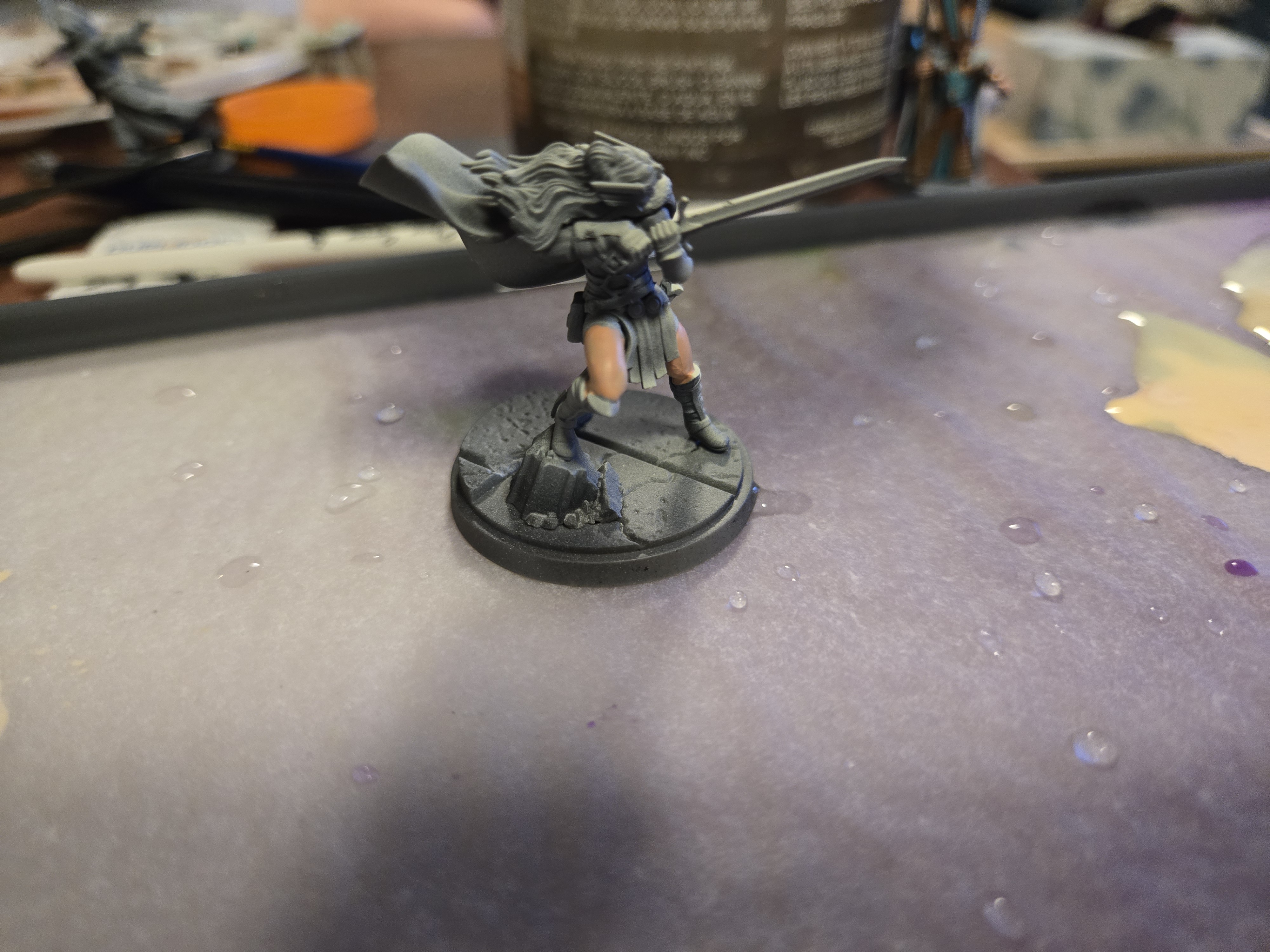
Marvel Crisis Protocol Lady Sif. Thinned paints, just base coated. I struggled to wet-blend the cloak. I will say I am not a good wet blender.
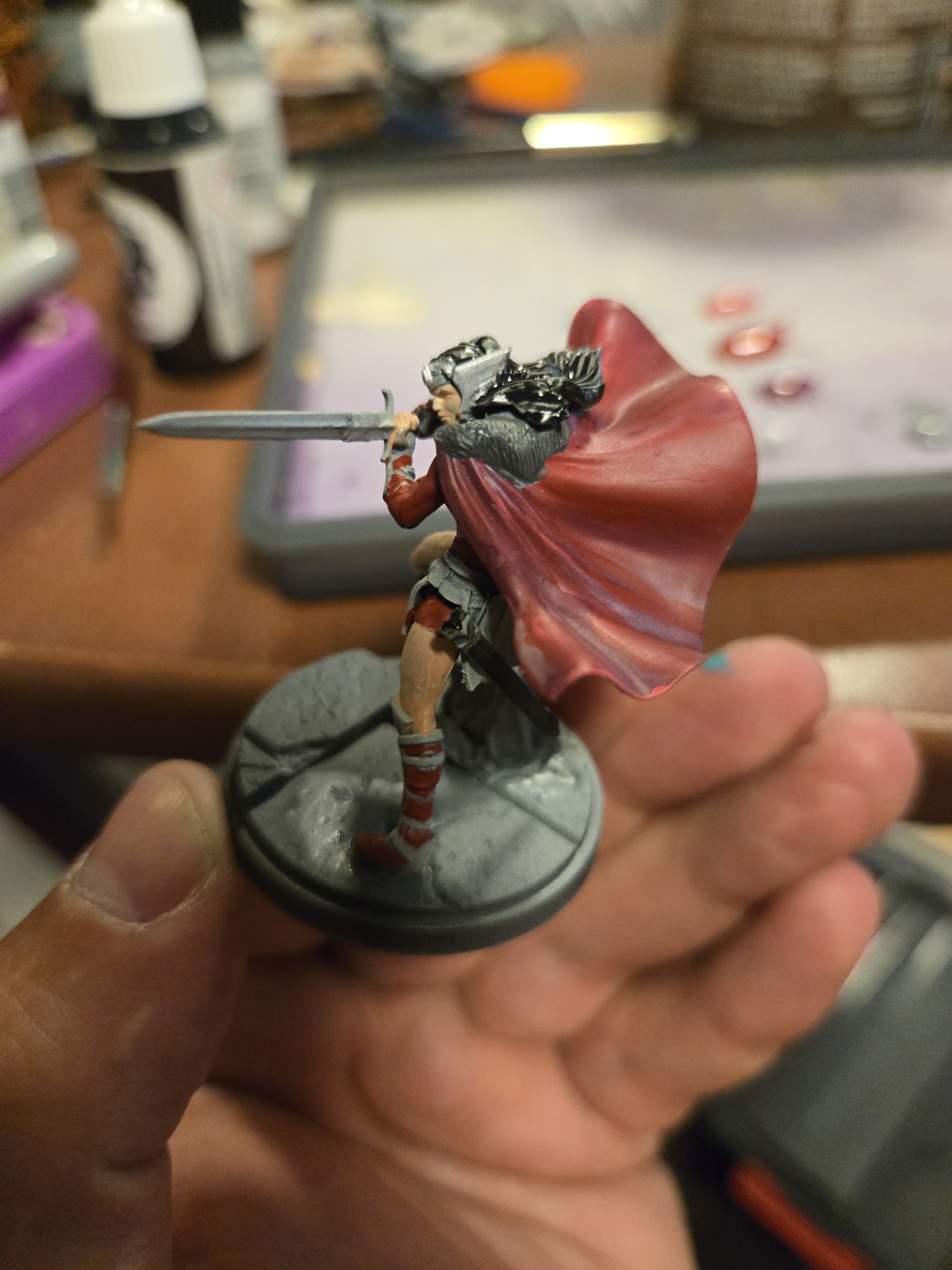
A zenithal primed phoenix guard captain.
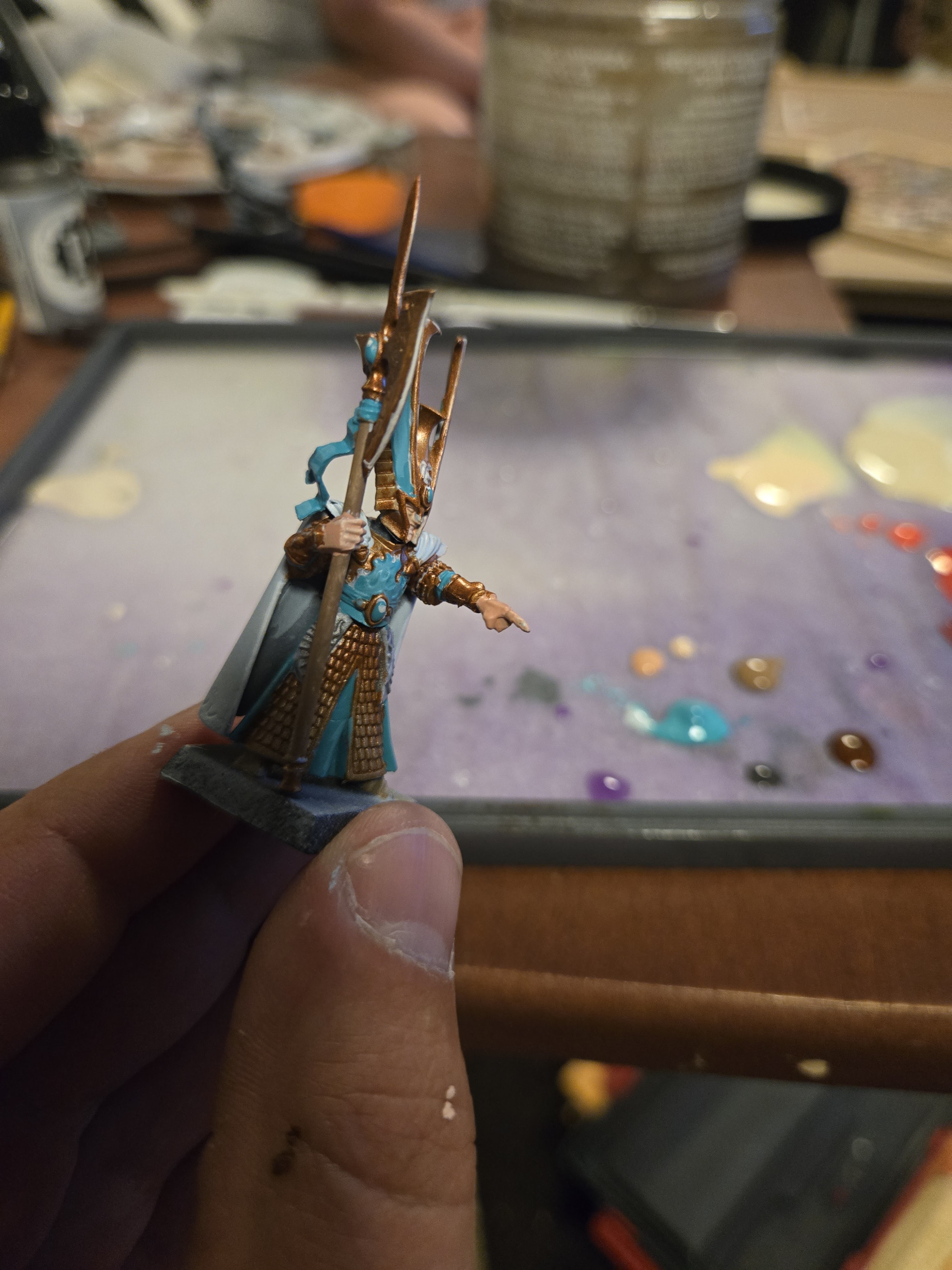
It is crazy how terrible a paint job can look zoomed in. At 3′ distance, I was happy with this model. The paints at times flowed too well, notably the flesh color around the hands. The metallic bronze and the blue did not flow nearly as well. You can clearly see the unpainted areas of the model in the zoomed-in photo.

My last test was a fully airbrushed Incredible Hulk for Marvel Crisis Protocol.

When properly thinned and mixed with an airbrush flow improver, the paints performed better than expected. In fact, I think they performed better than Citadel paints. They gave a nice, even flow with minimal pixelation. The pigments covered nicely; overall, they created a nice model with sound effects.

You can clearly see the folds in the trousers and many details. Again, this model was fully airbrushed. I only used a brush for the eyes and the nails.
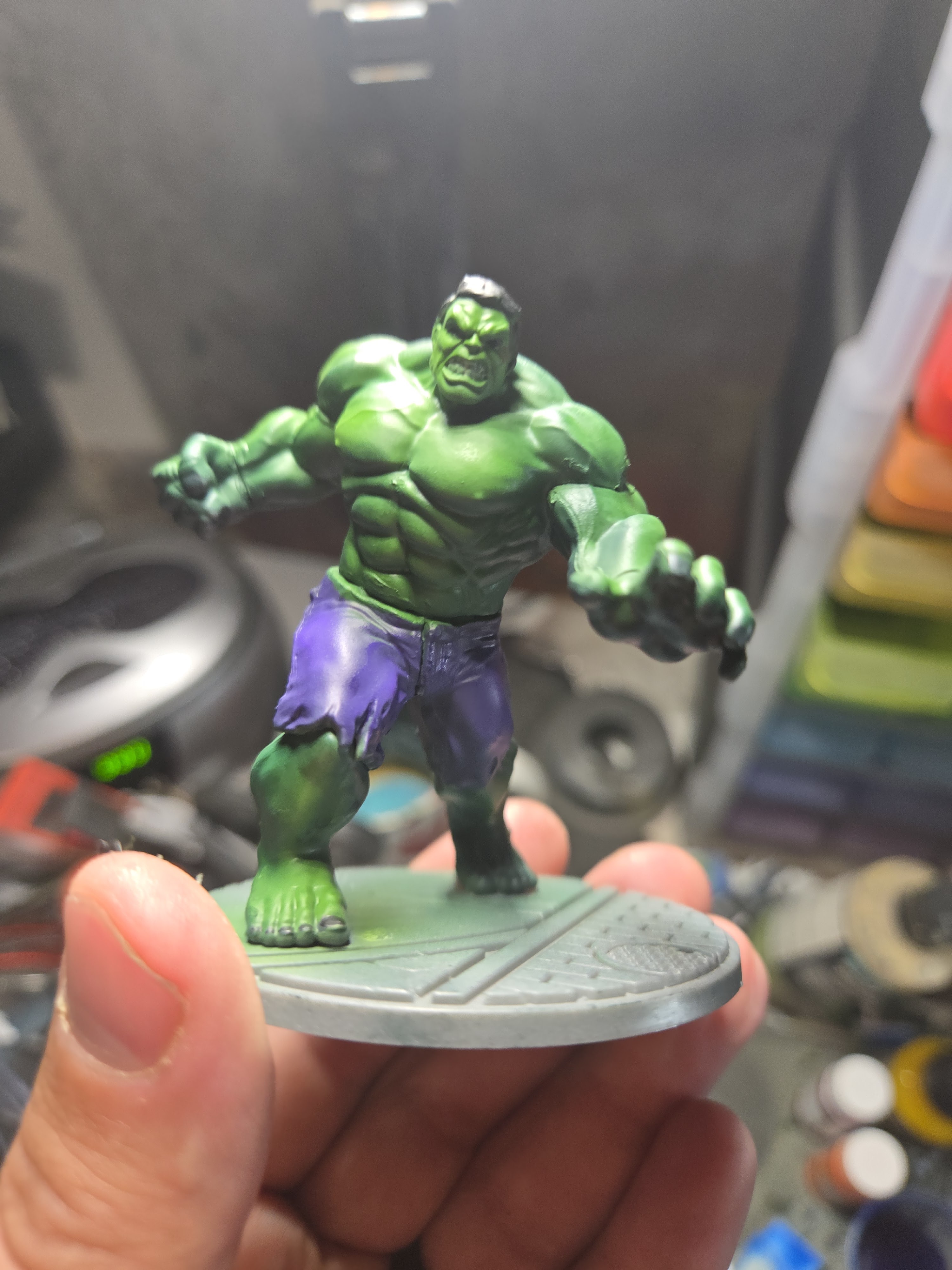
There are clearly defined shadows and highlights. My lines weren’t super clean. Again, I’m happy with how the paints were done with the airbrush. You can also see that there isn’t any spidering or splatter.
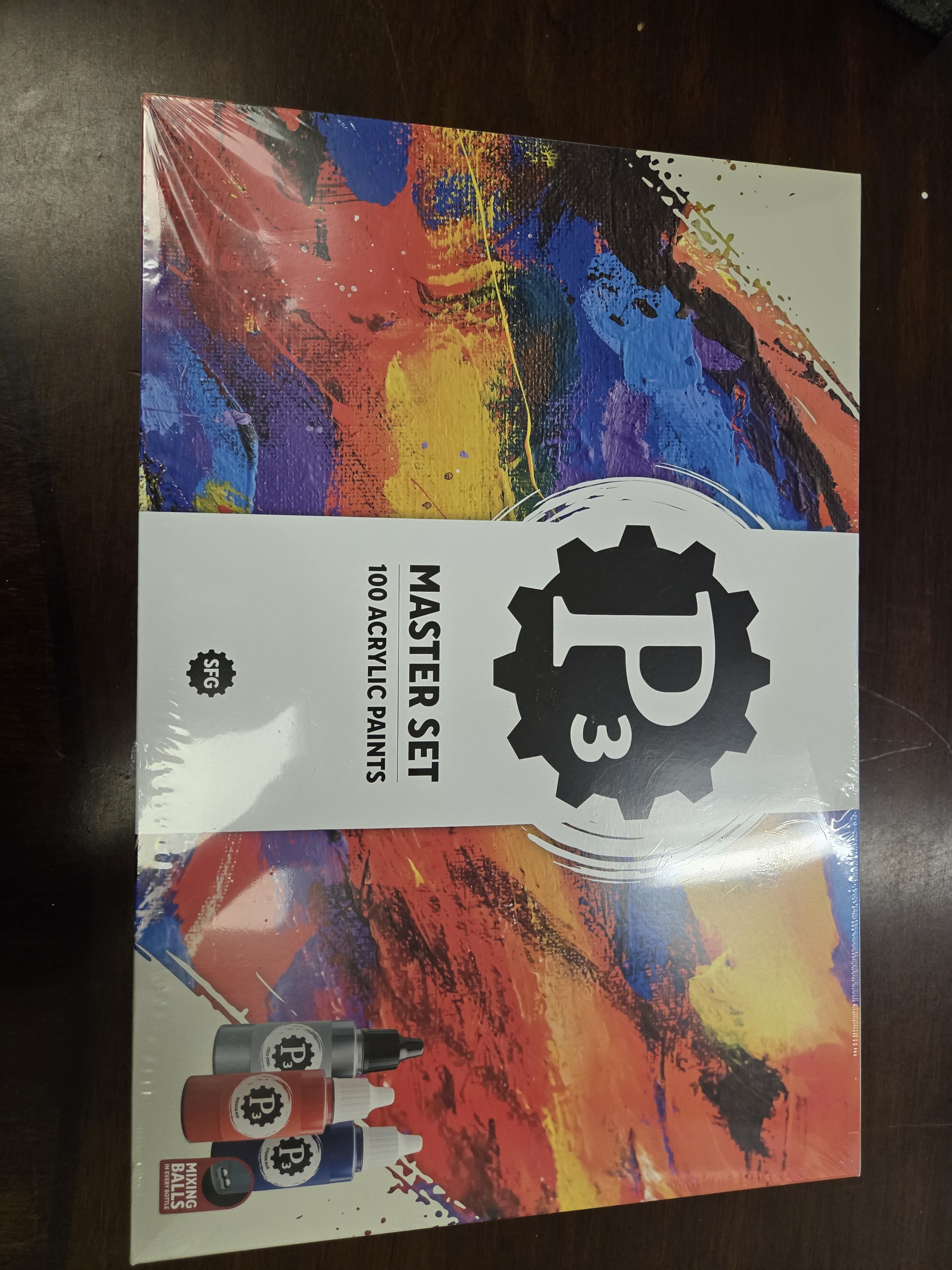
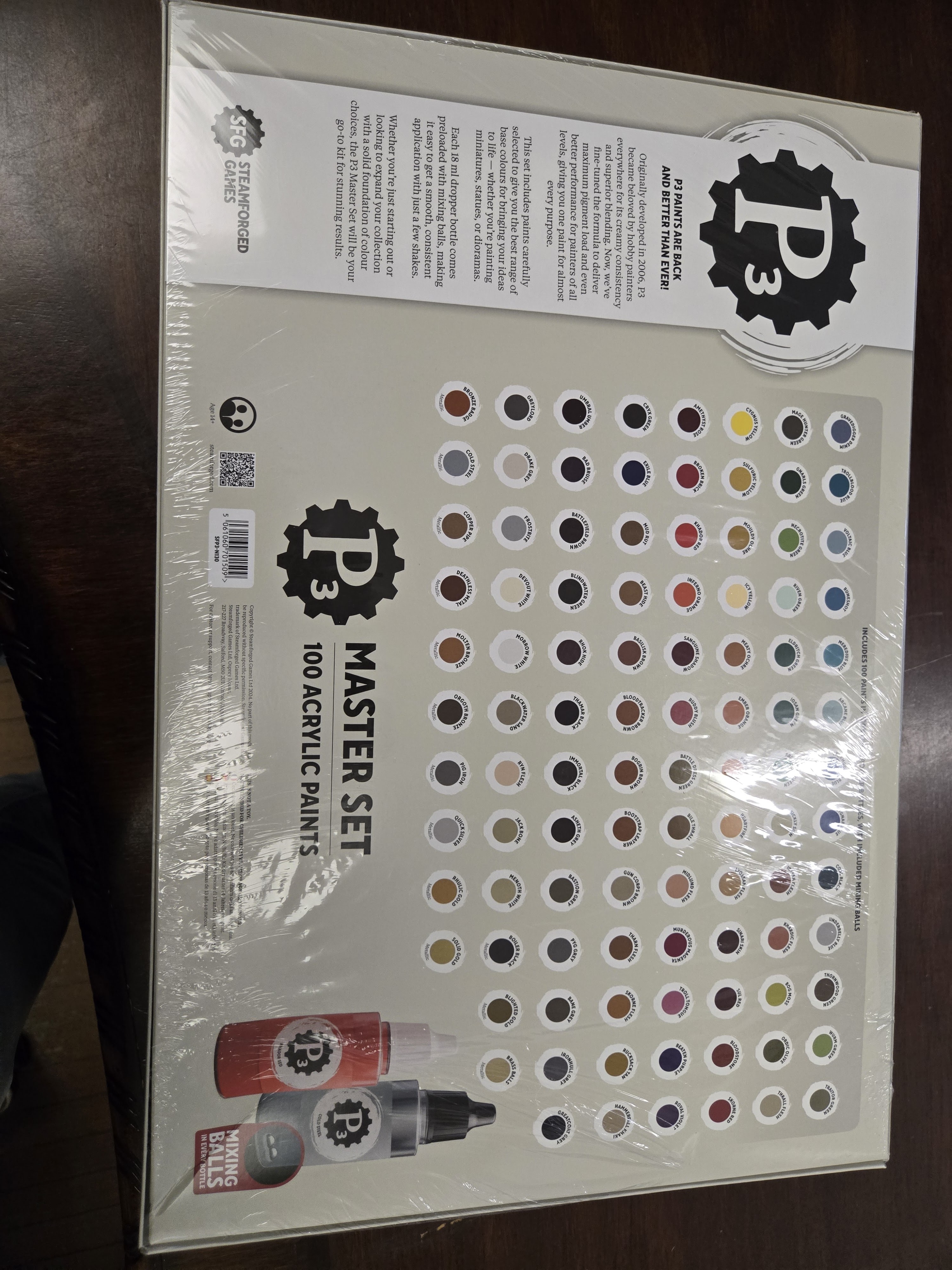
P3 Paints Master Set Acrylic Paints 100 Set Box Opening

The other day, I received a new set of paints from P3. I backed the Early Bird Kickstarter campaign, and purchasing the complete set cost me 256 BPD with shipping.

Conclusion

The P3 Master set is a decent paint set. It has an okay mix of colors. I think it’s a little heavy on the browns and potentially missing two reds, two greens, and a blue or two. You will be missing some items you would expect from Army Painter or Vallejo, where a brush, washes, thinner, primer, and paint mediums are often included with the set.

As I wrote this, I have not tested any of the paints, nor have I ever used P3 paints in the past. Based on reputation, they were the top paints on the market other than Coat d’ Arms. However, with Army Painter and Duncan Rhodes upping the game for paint quality, we will see if P3 can pass the test.

This set cost me 256 BPD, or $347 with shipping. The Army Painter Fanatic Wargamers costs about $300, and a Vallejo set with 76 paints costs $255, so this set is a little expensive. The Reaper set costs $154 and has 52 paints. It is cheaper than Dunca Rhodes Line, which costs $225 for 60 paints.

The Opening

I wanted to do a box opening of the Master Set. The box was a good value, but I haven’t tried the paints yet. That will take me a couple of weeks. I’d like to paint 10 or 12 models to see how they hold up and compare to other familiar brands like Vallejo, Duncan Rhodes, and Citadel.
There was one higher level on Kickstarter, which came with 10 paints and a paint stand. I didn’t feel like it was worth another $75.

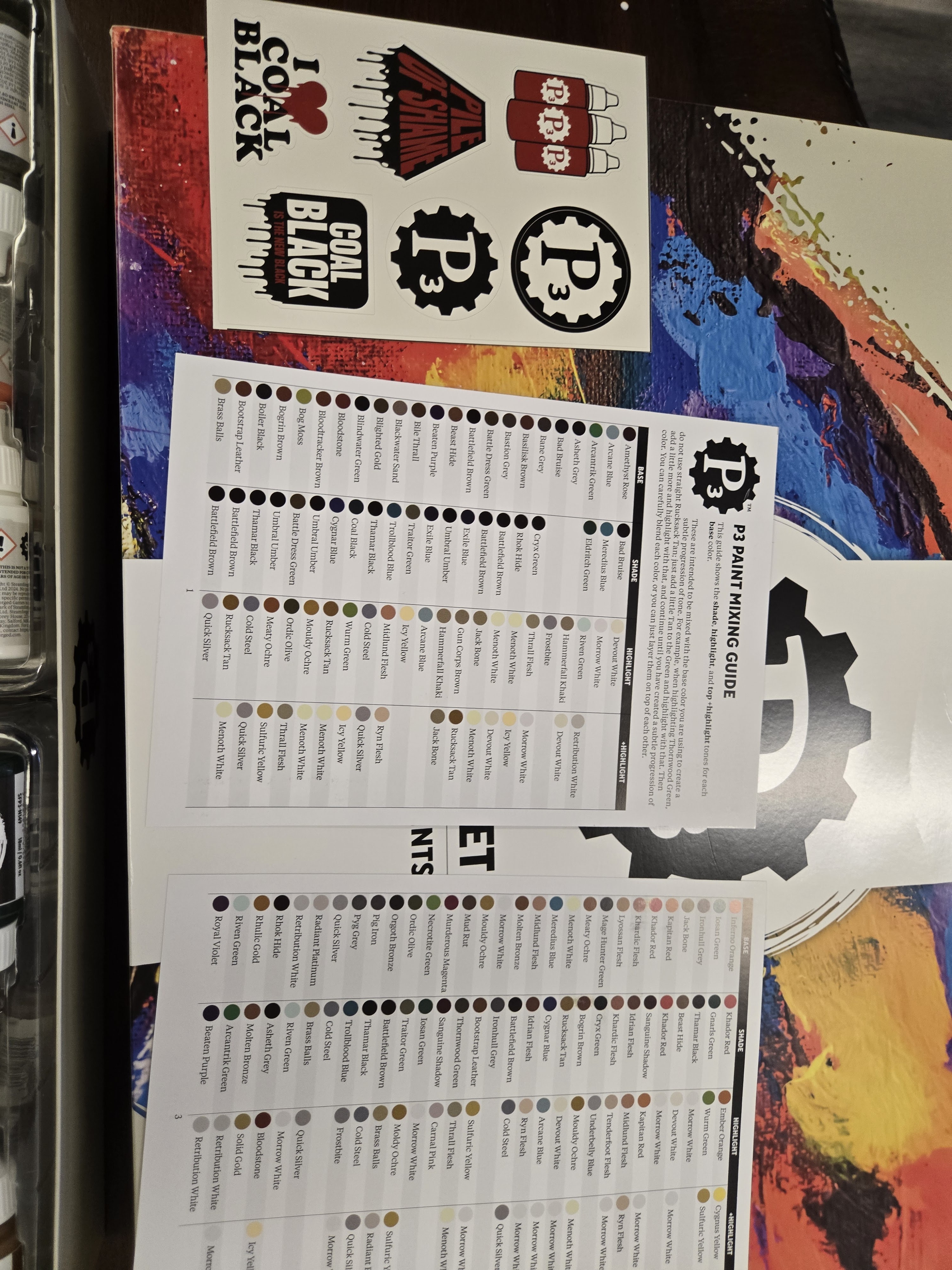
The box is very colourful, and the back clearly shows the paints and colours you will get. I like the organization of the color chart on the back. However, the box itself felt a little flimsy, and I wouldn’t recommend it as a long-term storage solution.

As is typical with paint sets like this, when I opened the box, the paints were no longer in their plastic organizers.

Nothing was damaged or spilled. The box also contained some stickers and a couple of handy charts for paint mixtures and correct layering, which has become typical with brands like Reaper, Duncan Rhodes, and Army Painter.

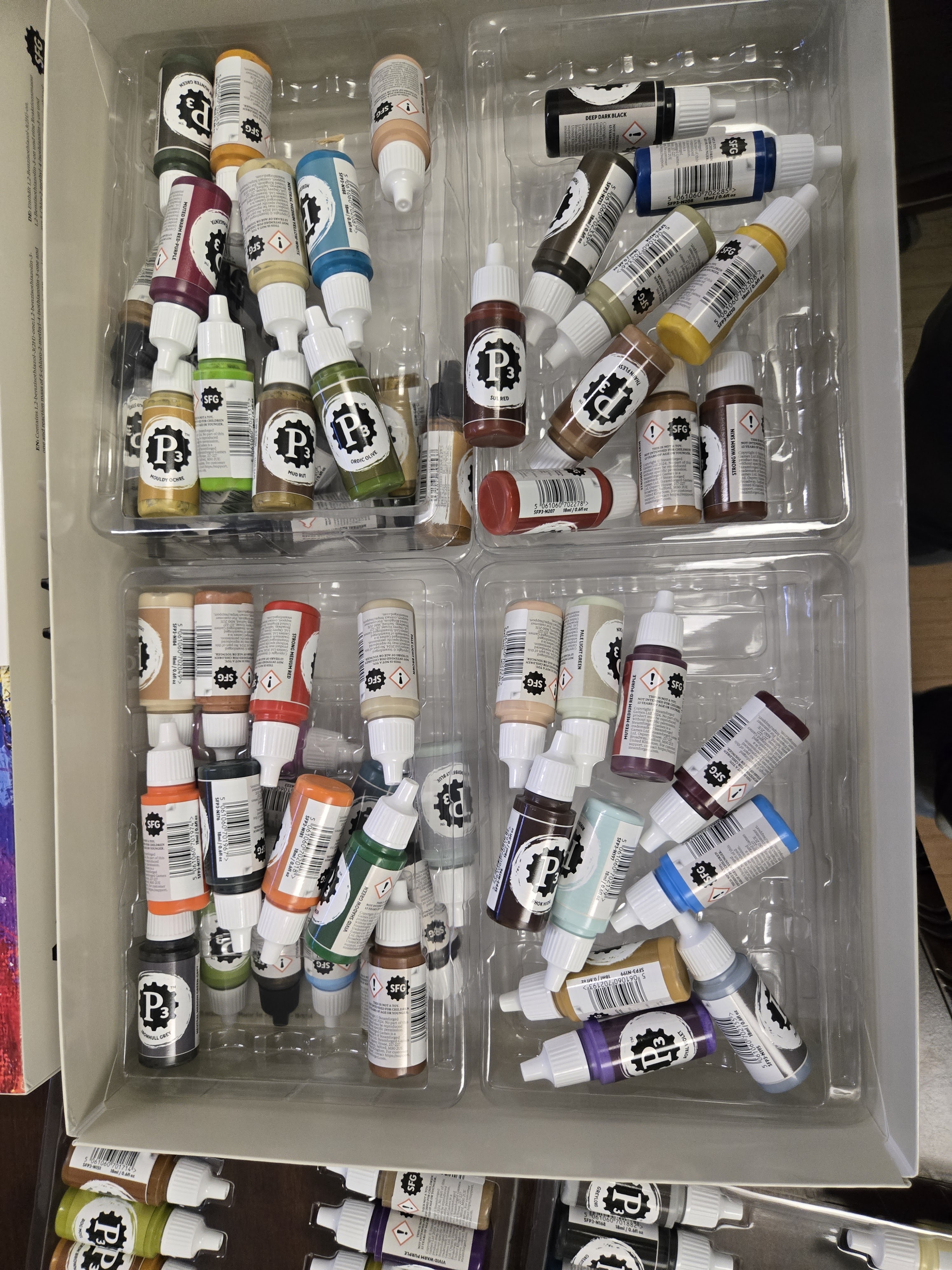
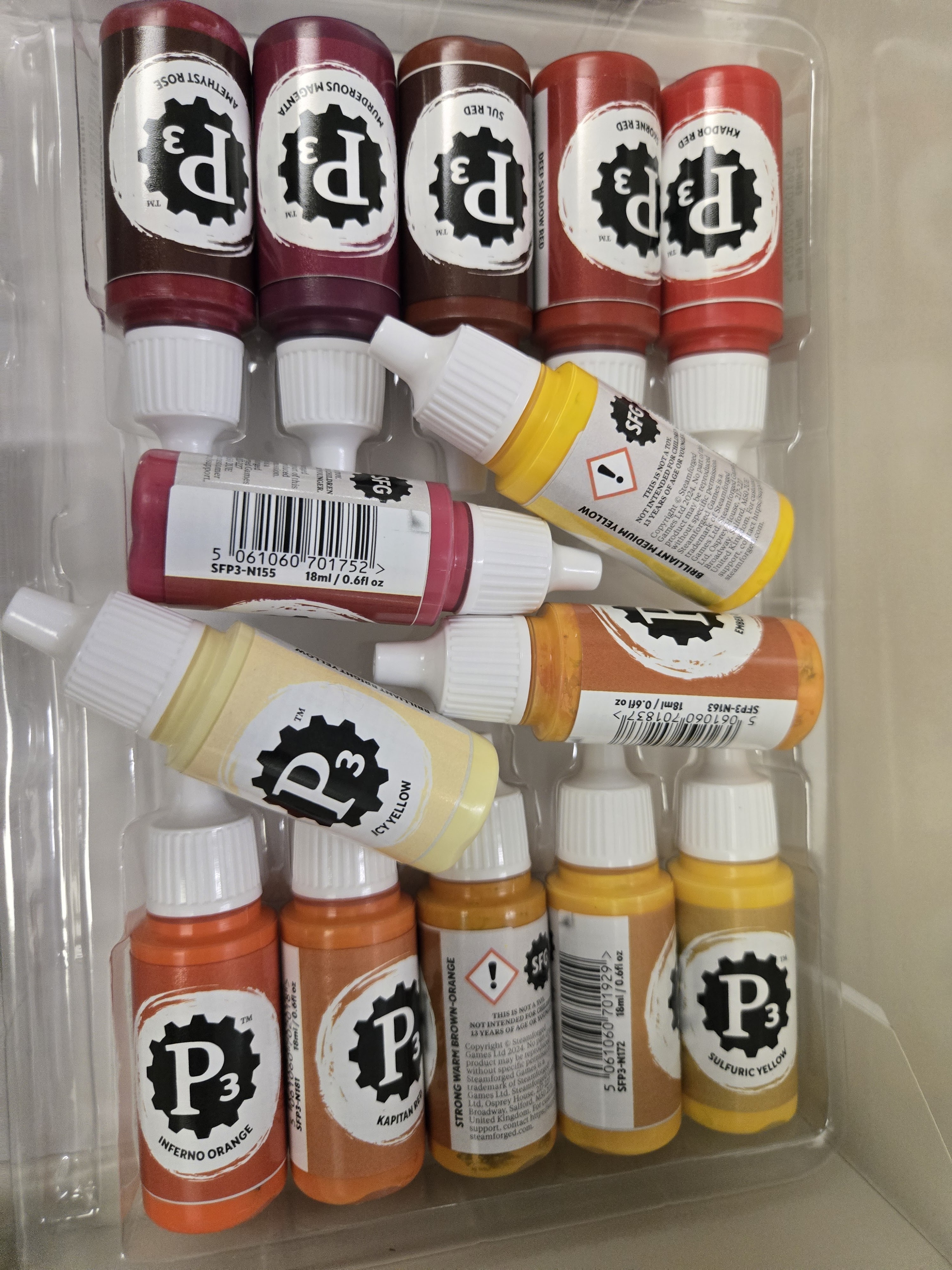
Each paint label was solidly applied, and you could easily see the tone of the paint through the bottle. The mixing balls weren’t obvious except with some vigorous shaking.

There is a nice variety of colors in the box. However, there were no mixers, such as medium or thinner, primers, or shade paints. Those items are a bit of a miss and are expected in most paint sets I have purchased.

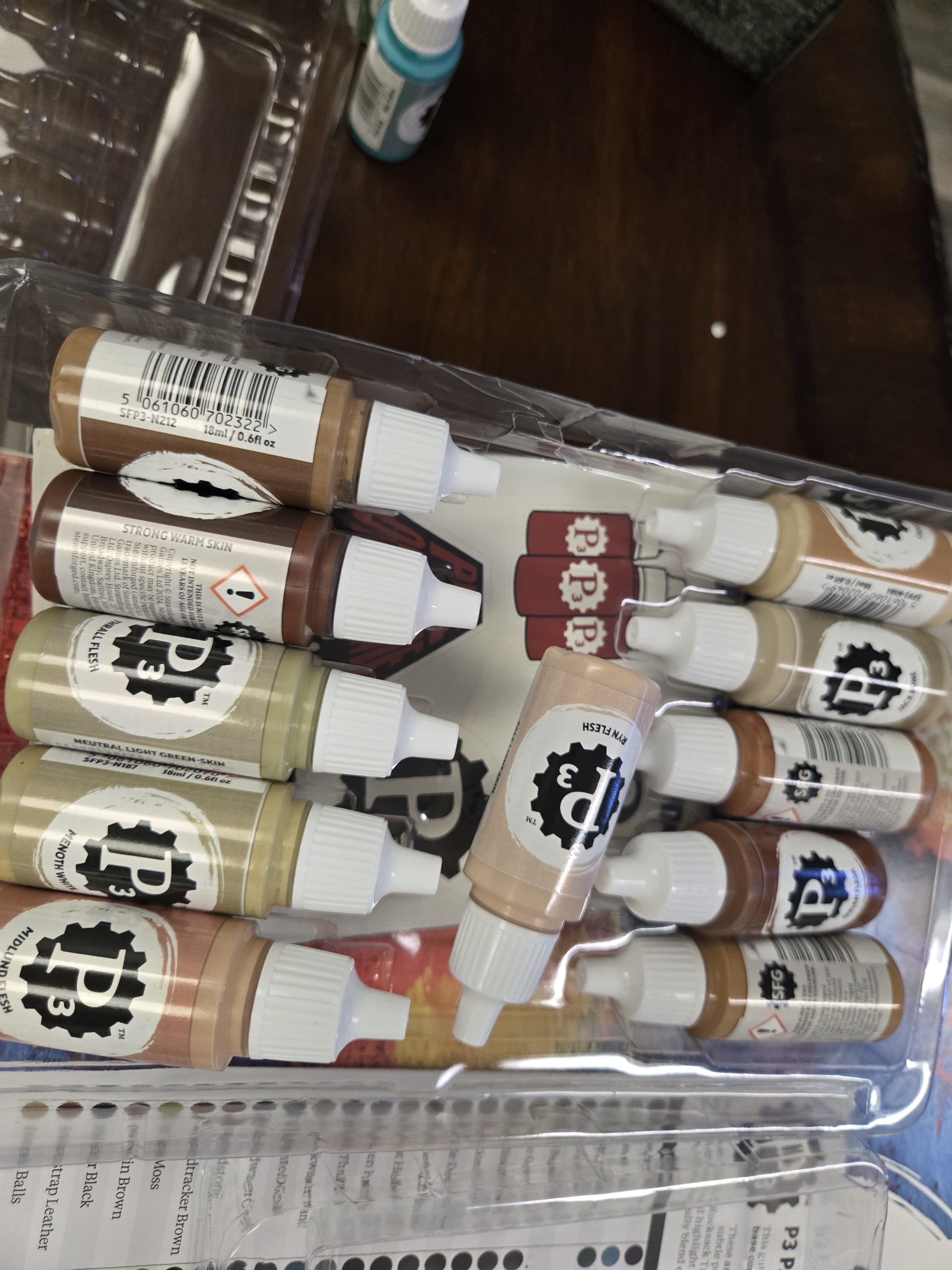
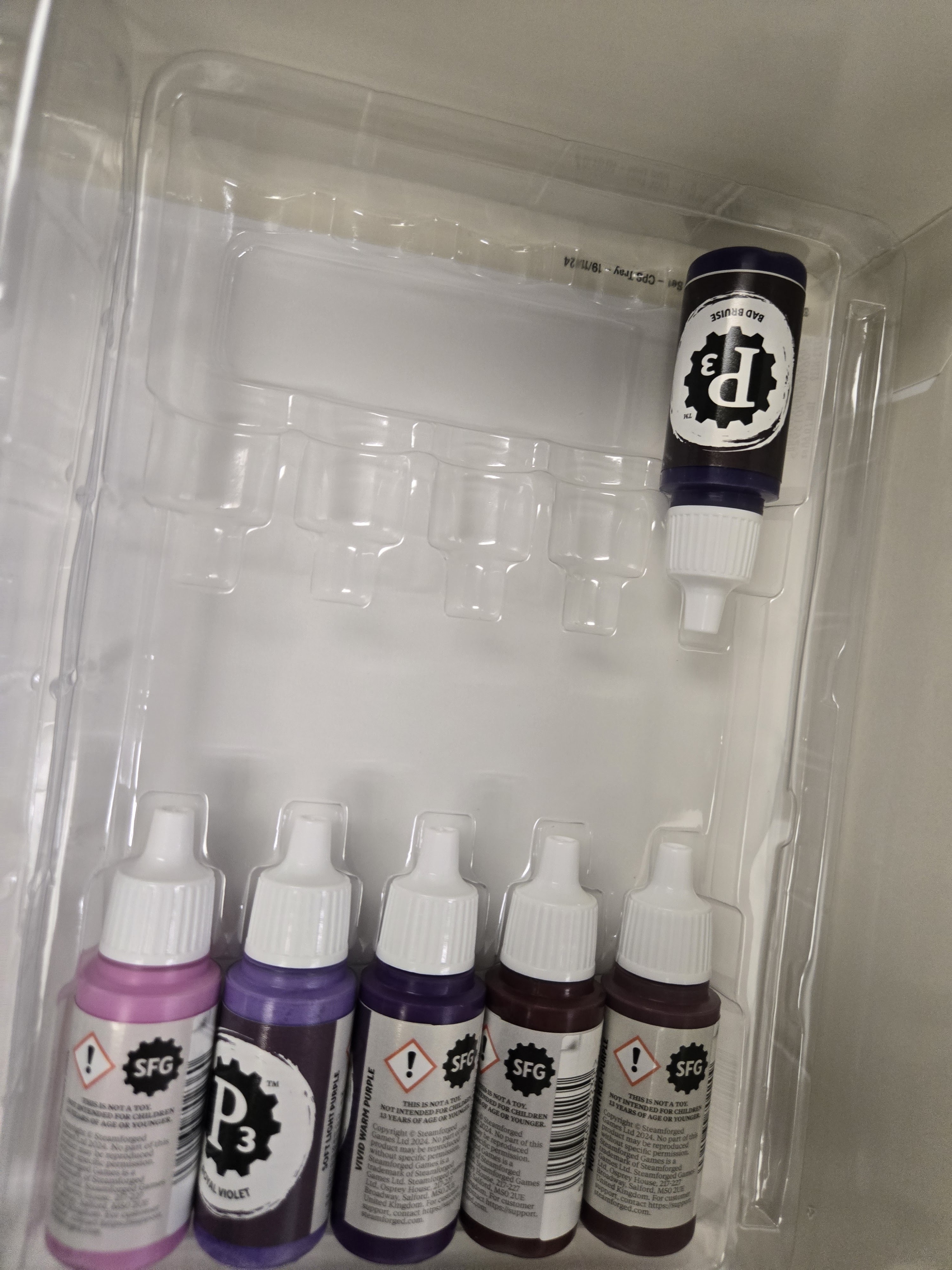
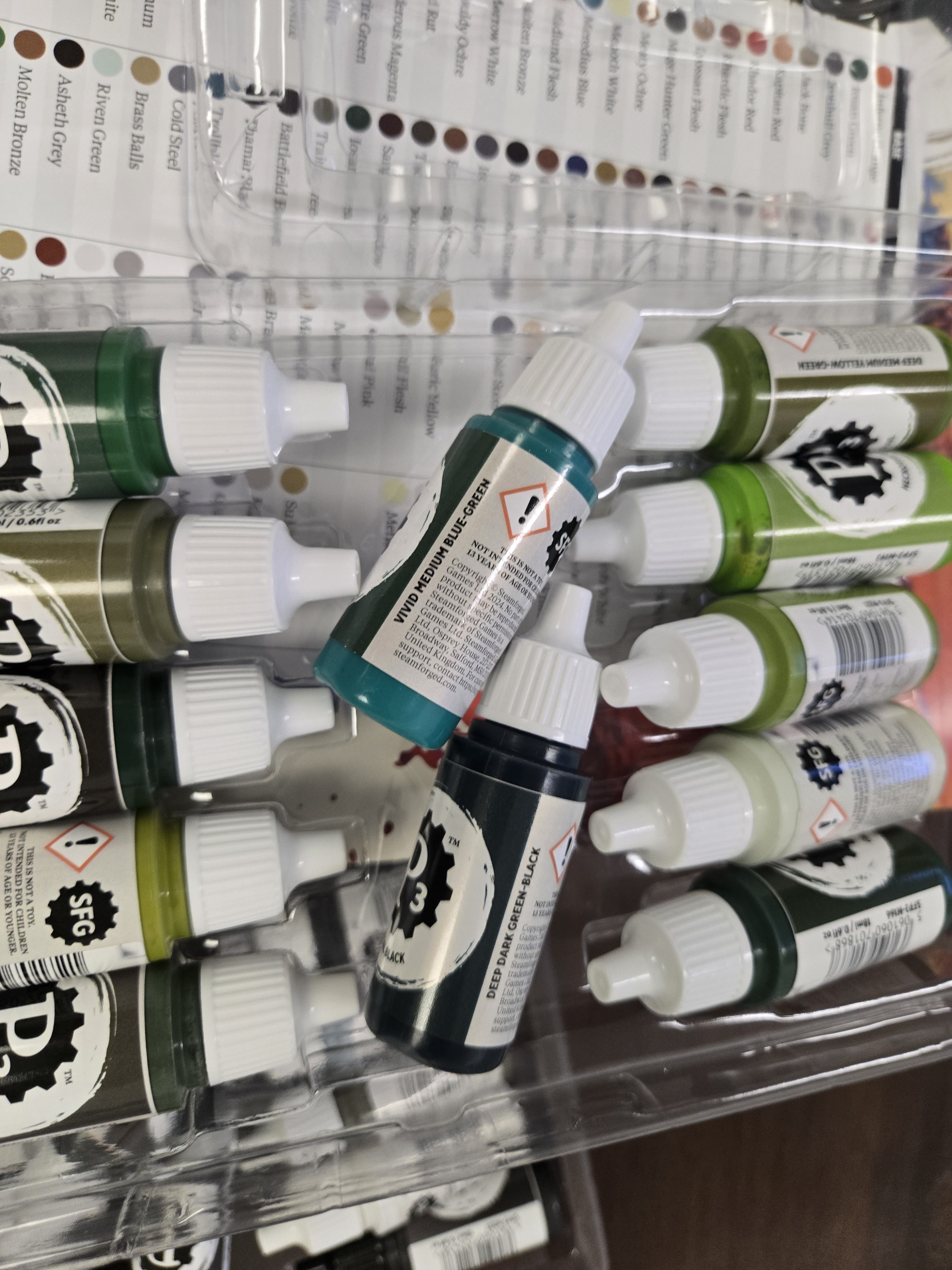
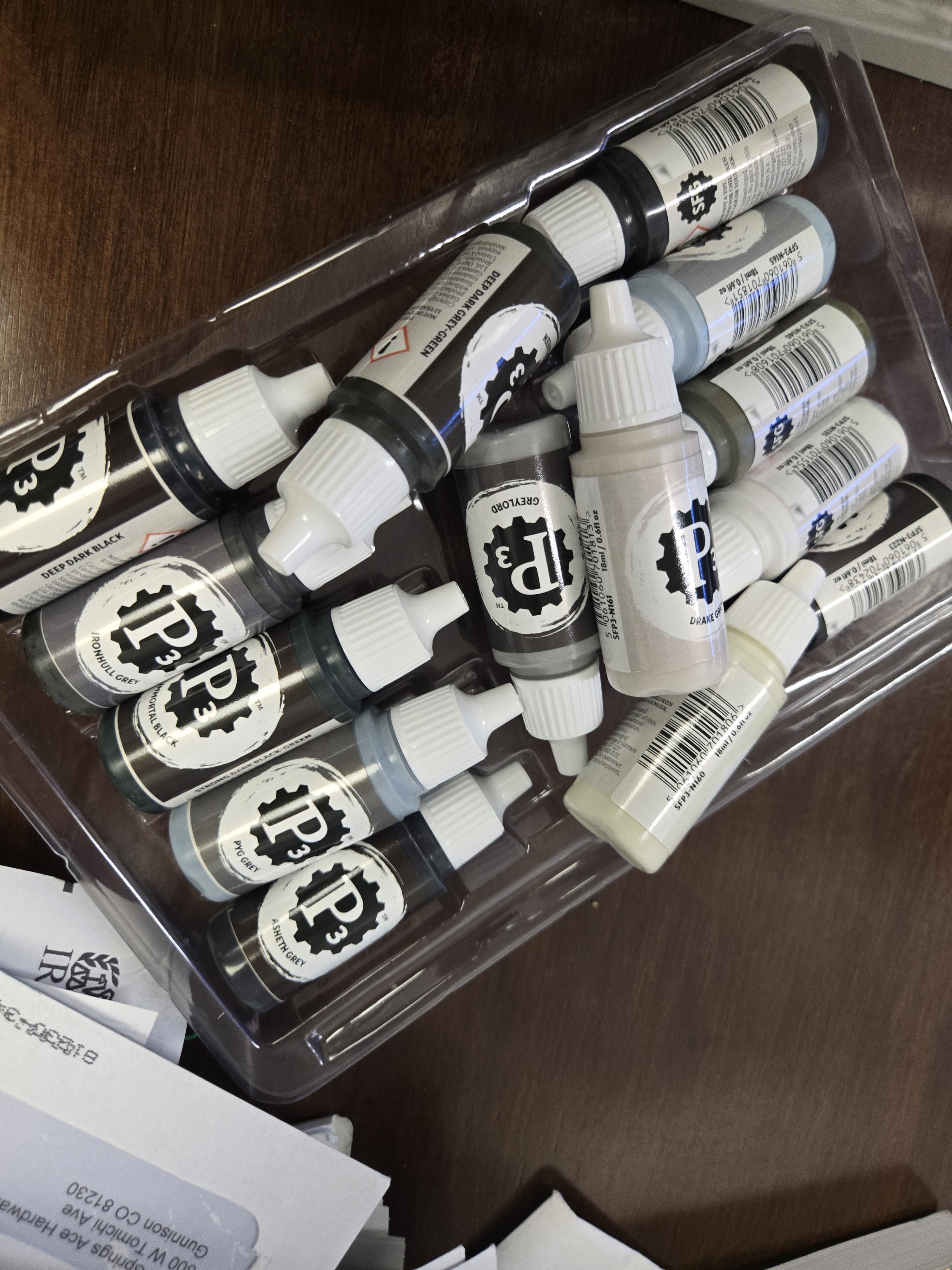
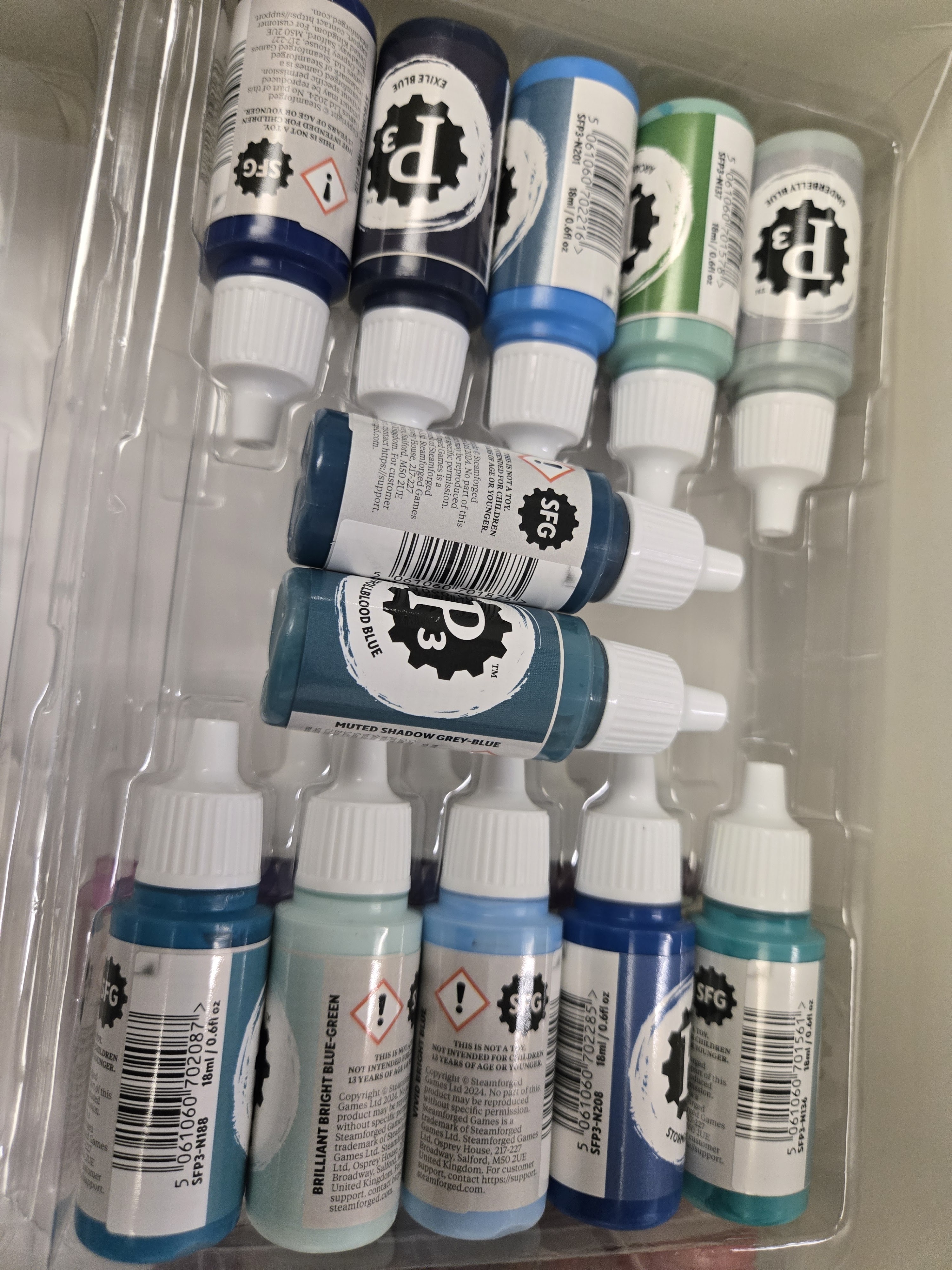
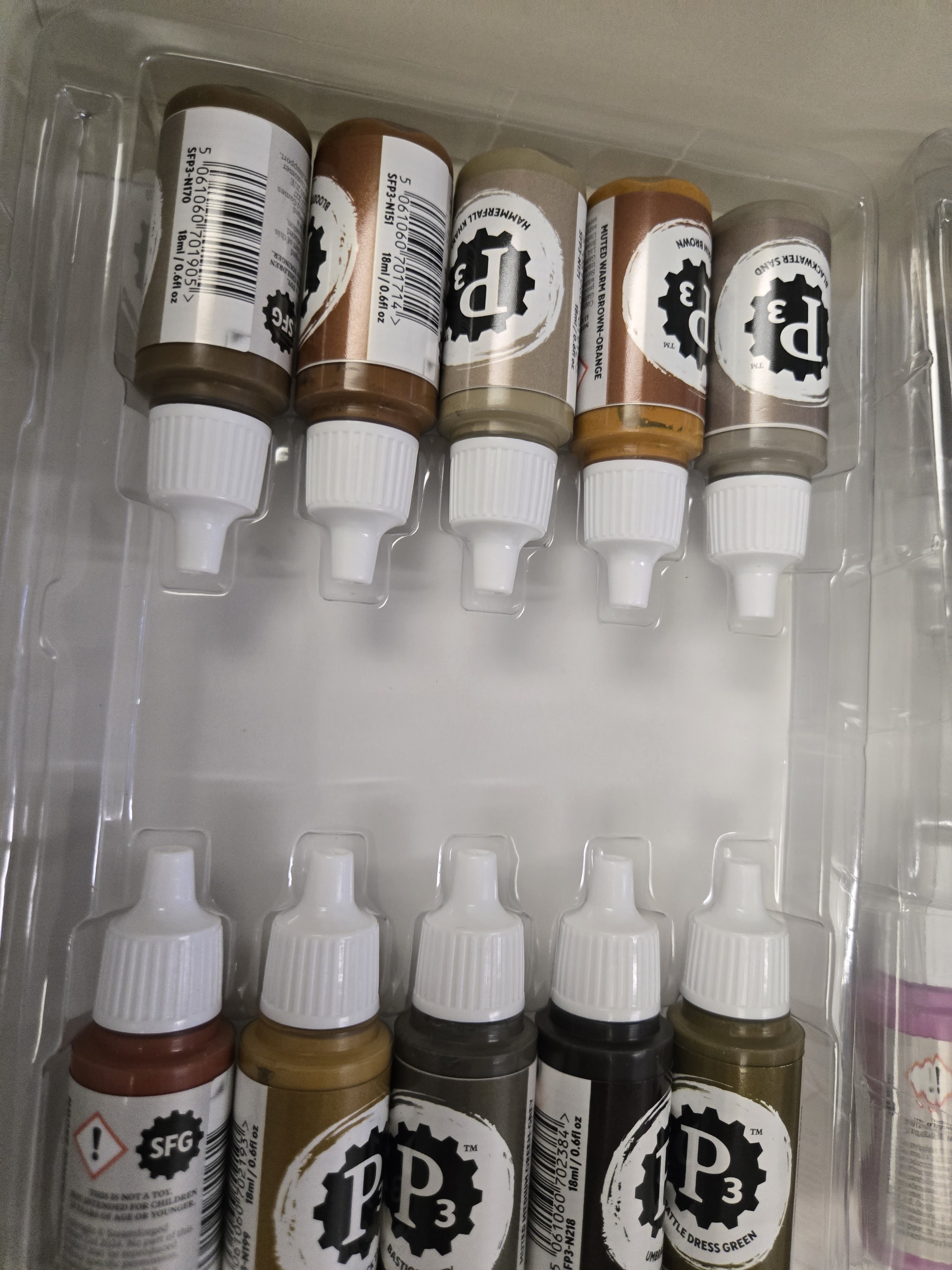
The box contained 12 metallics, 14 oranges and reds, 11 flesh tones, 6 violets, 12 Greens, 14 greys and whites, 12 blues, and a whopping 19 browns, for a total of 100 paints.

Flames of War Battle Report USA vs Soviets

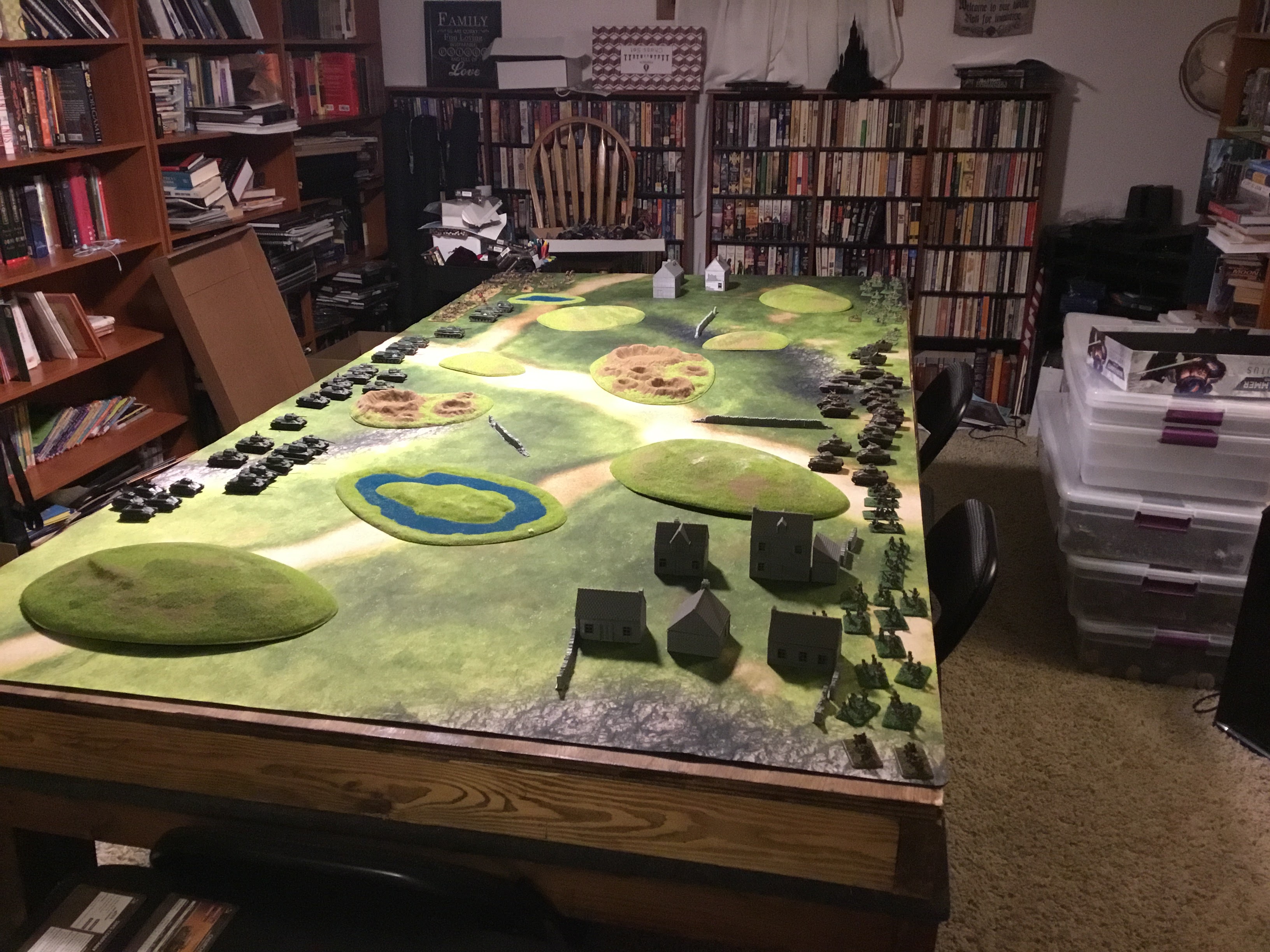
For whatever reason, I have never actually put my Flames of War models to the table. I have 5 armies, fully painted and angry ready for battle, but have never actually played myself. Over the next few weeks there are four battles scheduled so I can teach myself. The rules are vague as to how big of a table to use. How much terrain, deployment areas etc. I am setting up 100 pts on a my standard 8×4 table as such.

I have no idea how much space should be required. I have no idea what is a good list or a competitive list. I have read zero blogs and watched zero Youtube videos. We are going to take an adventure together.

SovietsAmericans
Churchill Guards Heavy Tanks23M4 Sherman Tank Company61
HQ32 HQ M4s7
3 Churchill 6pdr105 M4s18
T-34 Tank Battallion695 M4s18
HQ3Rifle Company39
7 T-34s21HQ 2 SMG Teams2
5 T-70s5Rifles 7 M1s 1 Bazooka 1 HMG8
7 T-34s21Rifles 10 M1s 2 Bazooka9
15 SMG Company+1 Komissar17Rifles 7 M1s 1 Bazooka6
3 82mm Mortar22 81 MM Mortar2
Light Tank Killer Company83 T30 75 MM Assault Guns3
4 45mm Guns84 M1917 HMG3
4 37mm guns6

First movement for the Russians has been made. I only had the Mortars in range of anything, unfortunately I did not have an artillery template.

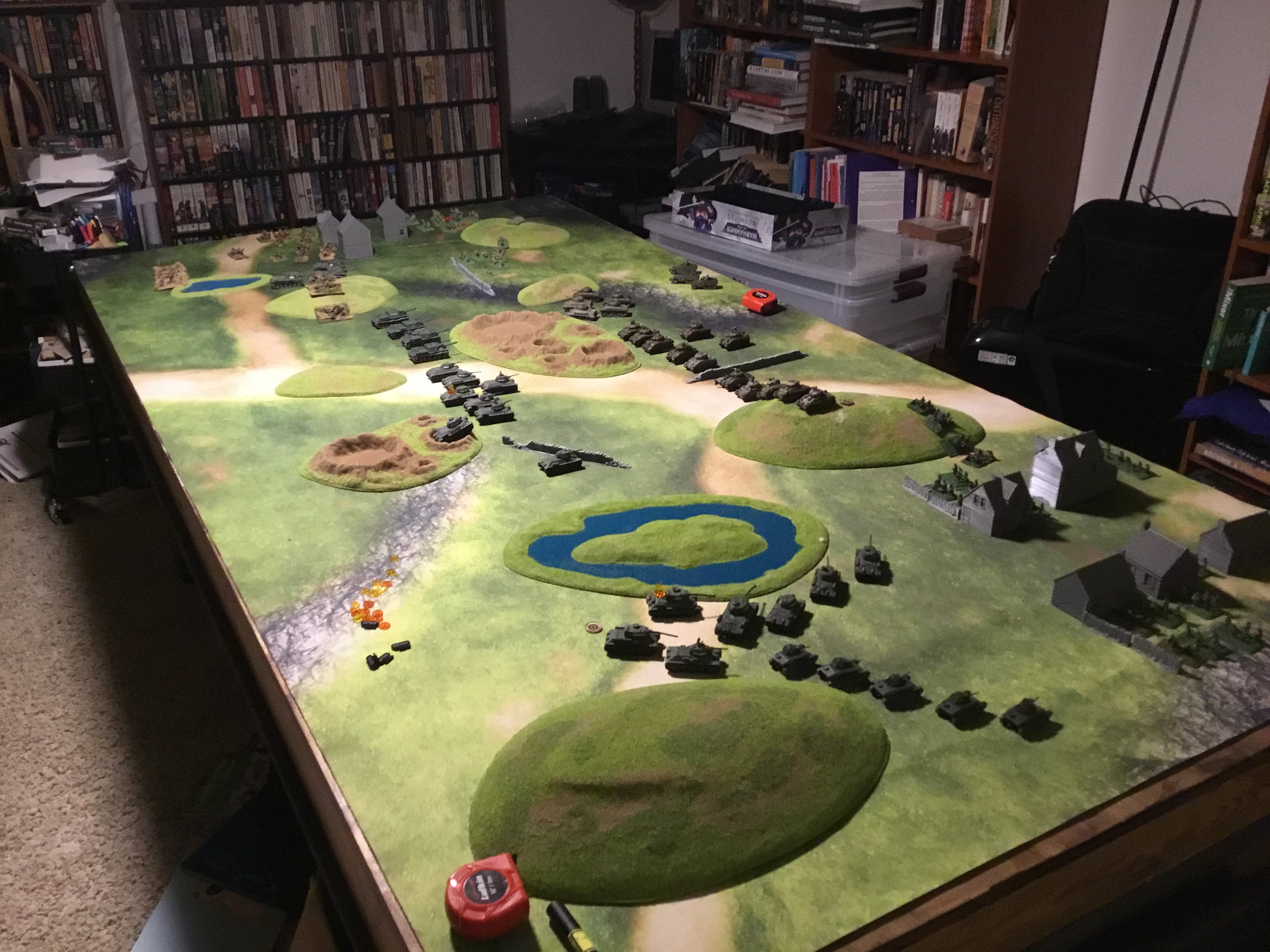
1 Week later I have an artillery template, plus a few dozen of the other sets of tokens you also need to play. The mortars killed a single set of the M1s. American go. The first few turns took a significant amount of time while I figured out the system. The whole when to save when to to save and other items were perplexing. I have watched several youtube videos and have a better grasp. The Americans did destroy a couple of T34s.

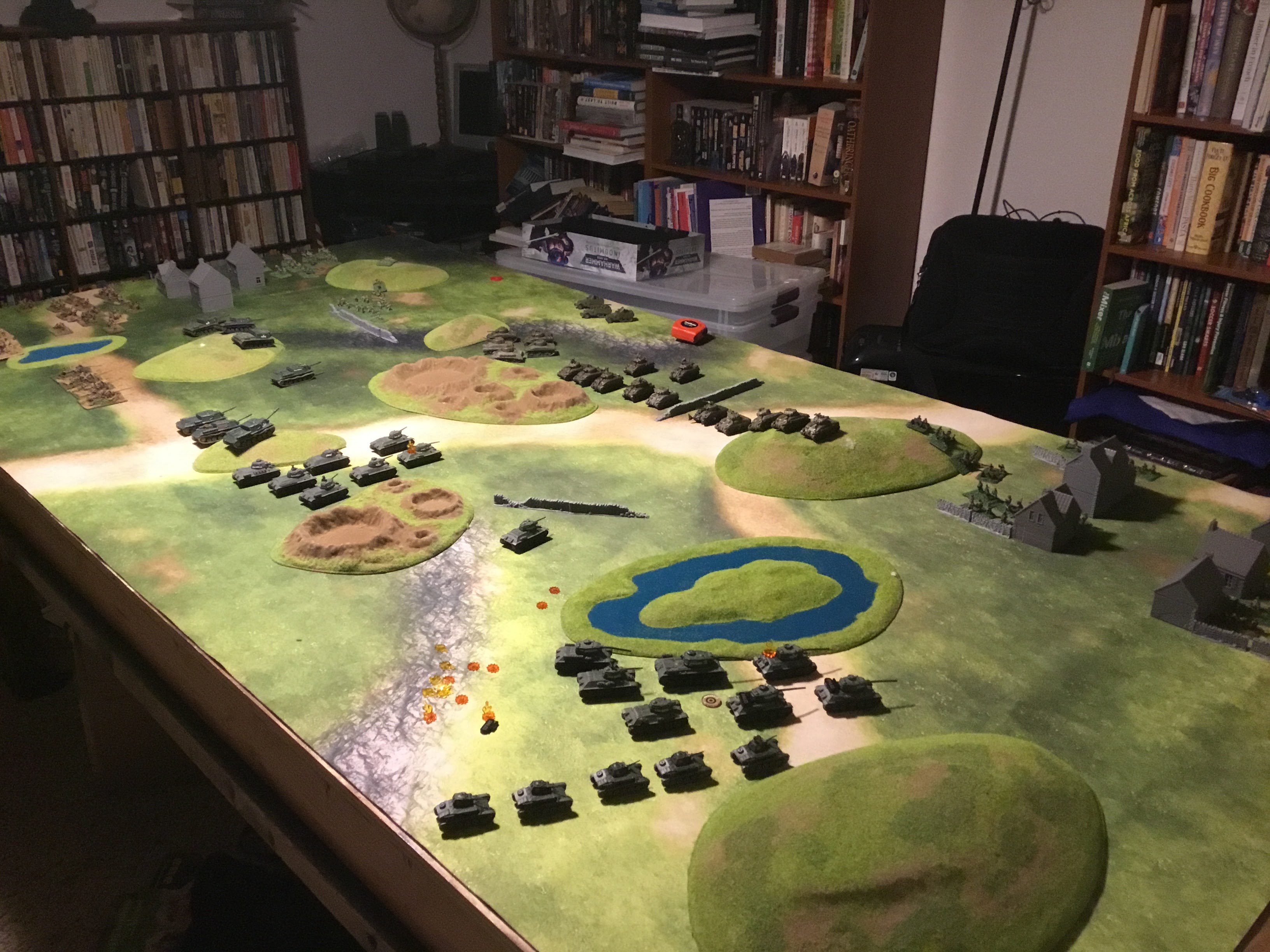
Turn 2 for both teams involved a ton of shooting and numerous tanks destroyed. At this point I think I have the basics of the game figured out. Artillery is very high-powered and can do a ton of damage to infantry. (no kidding) Tanks go up like popcorn making the battles very high-paced. Also any unit that is unsportted is at risk meaning you need well-rounded forces. A horde of infantry may take losses but can generally assault and stop a tank company. For either side I didn’t have much strategy, just kill and learn the rules.

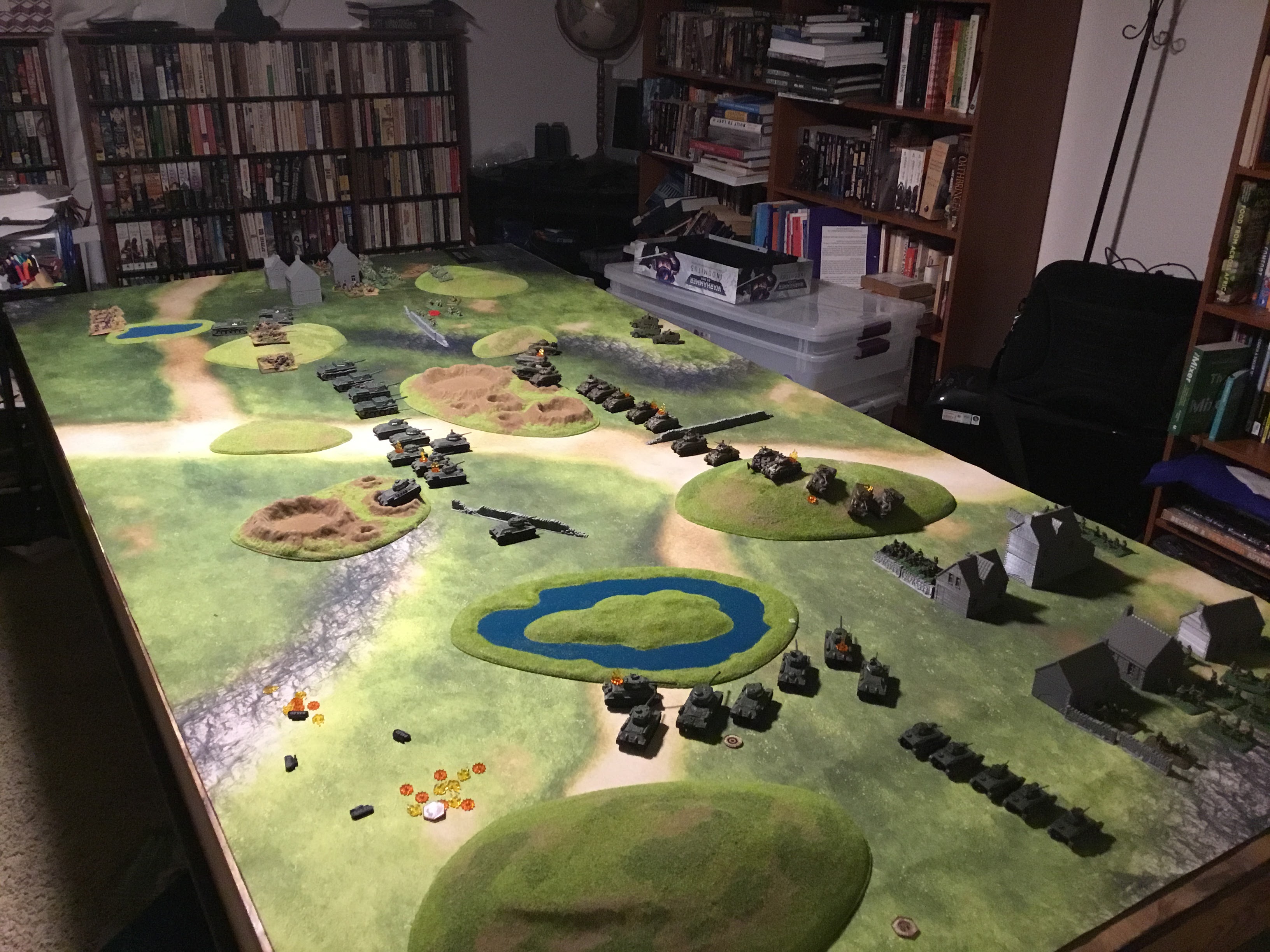
Turn 3 resulted in a ton of damage to the American side. You can see most of the infantry defending the top village were assaulted and destroyed, all but 5 of the shermans were destroyed vs the soviets still having about 12 tanks left. I called the game here. I the soviets just had too much firepower and it would have been a blood bath.

What I learned. This first mission had very little depth aside from lining up units for one side or the other to their best advantage. Table set up is huge and I need to be better. I half hazard through down some hills and other terrain not thinking my next table will be better. I think the game is balanced I wish elevation played a bigger role.