The 1467 Battle of Molinella was one of the most important battles in 15th-century Italy. It is also one of the first battles where firearms and artillery were extensively used. The battle resembled a pike and shot era battle more than a medieval one.
Wargame Use whatever rules you want to. If you have a good late medieval or early Renaissance rule set that incorporates firearms well, that would be my recommendation. 2 Players 8×4 Table For terrain, the battle was fought on the banks of the Idice River. Some minor hills, some shrubbery, and of course, the river on a short table edge.
Set-Up The two armies should be relatively balanced; your rules set will have good army lists. The Italian Condotta Army from DBM Book 4 can make some nice lists.
The battle of Mantinea in 362 BC was fought between two rival Greek city-states. Thebes and Sparta. While Sparta and Athens are the best-known city-states in ancient Greece. Thebes was renowned for its rich culture and esteemed educational institutions. It was located in the plains and had many agricultural exports.
Thebes was no slouch militarily either. In 371 BC, 8 years before our battle. Thebes defeated a Spartan army at the Battle of Leuctra.
The Battle of Mantinea was part of a larger civil war between the Thebans, led by the Boeotian League, and Sparta and Athens, which were aligned against their growing power. Thebes allied with the Spartans during the Peloponnesian War of 431 BC, which caused resentment in Athens. During the battle, the Spartans were able to slay the leader of Thebes. Although Thebes won the battle, they were unable to capitalize on their victory and achieve greater success due to the death of their leader.
Order of Battle Thebes, commanded by Epaminodas 30,000 infantry 3,000 Cavalry
Sparta, commanded by Agesilaus II 20,000 Hoplites 2,000 Cavalry
Wargame Rules: Hail Caesar, DBMM, any other large Bronze Age battle system 2 Players Models Needed Two armies’ worth of hoplites and skirmishers with light cavalry. The Theban military should be about 20% larger than the Spartan army. For example, if you are playing DBMM 400, the Thebian should have 480. Historically, the famous Spartan warriors numbered only about 1,000, and that should be reflected in list building. Feel free to have many commanders and allies, as that was a common feature amongst the forces. Terrain: The battle took place on a large flat plane flanked by two mountains.
Objectives: The Spartans must try to kill the commanders for the Thebians. The Thebians must defend their commanders and rout the enemy.
June 28th, 1575 marked the beginning of gunpowder-based warfare in Japan. The 38,000-strong allied forces of Oda Nobunaga and Tokugawa leyasu handily defeated Takeda Katsuyori and his 15,000 soldiers. The victory united Japan for the first time in several centuries under Oda Nobunaga.
The battle was actually two different engagements: a siege battle of Nagashino Castle, and a battle about 2 miles away at Shitaragahara. We are going to focus on the siege battle.
Wargame Scenario
2 Players For Use with Pike and Shotte Models Needed: Use whatever rulebook you want, but the Nobunaga player should have twice as many models as the Takeda player, including a large portion of gunpowder armed forces. The Takeda player should have a medium-sized cavalry detachment positioned outside the walls. Terrain: The battle took place on a peninsula, and walls for a castle are a must.
Set-Up The Nobunaga player should have his army positioned in an attacking position. The Takeda player should be defending with their cavalry hiding in the woods.
I recently received the P3 Master Series Paint Set. My box opening is available here.
I have been working with the paints for about two weeks and have painted 30 or so models using the paints. I did a variety of models, such as Star Wars Legion, Reaper Bones, Warhammer, Marvel Crisis Protocol, Lord of the Rings, 3D prints, and some Flames of War. I used the paints in several ways, direct from the bottle, thinned, airbrushed, and as glazes. I also used wet blending, layering, edge highlights, base coating, etc. There were no scientific comparisons, color matching, or very professional items; I just wanted to give my thoughts on the set.
When I started my hobby, I was almost mystified by the quality of the P3 paints and how hard they were to get. Professional painters swore by the paints. I had to have the Kickstarter to see what all the fuss was about.
Conclusion
As an amateur painter, I did not think these paints were for me. I would pass on rebuying them. I think I could see the appeal for a professional painter, but I don’t have the skill to maximize their potential.
As I stated in the unboxing, there were no mixing mediums, primers, or washes, so I would expect to come with a set like this.
The paints themselves were pretty thick. I mixed every paint in the bottle using a vortex mixer for about 45 seconds before using. Many paints broke on my wet palette after 15 or 20 minutes. When the paints were thinned too much, instead of just being thin and needing a second layer, the brush strokes were obvious and hard to hide, especially when wet blending.
I tried about 70 of the colors included in the box. They all had a lovely, rich hue and good coverage when appropriately thinned. The ratio to thin the paints differed with every color, and it took four or five tries to get the correct ratio. Many of the paints finished with a semi-gloss sheen. I prefer my paints to finish matte, but I could be incorrectly using them.
The P3 paints are a step below Army Painter and Vallejo, but a step up from Reaper and two steps higher than Citadel. I would still consider Two Thin Coats the top brand for amateur use.
First Experience
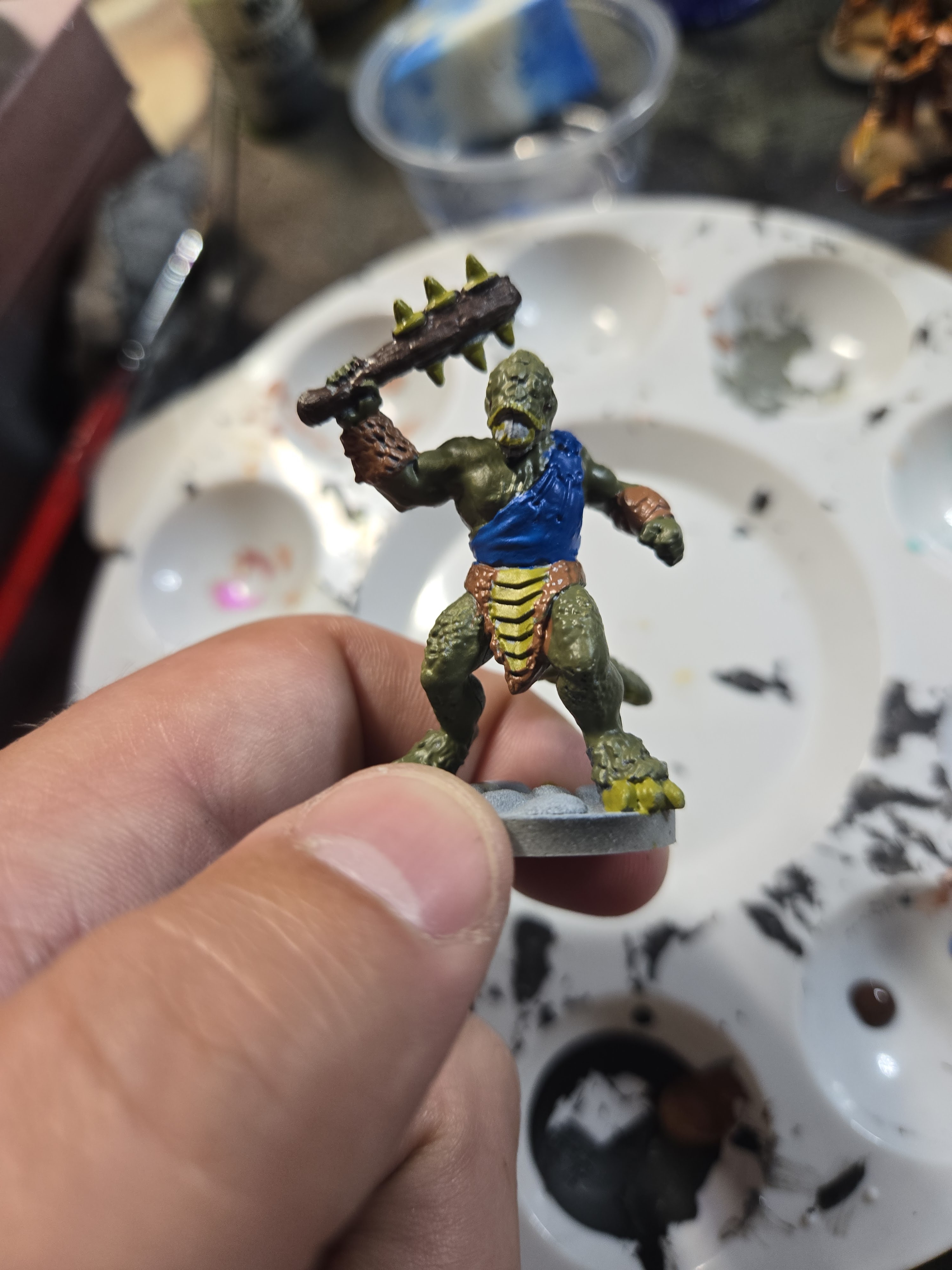
I first tried a DND Reaper Bones model I had already primed. I wanted to see what the paints could do directly from the bottle—no thinning, no wet palette, just paint.
You can see the rich color and bright hues, but you can also see how thick the paint was when it came from the bottle and how it muddled many details.
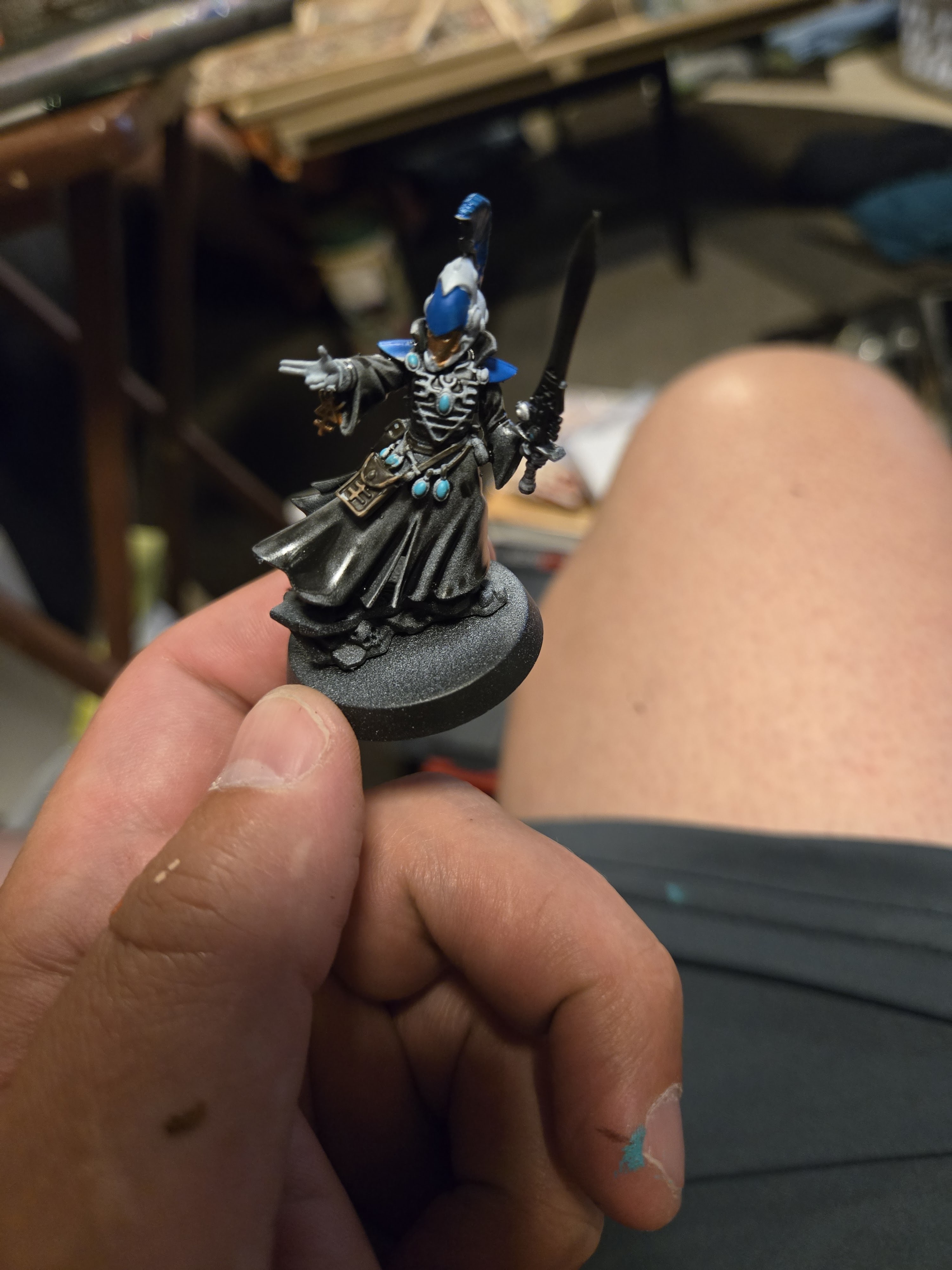
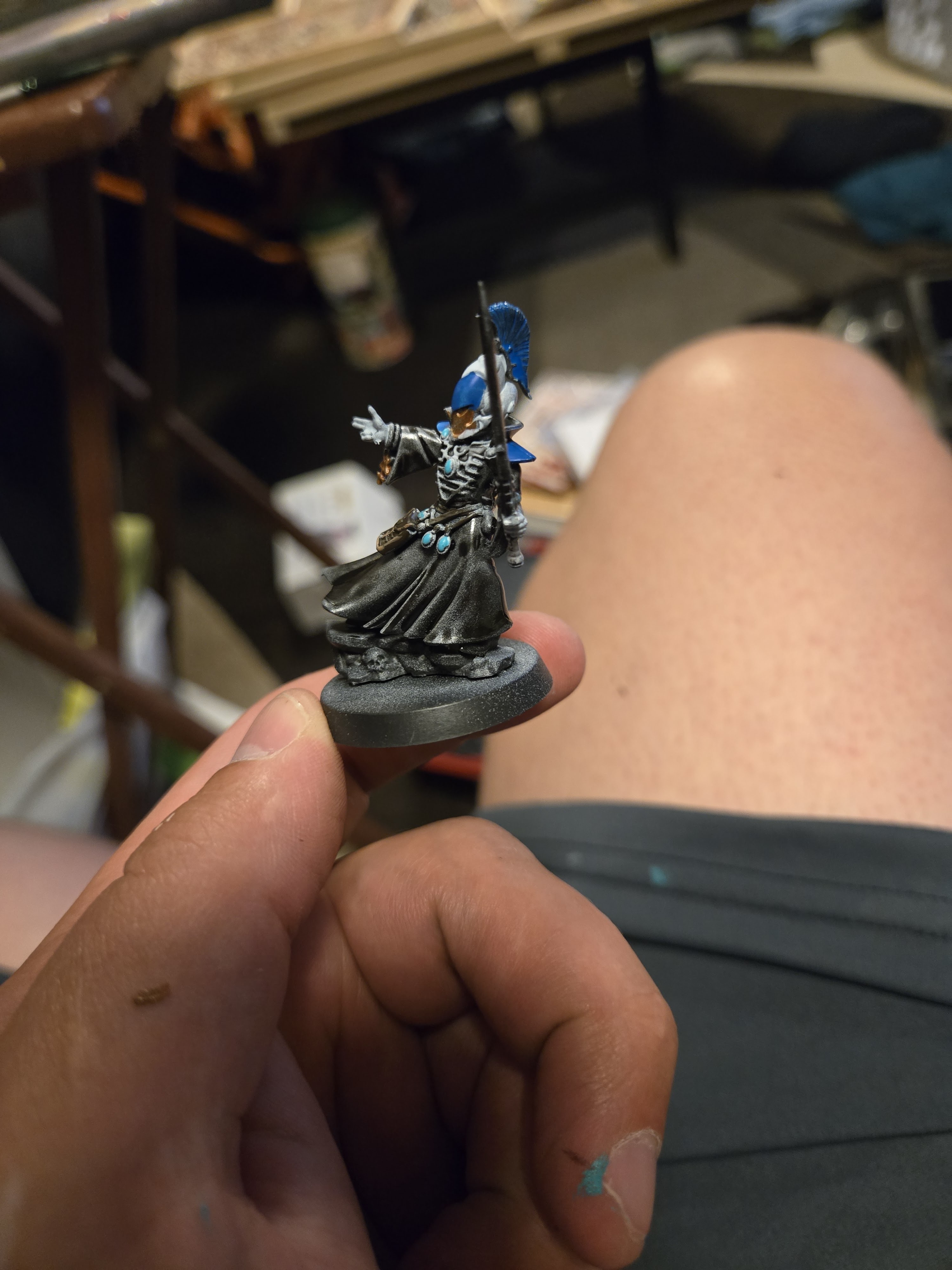
My next model was a simple Aeldari Warlock. This time, I thinned the paints and used the black as a glaze for the bottom robe, which turned out nicely. The unthinned paint made a very nice edge highlight. You can see it on the satchel and the model’s chest piece. The metallic visor didn’t work well; it was gloppy and hard to control.
You can see the stark difference between the unthinned and thinned paint. I don’t see much difference between thinned and unthinned in my usual paints like Reaper, Armypainter Air, and Vallejo Air. This was a big step in seeing so much difference.
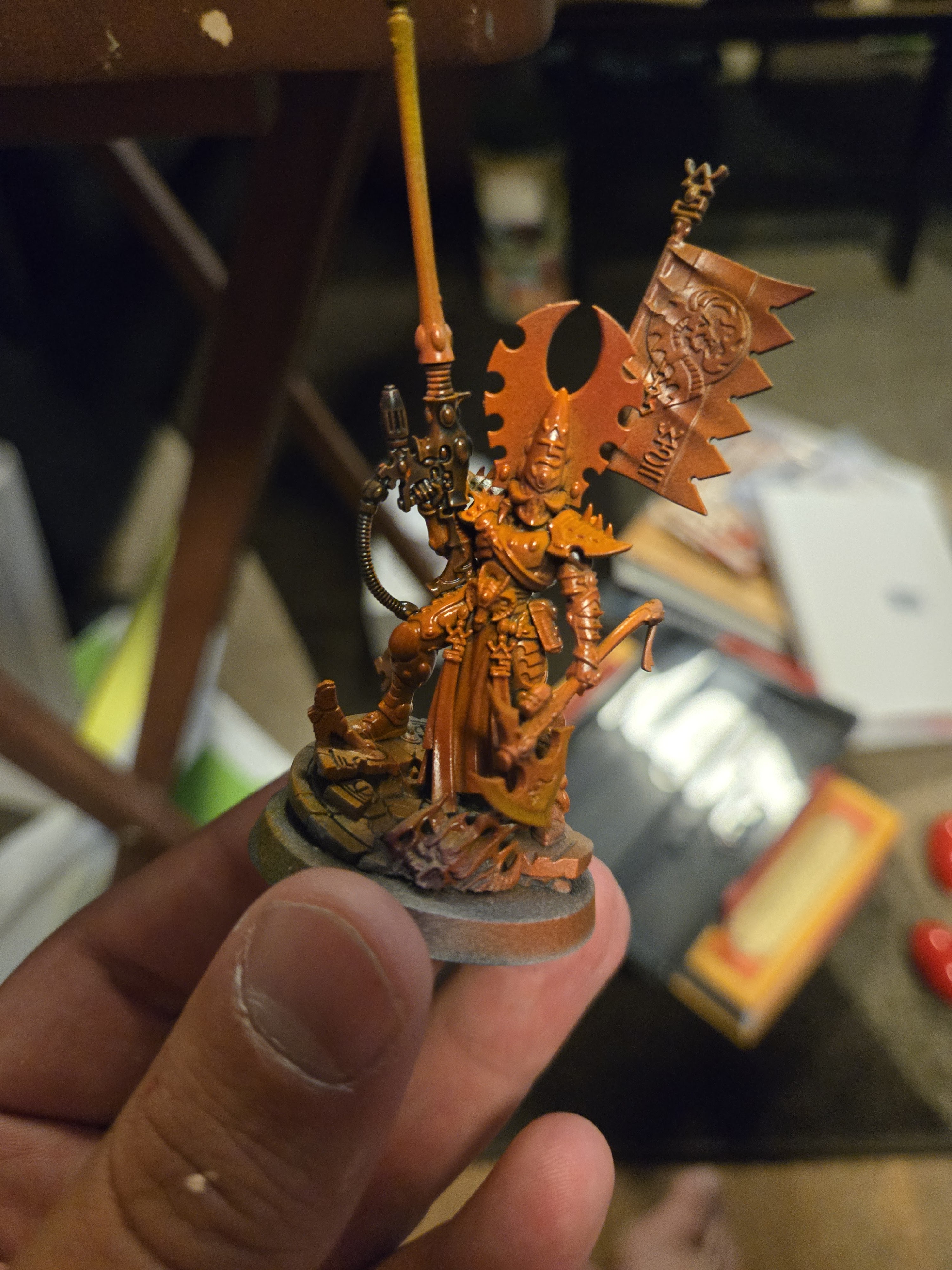
My next model was Fulgrim, also for the Aeldari. (I am in a league and picked Aeldari as my army.) I had already done some airbrush work on the model, which you can see below. For my P3 test, I simply did detailed work.
Below is the finished product after my detailed work. I won’t do bases until all models are ready.
The paints were difficult to control in tight areas unless the mix was perfect, especially in the face area. This is just something to be aware of as an amateur painter.
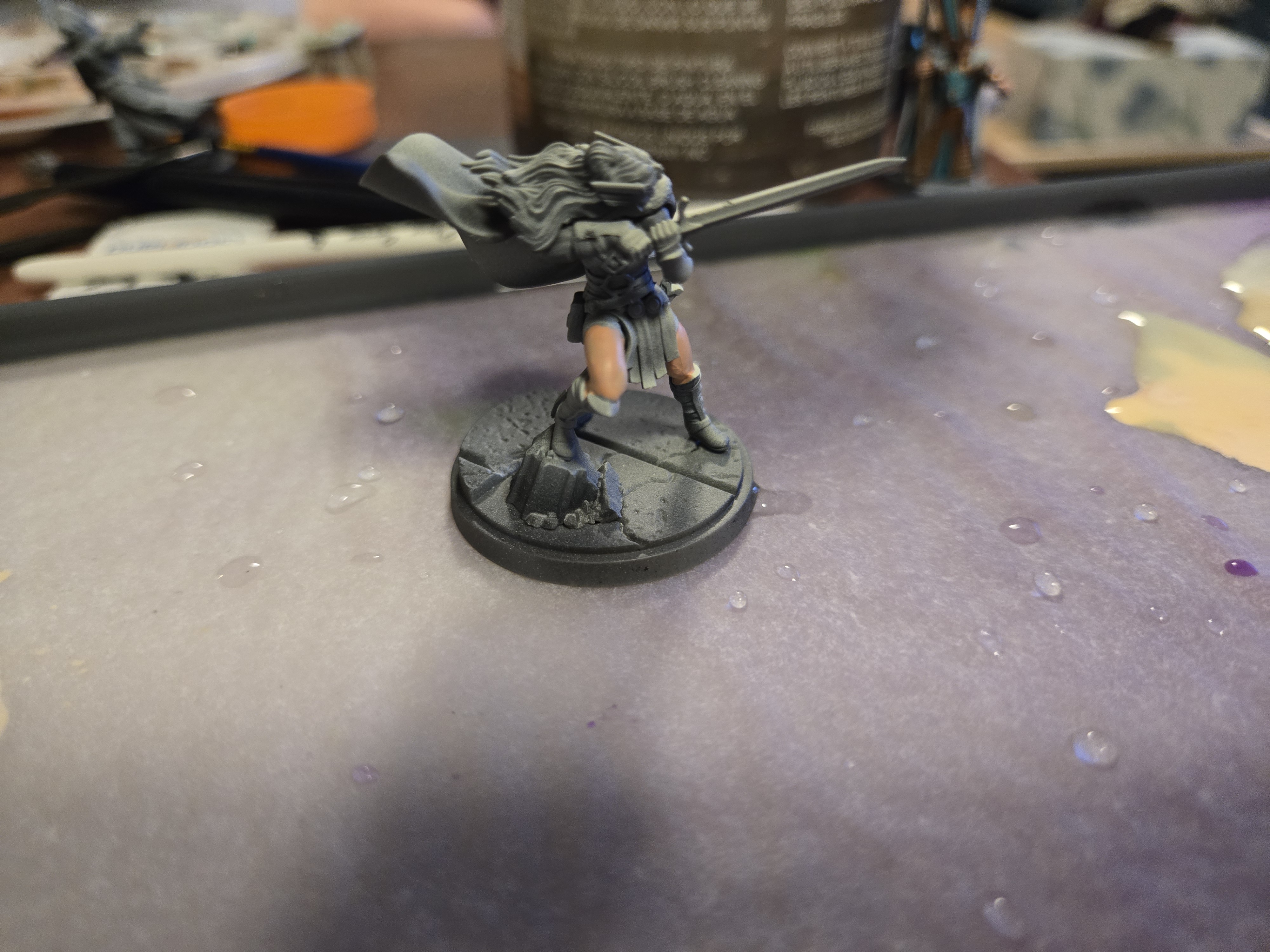
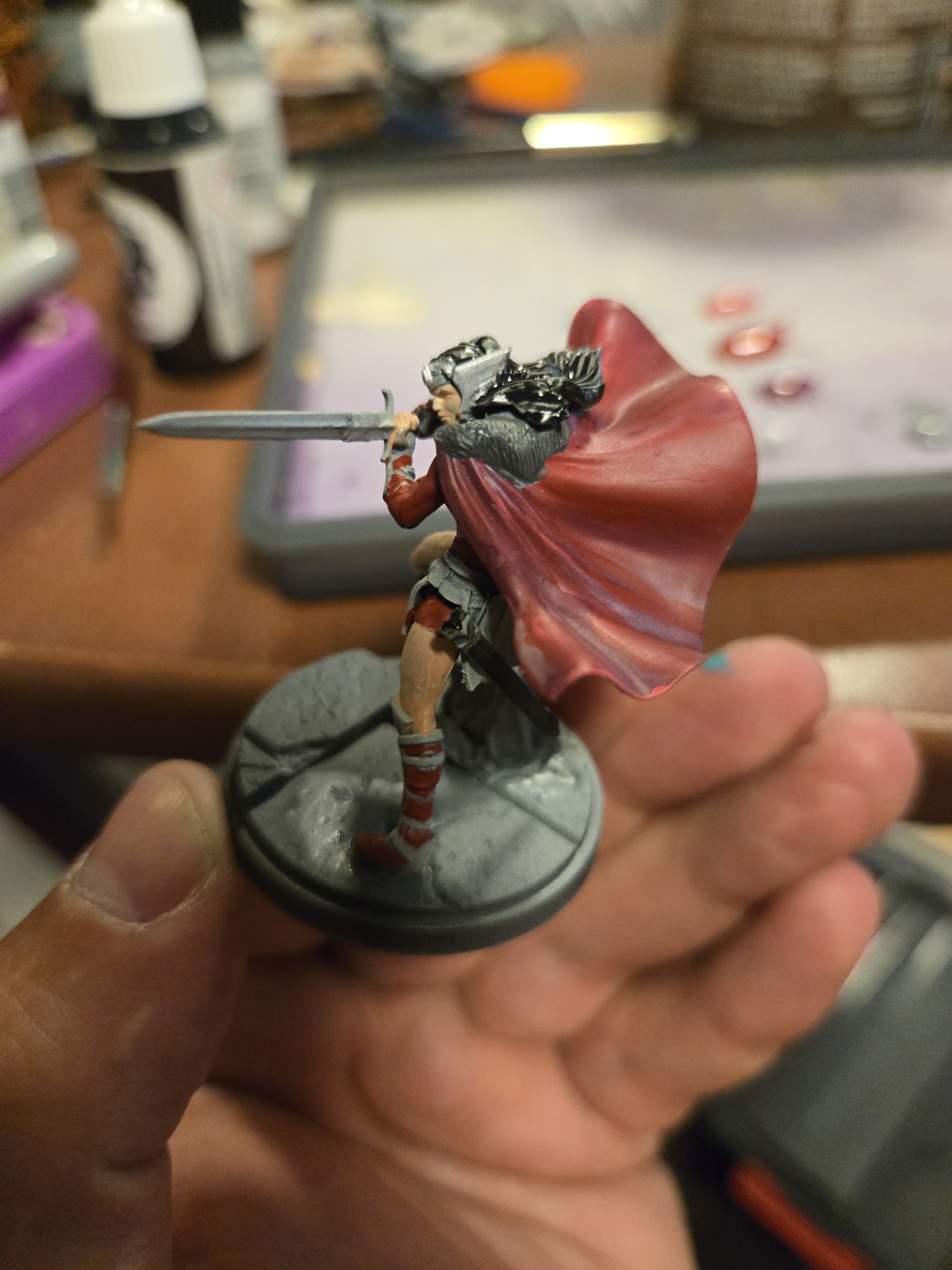
Marvel Crisis Protocol Lady Sif. Thinned paints, just base coated. I struggled to wet-blend the cloak. I will say I am not a good wet blender.
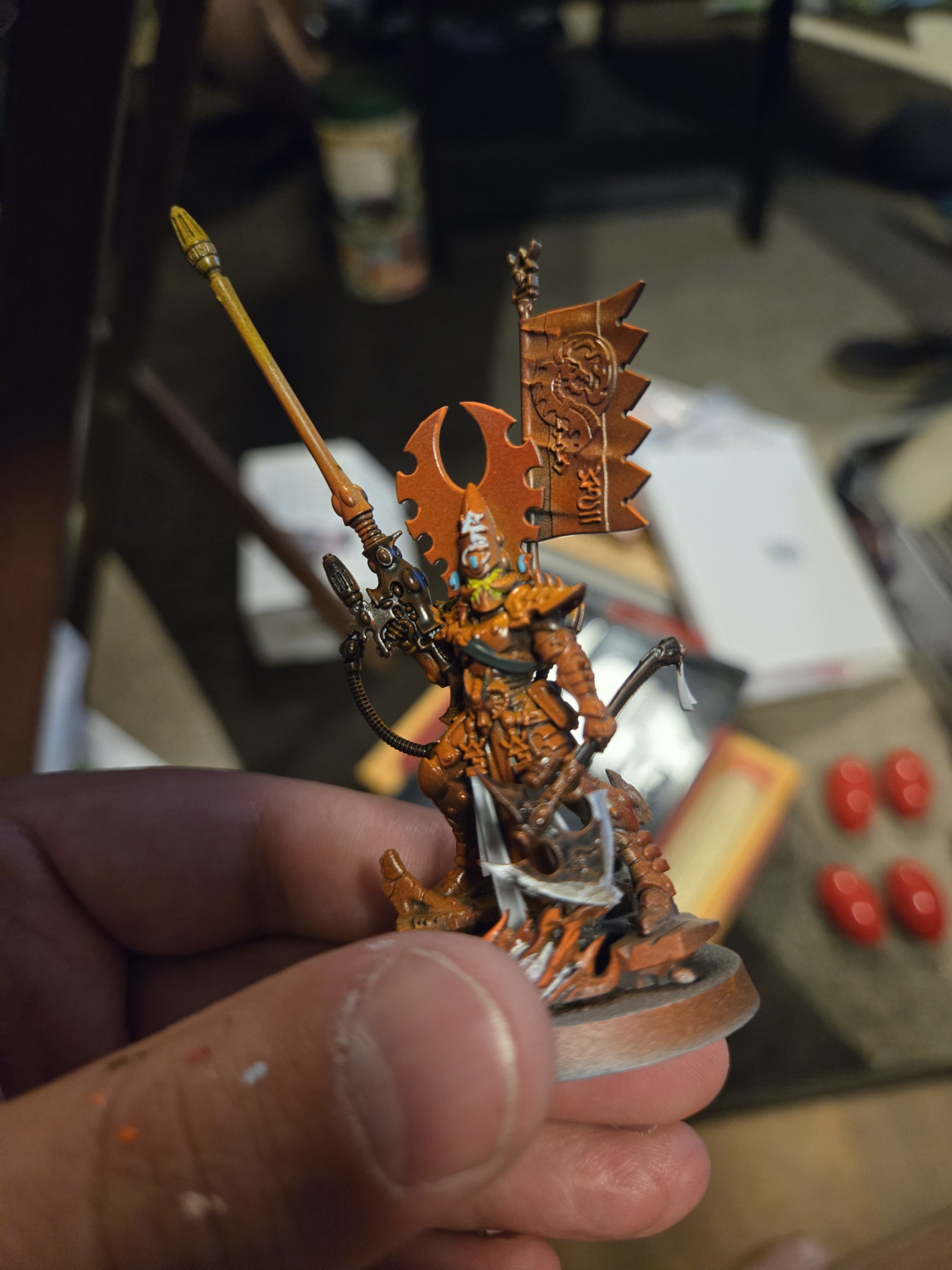
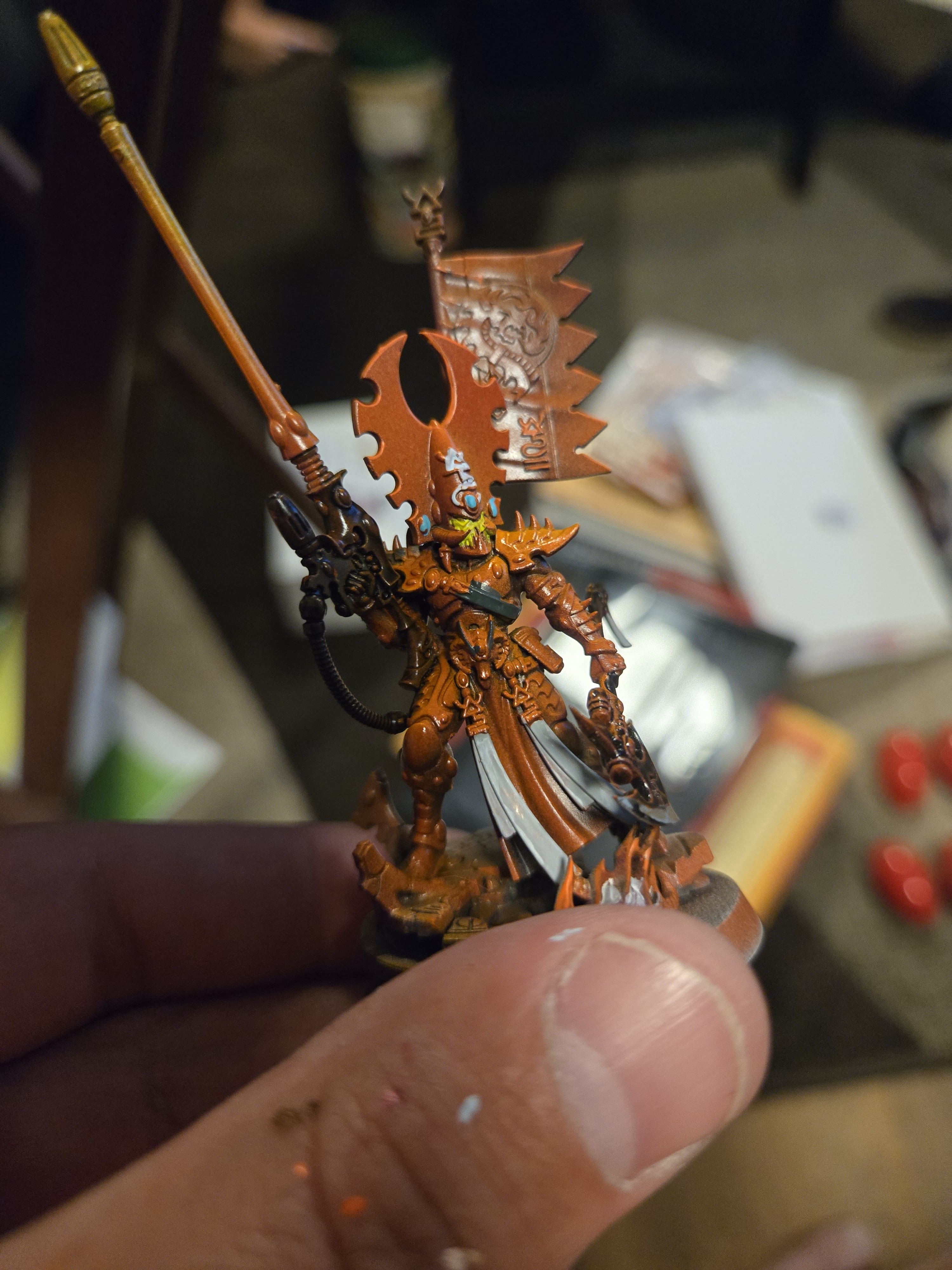
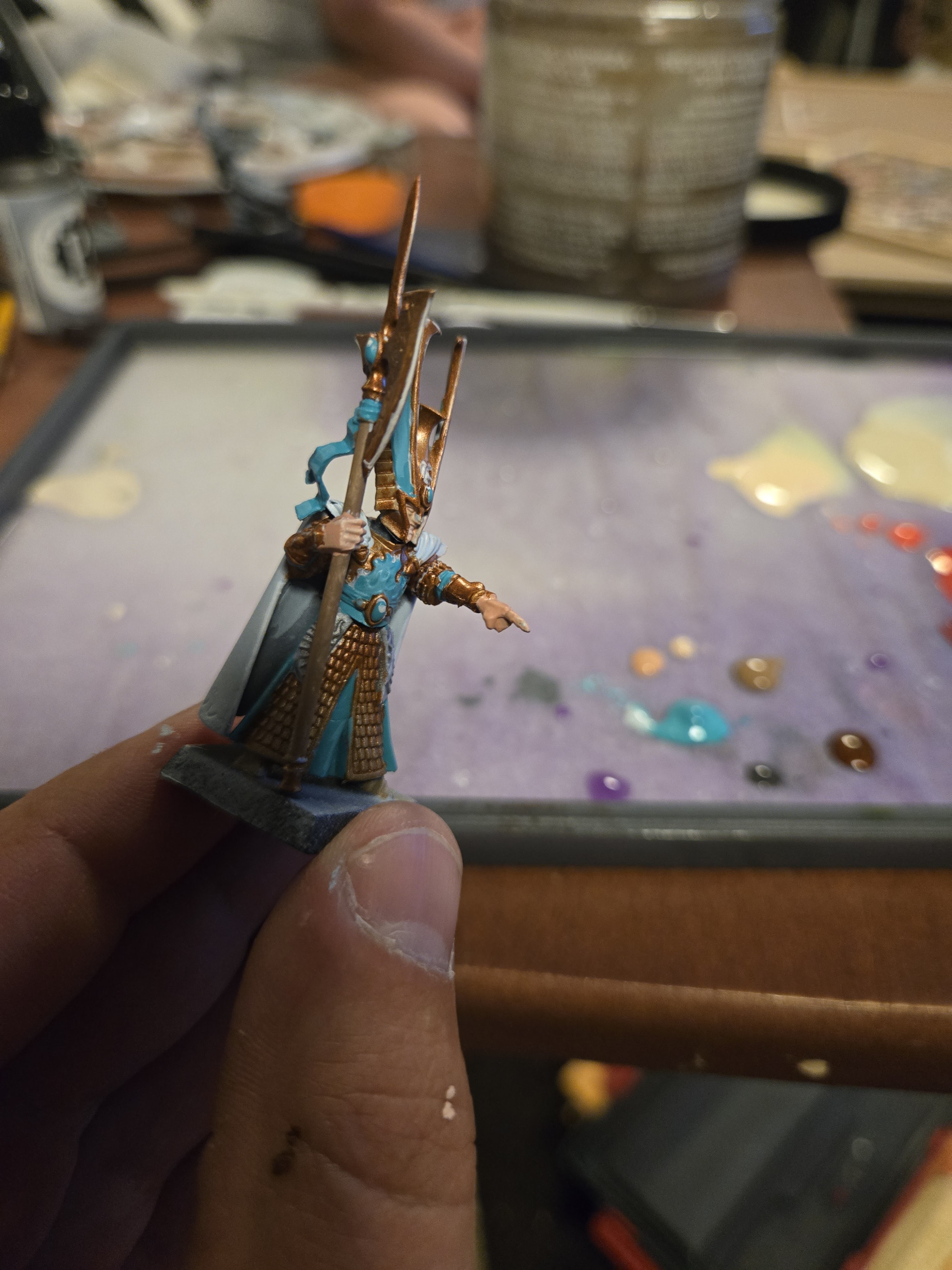
A zenithal primed phoenix guard captain.
It is crazy how terrible a paint job can look zoomed in. At 3′ distance, I was happy with this model. The paints at times flowed too well, notably the flesh color around the hands. The metallic bronze and the blue did not flow nearly as well. You can clearly see the unpainted areas of the model in the zoomed-in photo.
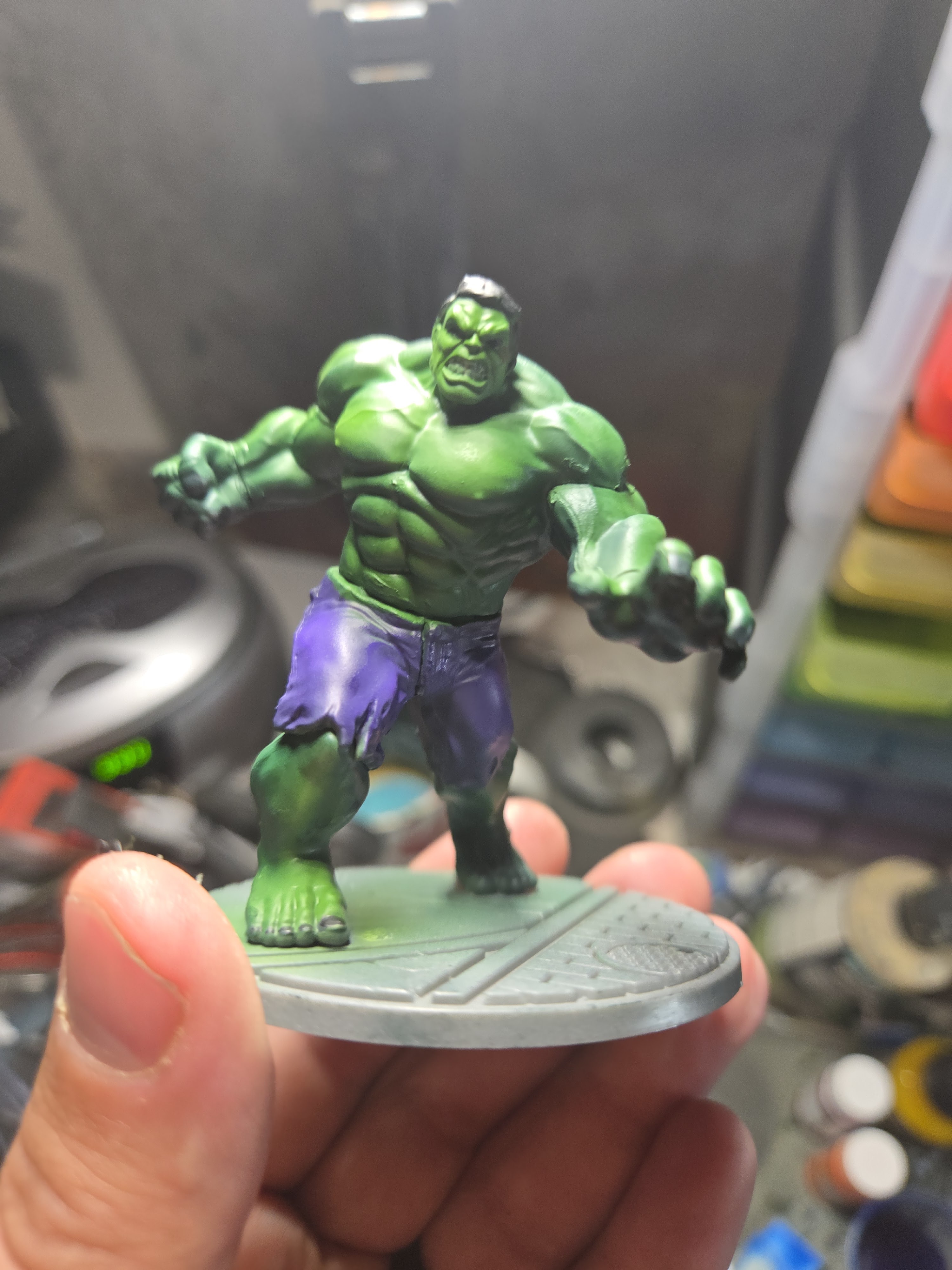
My last test was a fully airbrushed Incredible Hulk for Marvel Crisis Protocol.
When properly thinned and mixed with an airbrush flow improver, the paints performed better than expected. In fact, I think they performed better than Citadel paints. They gave a nice, even flow with minimal pixelation. The pigments covered nicely; overall, they created a nice model with sound effects.
You can clearly see the folds in the trousers and many details. Again, this model was fully airbrushed. I only used a brush for the eyes and the nails.
There are clearly defined shadows and highlights. My lines weren’t super clean. Again, I’m happy with how the paints were done with the airbrush. You can also see that there isn’t any spidering or splatter.
This is a historical fact that goes unnoticed by most of the world. Spain, France, and Portugal spent many years under Muslim control. The final expulsion of Muslims from Spain didn’t occur until 1614. In 1280, as part of the centuries-long Reconquista, Christians had one of their worst losses in their many wars against the Muslim kingdoms.
Muhammad II was able to lure the Castilian forces into an ambush with a feigned retreat tactic near the City of Moclin.
Crown of Castile Infante Sancho 3,000 knights and soldiers
Emirate of Granada Muhammad II 8,000 Soldiers and Horsemen
Scenario For DBMM, Hail Ceasar, any medieval style rules.
Number of Players 2 Forces Needed, Large lightly armed Muslim force, much smaller but heavily armed crusader style force including a contingent of heavy knights representing the Knights of Santiago Terrain 6×4 table with some wooded edges
Objective Christians, to save their Knights of Santiago, Muslims, destroy the Christian Force
Set-Up
The battle should be joined with roughly equal forces on one end of the narrow edge of the table. The game starts when the Muslim player puts his light cavalry and skirmishers on the flanks of the battle and attempts to surround the Christians.
The final of five primary carrier-on-carrier engagements during the 2nd World War. The Battle of the Philippine Sea was a decisive victory for the Americans. It left little doubt as to who would become the victor in the Pacific theater. 1700 Aircraft, 24 Carriers, 12 Battleships, 30 Cruisers, 100 Destroyers, and 50 submarines participated in the battle.
The casualties were light from a numbers standpoint. 3,000 total KIAs between the two sides. However, 1/3 of the Japanese carrier force was sunk, with another 1/3 damaged. 550 of their 750 aircraft were destroyed.
Order of Battle Japan 1st Mobile Fleet Jisaburo Ozawa 3 fleet carriers 6 light carriers 5 battleships 7 heavy cruisers 2 light cruisers 31 destroyers 24 submarines 6 oilers ~450 carrier aircraft ~300 land-based aircraft
Game System, Victory at Sea or some other Large WWII Naval Game 2-10 Players 8×16 Table Forces Needed (see above order of battle) Large blue mat with one minor island on the edge, containing an airfield
Objective Win the Battle per the rules of your chosen system
Set Up, divide your forces into the task forces that were historically present at the time. Engage in an all-out brawl to decide the fate of the South Pacific. I recommend reducing the American forces so the Japanese have a nearly even engagement.
Each side could easily control a task force. Historically, the two Japanese carriers were destroyed by American submarines.
Level up your Game
The battle was spread out over a wide area. Put the games in different rooms and have a central commander have to communicate via telegram to the various sectors.
On June 19th, 1821, during the Greek War of Independence against the Ottoman Empire, one thousand Greek revolutionaries faced off against 2,000 Ottoman cavalrymen. During the battle, the Greek cavalry fled, leaving the 500-member sacred band to face off against 2,000 Ottomans. The Sacred Band was nearly destroyed to a man, while their sacrifice bolstered their cause.
Order of Battle Greeks Alexandros Ypsilantis 500 Cavalry 500 Sacred Band Infantry
Ottoman Kara Ahmed 2,000 Cavalry
Wargame Use Sharpes Rifles or any other skirmish-style wargame from the age of Horse and Musket. 2 Players You will need models equivalent to whatever wargame rules you are using. The Greek cavalry should have 25% of the Ottoman cavalry and a similar amount of infantry.
The Greek cavalry never participated in the actual battle, fleeing before contact was made. In this scenario, the Greek cavalry does participate to perhaps change the fortunes of the sacred band.
Set-Up
Place the sacred central on a small hill with the Greek Cavalry in reserve. The Ottomans should have to assault the Greek Position. Whomever wins the battle wins the game.
Today, I am choosing to create a scenario for the Battle of Patay, a crucial battle during the 100 Years’ War that shaped modern France and Europe. I know a far more famous and influential battle took place on June 18th. Here’s the deal: 10,000 people like me have written a slew of wargames regarding Waterloo. Most of them are far better than I could ever come up with. My biggest idea would be allowing the Prussians on the field and having the French try to hold off their assault while the rest of the French army attempted to defeat Wellington.
The Battle of Patay is a classic example of a small superior force taking on a larger, ill-trained, ill-equipped army. The English attempted a similar strategy as had worked in Crecy and Agincourt, relying on their longbows to decimate the heavily armed French Knights and infantry. The French identified the potential ambush and slaughtered the archers before approaching the main line.
Order of Battle French La Hire 180 Knights 1300 Men at Arms
English John Fastolf 2000 Archers 3000 Infantry
Scenario Baron’s War or other Medieval-style skirmish game 2 Players 50 or 60 models Heavily wooded terrain 8×4 Table
Objective
After discovering the ambushers, French need to escape the board to French lines to report the position of the English longbows. English, prevent the scouts from escaping.
Set-Up 10 French outriders should be set up on the furthest edge of the table. The English should randomly assign groups of five archers to different points on the board. I’d create a grid on the table, each section being 1′ by 1′. The English should have ten groups of 5 archers each assigned to a random grid part.
Game When the French outriders enter a grid that contains English archers, they appear on the table and begin play.
Special Rules Ambush, when the outriders enter a grid section containing the archers, they appear and get a surprise attack on the outriders.
Line of sight. Getting an open longshot in a dense forest is hard, the archers will need to work to contain the outriders.
On June 14th, 1800. The Austrian forces of General der Kavallerie Michael von Melas attempted a surprise attack on Napoleon’s troops across the Bromida River. The Austrians, being numerically superior at the start of the battle, forced back the French. However, a well-timed assault from an incoming French division turned the tide of battle to the French.
Order of Battle (Wikipedia has a very nice, detailed list if you are interested)
French 29,942 soldiers 33 guns General Napoleon Bonaparte Corps Lannes 12 Battalions 6 Horse Artillery Cannons 5th Dragoon Regiment
Corps Victor 9 Battalions 4 Horse Artillery Cannons 3rd Cavalry Regiment
Wargame Scenario For use with General D’Armee, Black Power, or any other large-scale Napoleonic Wargame 2-8 Players, players can take control of the entire army on either side, or each Corps/Wing could have a commander as well French Players will need 31 Battalions, 36 Cavalry Squadrons, and 5 Artillery Batteries Austrian Players will need 41 Battalion,s 40 Cavalry Squadrons, and 6 Artillery Batteries Terrain should have a river near one field edge with a bridge crossing the river. There should be several forested areas and a large hill opposite the edge where the bridge stands Table Size 8×4 or even 10×4
Objective
The Austrians want to use their numerical advantage to break the French before the French forces can flank them. The French want to hold until Desaix arrives, then break the Austrians using a hard flank attack.
Set Up
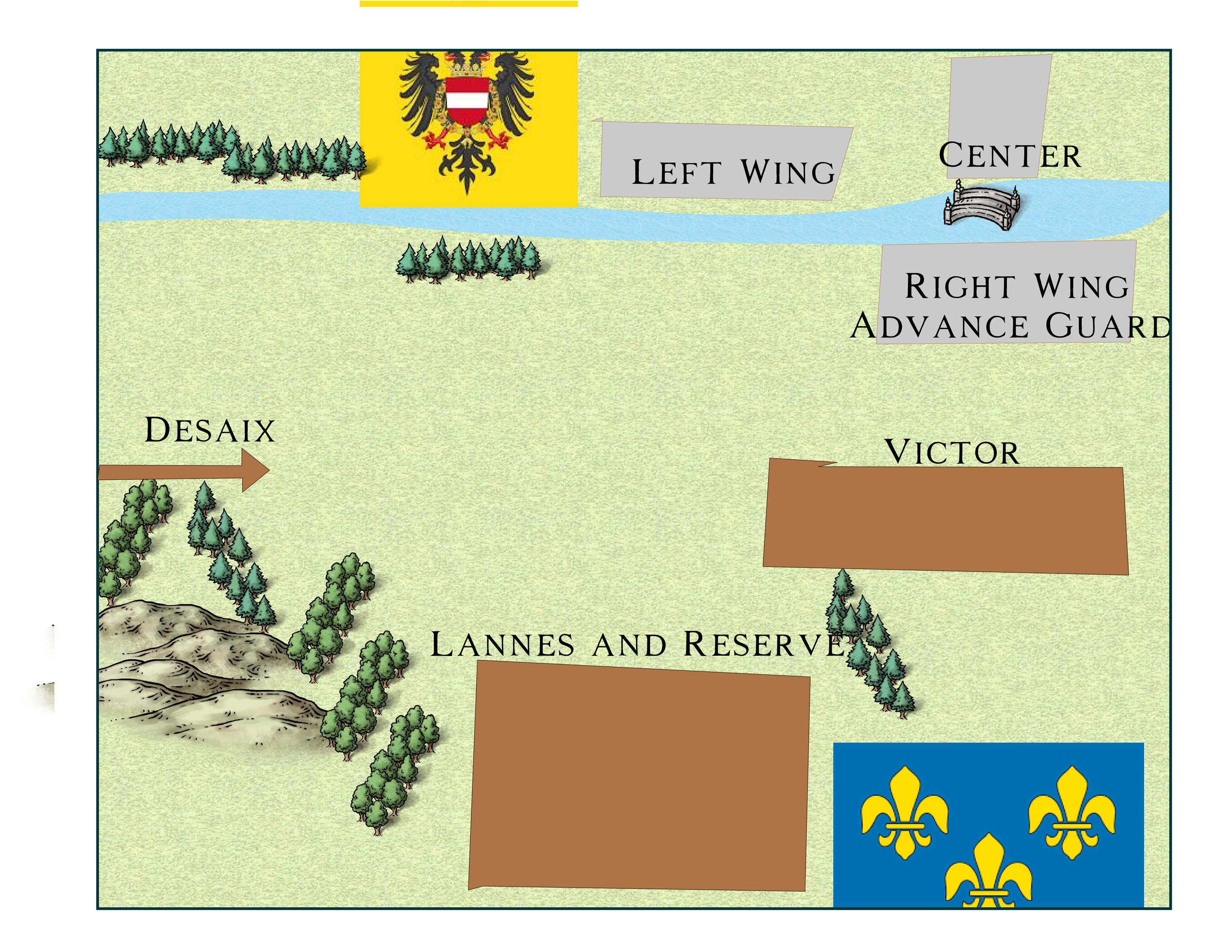
During the battle, the Austrians struggled to mobilize all their forces against the French. The Austrians should start with their advanced guard and right wing on the French side of the river, holding a bridgehead while the Center and Left wings continue to cross.
The French should start with the Victor Corps engaged with the advanced guard of the Austrians. Lannes and the Reserve Corps to the rear, and Desaix corps off the table to arrive at turn 10
Today, I want to discuss the most expensive aspect of wargame terrain. Premium options. These come in several flavors.
Overall, I have enjoyed writing this series. If you want more in-depth reviews of any products, let me know.
Games Workshop Kits
Why am I putting GW kits here? I think they are overpriced. They look absolutely stunning on the tabletop, but the amount of detail that goes into a simple GW kit you have to paint is astounding. Price per item, GW is the worst option.
The simple GW landing pad, as simple as it gets, is $80. The same terrain piece can be 3D printed from Etsy or another source and shipped to you for $30. GW has to be careful or they will price themselves out of the hobby altogether.
Enough on my rant now, to other premium options I actually use.
Instead of buying overpriced GW crap, I love using the fully modular Rampart terrain system. It can be magnetized, has nearly as much detail as GW kits, and is far more functional. The biggest challenge with Rampart is using your imagination to create amazing builds.
You can’t go wrong with the Kallistra system for creating historical battle boards. It’s a custom hex battlefield with numerous surface types: hills, mountains, rivers, craters, roads, and bridges. I use Kallistra hexes in most of my historical conflicts and am happy to do so. I have an epic D-Day battle planned one day, and Kallistra Terrain will be the star.
It is the cream of the crop for terrain. Its modularity is fantastic, and it is stunning on the table. However, I can’t recommend it for most wargames. The scale is just a little off. It is wildly expensive. I have, I think, every set they ever produced. I love my Dwarven Forge. Price is getting to be an issue with their latest sets.
A custom terrain building from Canada. I have personally commissioned 5 projects from Green Leaf. His creations are often shown on MiniWargaming. They are some of the best custom terrain set-ups around. Send him a project and he will make something special.
It’s not as diverse as some of the other options. The creators at Tabletop World put together some stunning resin pieces. Unfortunately, they are no longer producing models. If you can find them, buy them.
Custom Etsy Creators
The rise of Etsy has been huge for the wargaming hobby. I use Etsy for many of my unique pieces. You can spend as much or as little as you want. You can acquire whatever you want. It also helps small hobbyists like ourselves. Just be aware that sometimes what is sold isn’t what you expected.
The first of two pop-up terrain options. I prefer Acidhouse for its modularity. But there is a place for a fully functional battlefield in a few seconds that packs beneath a bed. I personally own every single set and enjoy using them on the table.
My other flatpack option for wargame terrain. It is highly modular, but durability can be questionable. I think I own every set they have ever produced.






 stonewalljackman