June 28 1575 Battle of Nagashino Wargame

June 28th, 1575 marked the beginning of gunpowder-based warfare in Japan. The 38,000-strong allied forces of Oda Nobunaga and Tokugawa leyasu handily defeated Takeda Katsuyori and his 15,000 soldiers. The victory united Japan for the first time in several centuries under Oda Nobunaga.

The battle was actually two different engagements: a siege battle of Nagashino Castle, and a battle about 2 miles away at Shitaragahara. We are going to focus on the siege battle.

Wargame Scenario

2 Players
For Use with Pike and Shotte
Models Needed: Use whatever rulebook you want, but the Nobunaga player should have twice as many models as the Takeda player, including a large portion of gunpowder armed forces. The Takeda player should have a medium-sized cavalry detachment positioned outside the walls.
Terrain: The battle took place on a peninsula, and walls for a castle are a must.

Set-Up
The Nobunaga player should have his army positioned in an attacking position. The Takeda player should be defending with their cavalry hiding in the woods.

Objectives
Simple siege attack and defend.
June 27 1760 Battle of Echoee Wargame Scenario

In June of 1760, the French and Indian War was in full swing. The Cherokee had surrounded a small fort, and the British had sent another force to relieve it. The relief force was also expected to destroy Cherokee towns and kill any Native Americans who were located there.

The native Americans ambushed the 1,300-strong column and killed 20 British Regulars. At the time, the Cherokee were in desperate need of supplies.

Cherokee
Seroweh
500 Warriors

British
Archibald Montgomerie
1500 British Regulars

Wargame Scenario
Sharpes Rifles or other horse and musket skirmish game
2 Players
Forces Needed: British Infantry, Native Americans armed with rifles
Terrain should be heavily wooded with a dirt road down the middle, and the British should have 4 or 5 wagons and other cargo.

Objective
Native Americans take the British supplies
British Fight off the Native Americans and prevent the loss of the supplies
If the British lose more than 30% of their supplies, they lose the game.

SetUp
The British train should be walking through a forest, and the Native Americans should be able to decide where to attack. The models on the table should have twice as many British as Native Americans.

Special Rules
Supplies, the Native Americans will have taken supplies if they get within 3″ of a supply wagon, they will take supplies and retreat into the forest. Each wagon has 10 loads of supplies.

June 26th 1794 Battle of Fleurus Wargame

On June 26th, 1794, during the war of the First Coalition. An understrength force from the Habsburg Monarchy assaulted an entrenched force in an inconclusive battle for the Low Countries. This scenario would be great to teach a new player, or if you have a tactically strong and a weaker commander. Also, if you have a robust team against a weaker team.

Historically, this battle was inconclusive; we want this scenario to be conclusive.

There is a more in-depth order of battle available here. You can divide the forces amongst players as historically accurate divisions if you choose.

Order of Battle
France
Jean-Baptisete Jourdan
70,000 Infantry, in 96 Battalions
12,000 cavalry in 64 squadrons
100 Guns in 13 batteries

Habsburg Monarchy
45,000 Infantry in 68 Battalions
14,000 cavalry in 71 squadrons
111 Guns in 10 batteries

Wargame Scenario
It is to be played with any large-format Napoleonic corps-level game.

Players 2-10, see the historical order of battle for more in-depth information on ways to divide the forces.
Terrain: Add some wooded areas, some roads, some streams, and basic French countryside.

Set-Up

The French should be in a strong position in the center of the table, and the Habsburg Monarchy should be positioned to attack and attempt to surround the enemy. One thing to note is that the Habsburg Monarchy’s primary attack should be on their right or the French left.

Objectives

France, force the Habsburgs to retreat, for the Habsburgs, if they can force any French Division to collapse and retreat, it would be a win for them.

June 25th 1944 Battle of Tali-Ihantala wargame Scenario

Part of WWII that is frequently ignored is the northern engagements between Finland and the Soviet Union. While Finland was not supportive of Fascism or any of the other parts of the Nazi regime. They followed a simple doctrine. The enemy of my enemy is my friend. The Soviet Union had taken large swaths of Finnish land in previous years, and Finland wanted them back.

The Battle of Tali-Ihantala started on June 25th, 1944, and lasted until July 9th.

Finland
C.G.E. Mannerheim
100,000 Soldiers
Several Armoured Divisions
German Luftwaffe Detachment

Soviet Union
Leonid Govorov
150,000 Soldiers
6 Tank Brigades
10 Artillery Regiments

The opening hours of the battle involved a Soviet Artillery bombardment and a hard push along the edge of Lake Leitimojarvi. This is where we will have our game.

Wargame
Rules, Command Decision, Bolt Action, Flames of War
2 Players
6×4 Table
Forces Needed: Finnish and Soviet forces in your chosen game. The Soviets should have 50% more troops than the Finns. For Bolt Action, we will use 1500 points for the Soviets and 1000 for Finland.
Terrain should be an interesting area with pine forest, clearings, and a large lake.

Set-Up

Finland should be in a defensive position with its forces holding each side of the lake. An objective marker should be placed somewhere on the Finnish side of the lake. The Soviets should be off the table, preparing to assault the Finns’ position. The Soviets will get an artillery strike before the first round of the game.

If the Soviets end the game with one objective, it is a tie; if both objectives are achieved, it is a win.

June 24th 1340 Battle of Sluys Wargame Scenario

The Battle of Sluys in 1340 was a major naval battle during the Hundred Years’ War. It was also a tragic defeat for the French. The French outnumbered the English and had better warships. However, their tactics caused complete and utter defeat.

English
King Edward
150 Ships, mostly Cogs

French
Huges Quieret
230 Ships, mostly Galleys

A cog was a single-masted warship. The English did not have a purpose-built military navy at the time; instead, they would seize shipping cogs and retrofit them with wooden ‘castles’ for war. The French took their experience sailing the Mediterranean using agile shallow-drafted galleys and put them to work in the English Channel.

During the battle, the English could use their superior longbows to wreak havoc on the French Galley. Because the French chained their ships together, they were essentially immovable. The Cog’s height also prevented any significant boarding actions from the French.

Wargame

For Use with the Baron’s War or Other Medieval Skirmish Game
2 or 3 Players
Forces Needed: 20 or 30 English Archers and 15 Men at Arms, 40 French Crossbows and 60 Men at Arms

Terrain- A couple of large galleys capable of holding half the French forces, a cog capable of carrying the English. The cog should be higher than the galleys, and there should be some way for the French to assault the Cog.

Objective
French board and seize the Cog, English, destroy the French.

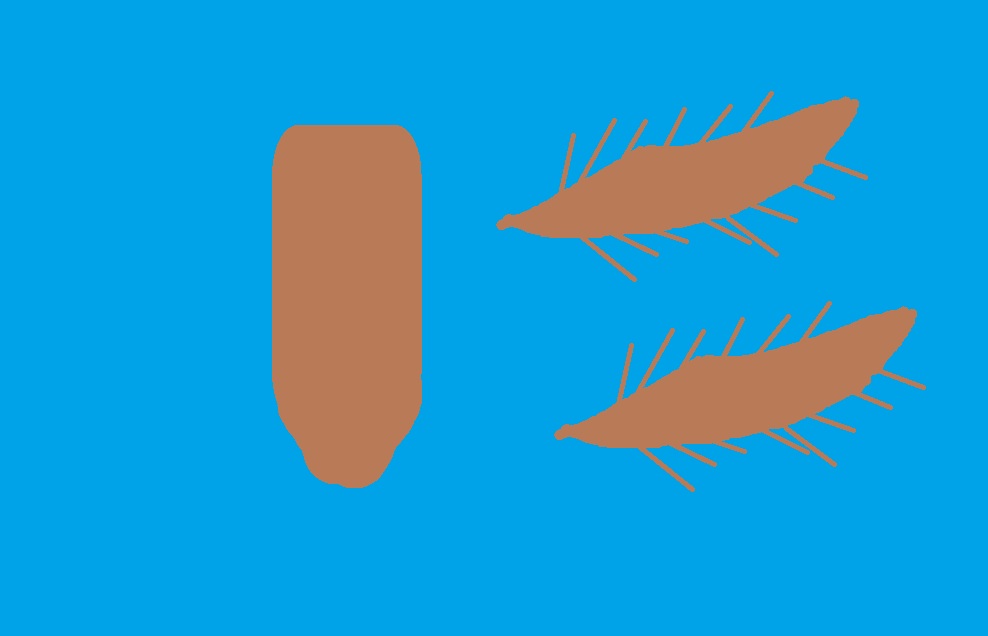
My Paint skills were on point for this one……..

Set-Up

One of the two galleys should be positioned attacking the English Cog and preparing to board, the other should be moving slowly to engage.

Special Rules
The English longbows should be able to shoot farther and faster than French Crossbows.

June 23rd 1280, the Slaughter of Moclin Wargame

This is a historical fact that goes unnoticed by most of the world. Spain, France, and Portugal spent many years under Muslim control. The final expulsion of Muslims from Spain didn’t occur until 1614. In 1280, as part of the centuries-long Reconquista, Christians had one of their worst losses in their many wars against the Muslim kingdoms.

Muhammad II was able to lure the Castilian forces into an ambush with a feigned retreat tactic near the City of Moclin.

Crown of Castile
Infante Sancho
3,000 knights and soldiers

Emirate of Granada
Muhammad II
8,000 Soldiers and Horsemen

Scenario
For DBMM, Hail Ceasar, any medieval style rules.

Number of Players 2
Forces Needed, Large lightly armed Muslim force, much smaller but heavily armed crusader style force including a contingent of heavy knights representing the Knights of Santiago
Terrain 6×4 table with some wooded edges

Objective
Christians, to save their Knights of Santiago, Muslims, destroy the Christian Force

Set-Up

The battle should be joined with roughly equal forces on one end of the narrow edge of the table. The game starts when the Muslim player puts his light cavalry and skirmishers on the flanks of the battle and attempts to surround the Christians.

June 22nd 168 BC Battle of Pydna Wargame

The first battle of Pydna showed the flexibility of the Roman legionary warfare system compared to the rigidity of the Macedonian Phalanx. The Second Battle of Pydna, in 148 BC, ended the Macedonian Empire.

Historically, the first battle was falling in line for the Macedonians. The Roman legions were powerless to beat back the phalanx and were forced to retreat. As the terrain became rougher and rougher, the phalanx began to break apart, offering an opening for Roman legionaries to attack the flanks and defeat their enemy. One notable aspect of this battle, the historic Macedonia Companion Cavalry did not engage in combat due to issues between the Macedonian Nobles and their leader.

Rome
Lucius Aemilius Paullus
30,000
20,000 legionaries and 3,000 Cavalry, 22 elephants, 7,000 Greek Allies

Macedon
Perseus
31,000
4,000 Cavalry, 20,000 phalangites, 5,000 Thracians, 2,000 skirmishers

Wargame System DBMM, Hail Ceasr, Art De La Guerre, Mortem et Gloriam (army lists)

Macedonian 2415 5572 Points
4 Macedonian Cavalry
8 Agema
7 Petasts
11 Chalkaspides
11 Illyrians

Roman 2513 5572 Points
General
Sub General
Ally General
16 Hastati and Principes
8 Triari
6 Illyrian Cav
4 Illyrian Foot
4 Thureophoroi

Table 6×4
Terrain, I would have the Romans with their backs up to rough or broken terrain similar to the actual battlefield.

June 21st 1529 Battle of Landriano Wargame Scenario

From 1494 until 1559, the Italian wars raged across central Europe. Two major powers, France and Spain, each claimed the various Italian Kingdoms. In 1529, the French were near defeat, and the decisive engagement at Landirano ended the French efforts until 1536.

French
Comte de Saint-Pol
12,000 soldiers and cavalry

Holy Roman Empire and Spain
Antonio de Leyva
16,000 soldiers and cavalry.

Wargame.

It is tough to research to get an exact order of battle, but I would recommend using the following: the list gives you a cavalry-heavy list vs an infantry-heavy list.

French Army; 134

4 Units of Capagnie d’Ordonnance (heavy cavalry) 32
3 Units of Ordonannce Archers (lancers) 12
2 Units of Stradiots (scout cavalry) 8
2 Units of Argoulets (melee cavalry) 8
6 Units of Aventuriers (skirmishers) 18
6 Units of Bandes Francaises (Pike and Shot) 48
2 Medium Guns 8

Holy Roman Empire 133
3 Units Gentes d’armas (heavy cavalry) 24
6 Units Spitz (Traditional German Pike and Shot) 42
2 Units Jinets (scout cavalry) 10
2 Units Colunela (Spanish pike and shot) 18
2 Units Veteran Colunela 22
2 Units Spanish Arquebusiers 10
2 Medium Guns 8
1 Heavy Gun 5

Wargame Rules, Tilly’s very bad day, or Renatio Et Gloriam, or any other mass Pike and Shot wargame.

Set-Up,
8×4 Table
Up to 4 Players
The table should have two rivers that merge into a delta on one short edge. Both rivers should have multiple crossings and fords, with one main road and bridge connecting the hamlet. Between the rivers should be a large hill, where the primary fighting took place historically. The rivers should have ample vegetation along their banks.

Objective

The French Army is on the retreat, and the Holy Roman Empire forces have maneuvered to cut off their retreat to Pavia. The Holy Roman Army should be moving from the table’s edge away from Pavia, while the French should be attempting to reach it.

June 19 1821 Battle of Dragasani Wargame Scenario

On June 19th, 1821, during the Greek War of Independence against the Ottoman Empire, one thousand Greek revolutionaries faced off against 2,000 Ottoman cavalrymen. During the battle, the Greek cavalry fled, leaving the 500-member sacred band to face off against 2,000 Ottomans. The Sacred Band was nearly destroyed to a man, while their sacrifice bolstered their cause.

Order of Battle
Greeks
Alexandros Ypsilantis
500 Cavalry
500 Sacred Band Infantry

Ottoman
Kara Ahmed
2,000 Cavalry

Wargame
Use Sharpes Rifles or any other skirmish-style wargame from the age of Horse and Musket.
2 Players
You will need models equivalent to whatever wargame rules you are using. The Greek cavalry should have 25% of the Ottoman cavalry and a similar amount of infantry.

The Greek cavalry never participated in the actual battle, fleeing before contact was made. In this scenario, the Greek cavalry does participate to perhaps change the fortunes of the sacred band.

Set-Up

Place the sacred central on a small hill with the Greek Cavalry in reserve. The Ottomans should have to assault the Greek Position. Whomever wins the battle wins the game.

June 18th 1429 Battle of Patay (Not Waterloo) Wargame Scenario

Today, I am choosing to create a scenario for the Battle of Patay, a crucial battle during the 100 Years’ War that shaped modern France and Europe. I know a far more famous and influential battle took place on June 18th. Here’s the deal: 10,000 people like me have written a slew of wargames regarding Waterloo. Most of them are far better than I could ever come up with. My biggest idea would be allowing the Prussians on the field and having the French try to hold off their assault while the rest of the French army attempted to defeat Wellington.

The Battle of Patay is a classic example of a small superior force taking on a larger, ill-trained, ill-equipped army. The English attempted a similar strategy as had worked in Crecy and Agincourt, relying on their longbows to decimate the heavily armed French Knights and infantry. The French identified the potential ambush and slaughtered the archers before approaching the main line.

Order of Battle
French
La Hire
180 Knights
1300 Men at Arms

English
John Fastolf
2000 Archers
3000 Infantry

Scenario
Baron’s War or other Medieval-style skirmish game
2 Players
50 or 60 models
Heavily wooded terrain
8×4 Table

Objective

After discovering the ambushers, French need to escape the board to French lines to report the position of the English longbows.
English, prevent the scouts from escaping.

Set-Up
10 French outriders should be set up on the furthest edge of the table. The English should randomly assign groups of five archers to different points on the board. I’d create a grid on the table, each section being 1′ by 1′. The English should have ten groups of 5 archers each assigned to a random grid part.

Game
When the French outriders enter a grid that contains English archers, they appear on the table and begin play.

Special Rules
Ambush, when the outriders enter a grid section containing the archers, they appear and get a surprise attack on the outriders.

Line of sight. Getting an open longshot in a dense forest is hard, the archers will need to work to contain the outriders.