Very little can be said about 3D Printing that others have not written about. You can buy any form of terrain 3D printed that you can imagine. Want a scale model of Helms Deep? Boom, got it. Want a Kashyyk-style tree village, done. Want industrial acid basins and floating skull rocks? You can print them.
As wargamers, we have stopped asking if we can and started asking if we should.
I am not going to discuss how to 3D print. There are thousands of YouTube videos and guides on how to use a 3D printer and what 3D printer to buy. I will focus on my experiences with 3D printing and how that helps or hinders me as a gamer.
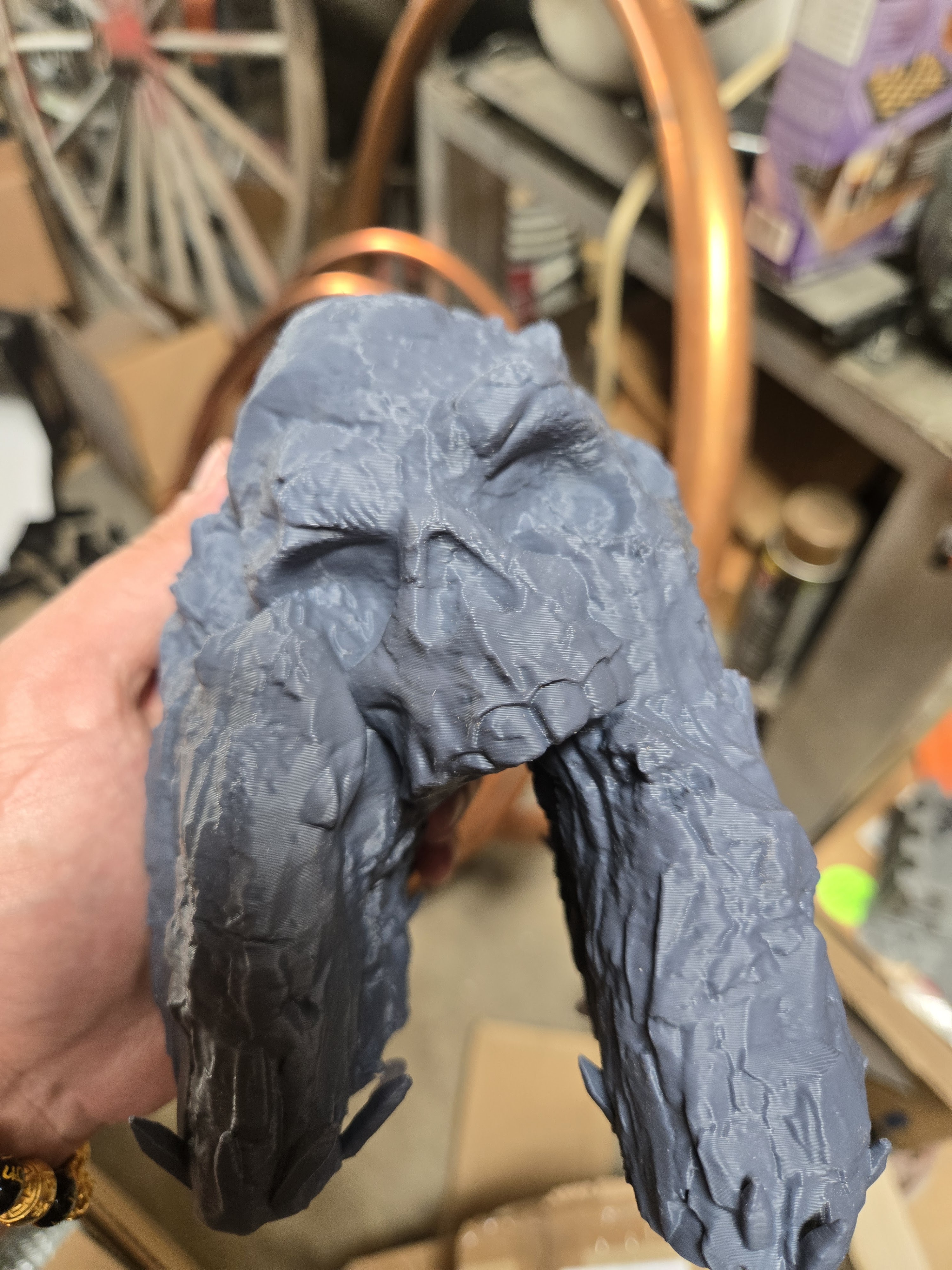
What to 3D Print
I personally own about ten 3D printers, two or three of which are functional at any one time. I know I am hard on printers, but I also don’t have the time, energy, or discipline to properly maintain such sensitive hardware.
I have found that the happiest part of printing is small prints of minor pieces. If I want to add a burned-out car, I can find a print for that. If I want some sandbag barricades, a few fences, or tank traps, I am happy to 3D print those.
I struggle with 3D printing because I want to do large setups. That Helms Deep scenery I talked about earlier? I hired it out. I am finding that by investing my time, buying the filament, and dealing with failures, I have forgotten or lost my passion for the project. I figured I would need $765 worth of filament, and I was able to order the scenery for $1000. Large scenery is better purchased. With the low barrier to entry in the market, you will always get a fair price.
If I need a specific building for a scenario—think Pavlov’s house for Stalingrad, or I did a Geonosian table—I am happy to 3D print it. However, I refused to 3D print my competitive 40k setup; it required over 140 prints, and I just didn’t have the energy.
How to Use 3D Prints
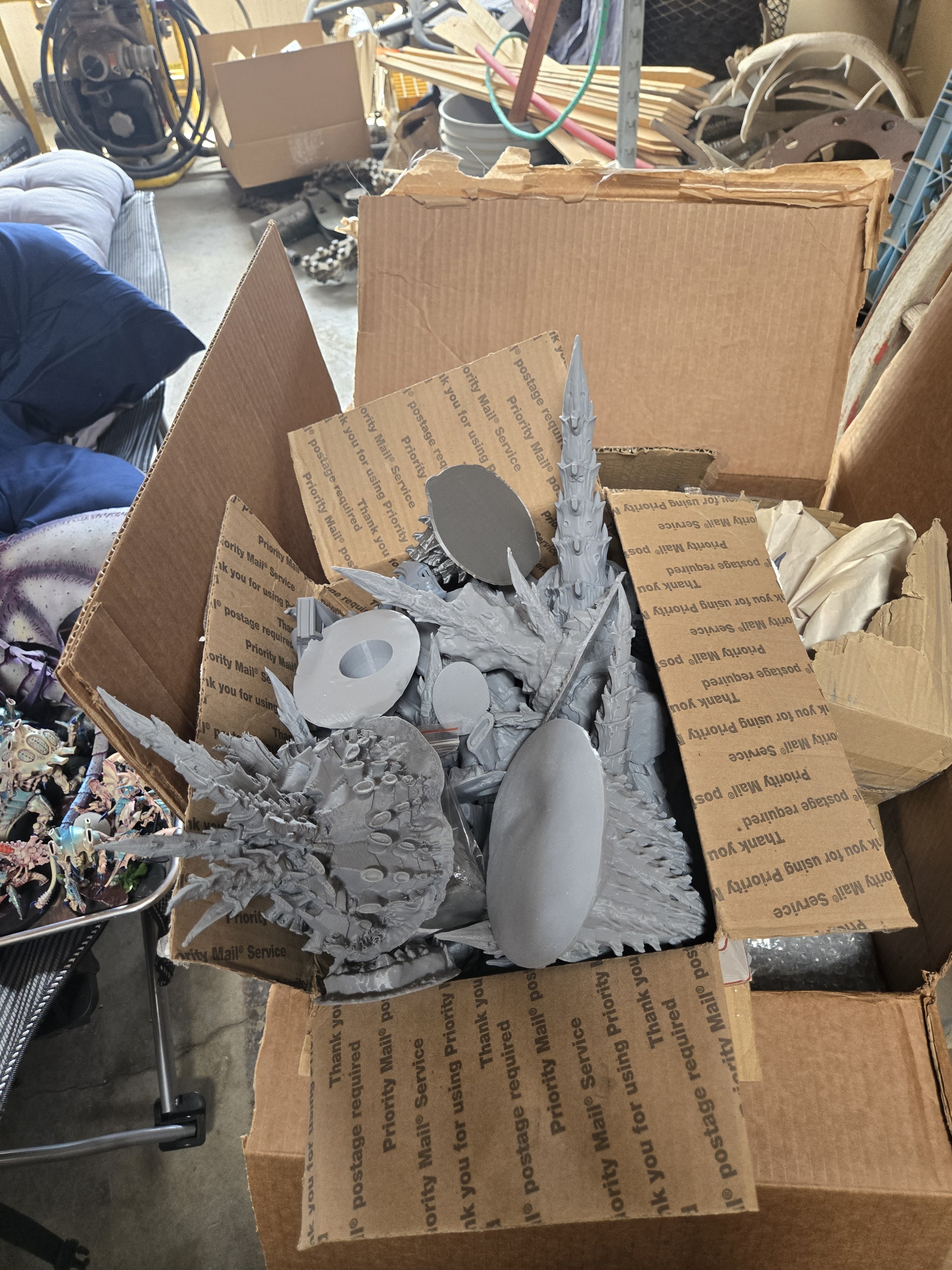
3d Prints are usually more durable than handcrafted or MDF items. The right 3D prints can also be stunning in detail. No matter how good the model is, a poor 3D print job tends to be unsalvageable.
I also think 3d prints must be painted to look acceptable on the table. I am well-versed in using rocks and some buildings in filament grey. They really just look like brown or grey lumps on the table. Get out your airbrush, throw on a basecoat, and then get a big drybrush and go over everything. Your models will pop on the table. You don’t have to do a bunch of details like shutters or drainpipes, just a basecoat and a drybrush.
My favorite use for 3D printing is to bring something to life. For the third time, I will refer to Helms Deep, an iconic location and one of the most significant cinematic battlefields ever. My crafting skills would be woefully insufficient to create such a majestic location. 3D printing fills that role. It is tangible and durable, and I can pack it away until next time.
Downfalls of 3D Printing
3D printing is the perfect solution for wargames. You can print exactly what you want. You can change the scale. With enough practice, you can even edit the models to your liking.
The biggest problem with 3D prints is space. The voluminous number of models available means I want all of them. I like Eastern European buildings, Western European buildings, American West buildings, South American buildings, Moon Landings, Elven buildings, and Orcish Camps, and I want them on different scales.

I literally own multiple warehouses and storage facilities and I am having trouble storing the amount of shit I have acquired for gaming. My addiction to buying 3D-printed scenery is a significant part of that problem. Looking at my most recent Etsy Orders, I have 3 full 40k or AOS terrain tables en route.
Each table typically requires a large tote to store, which requires labeling and even remembering exactly what is in that tote.
One major drawback of 3D printing is the layer lines. These layer lines will show up with a simple dry brush unless properly sanded or filled. To alleviate this, I prime most models with an automotive primer that fills most lines. It also fills in many details.
Other downfalls can include a lack of connection to said scenery. In our hobby, it is essential that we are happy with our participation. We will spend 1000 hours on a single army, painstakingly painting facial features and belts and using waterslide decals to place insignia. We take them to the table and create stories regarding the models, and we remember each and every figure. Crafting buildings from foam, measuring, and painting builds that connection. A 3D print doesn’t.
Finally, the environmental impacts of 3D printing are not insignificant. If you’re into that sort of thing, think of how much plastic can be created and wasted, the large spools, the spilled resin, and the unused models that we print because we can. That kind of workload has a measurable effect on the environment.
Overall
I would recommend 3D printing to all hobbyists in any hobby. The tool is far too versatile not to use. You no longer need a $2,000 machine with tons of software and custom-built parts. Most printers are plug-and-play. To be able to download and print a Japanese bunker in the Philippines one day and a trebuchet the next is invaluable for someone who plays a variety of games.
 stonewalljackman