Yesterday, we played with moving forces around to prepare for the main action today. Had the actions of August 3rd and 4th not been successful. The French would have been outnumbered in today’s battle by at least 10,000 soldiers.
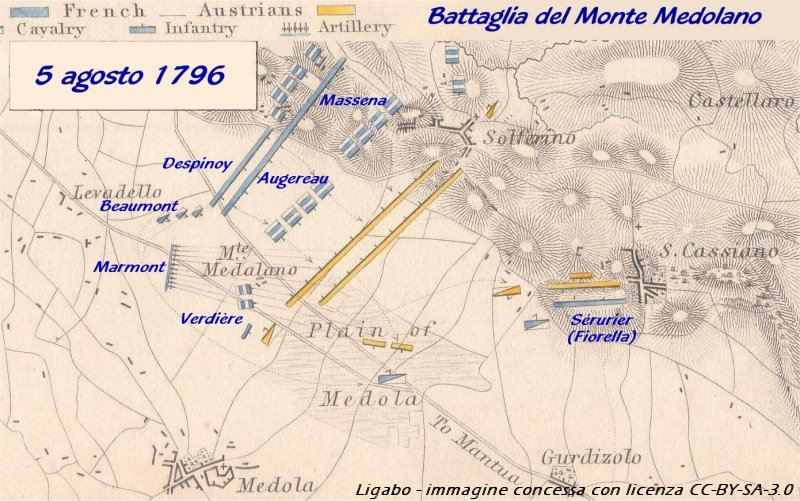
France Napoleon Bonaparte 30,000
Austria Dagobert Sigmund von Wurmser 25,000
Wargame 2 Players Use General D’Armee or other Napoleonic ruleset The battlefield had several large hills on the French left flank and a large plain to the center and right. The most intense action took place in the mountains; having a position to overlook the field with artillery would have likely ended the battle.
France, 35 Battalions, 25 Squadrons of Cavalry, 10 Artillery Batteries Austria 30 Battalions, 22 Squadrons, 8 Batteries
Approximately 1 division of French should be left on the table to be brought on the table at a random roll of the dice, maybe a 10+ with 2 D6. This simulates Seruier coming to the flank of the Austrians.
Deployment should be along the long diagonal, with the Austrians having the hills to their right and possessing most of the mountains.
The French win if they seize the mountains and establish artillery positions. The Austrians win if they successfully withdraw without losing more than 20% of their force, or hold the hills.
My other favorite period of gaming happens to be the Napoleonic era. The Peninsula campaign can make for some great games with epic battles. On July 28th, such a battle took place where Arthur Wellesley began the campaign to retake Spain. Wellesley, as he did famously at Waterloo, forced an engagement, but played a defensive role in the battle.
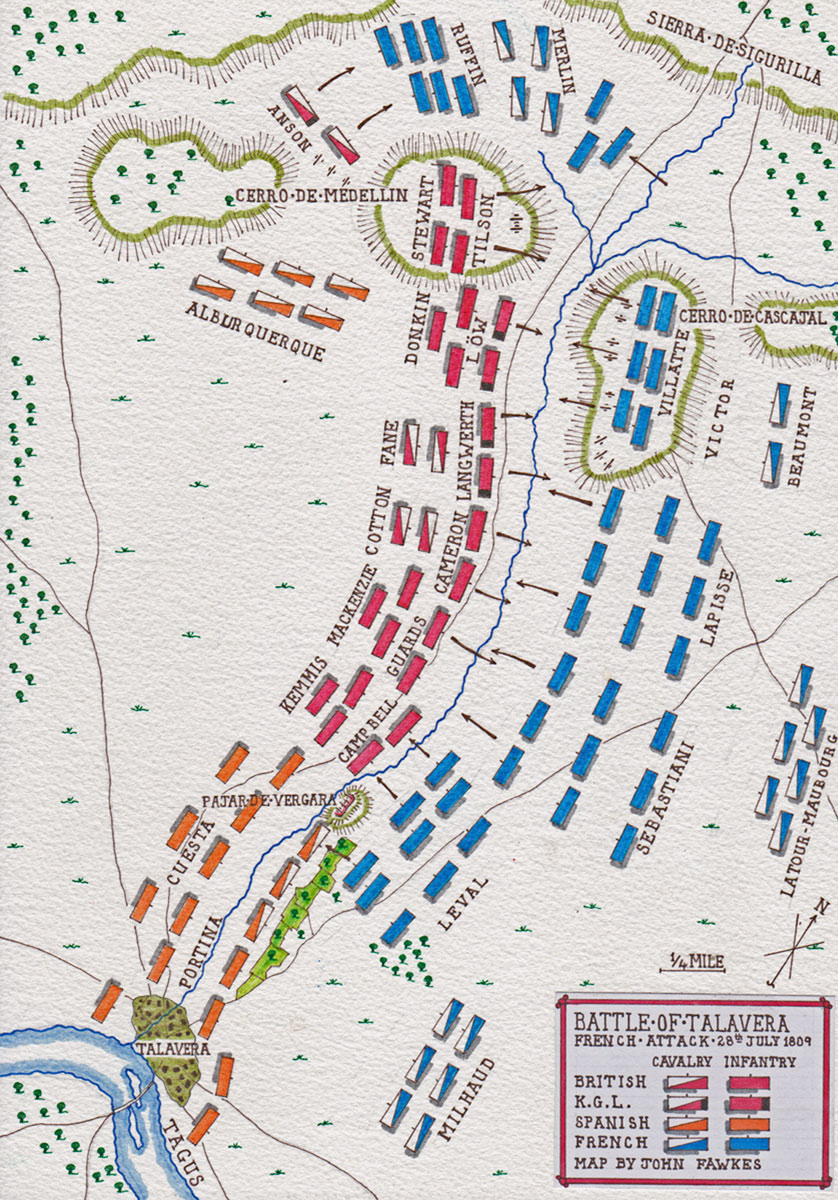
France Joseph Bonaparte (41 Battalions, 56 Squadrons, 13 Artillery Batteries) 46,138 Soldiers 80 guns
Wargame 2- 20 Players (If more than 3 use an umpire). Each player could easily control a division, corps, or faction. Rules, General D’Armee, or any other large-format Napoleonic Wargame Table 16×8 for 15mm, smaller for 6mm The terrain is arid, with some bluffs; the river did not really apply much. Use the order of battle to determine troop quality. It could help balance the game by making the Spanish closer to the militia.
Scenario The French should be the aggressor and attempt to move the British and Spanish forces from a defensible position. The French should have a higher quality of troops than the Spanish.
After a grueling nighttime march in the oppressive Egyptian heat. Napoleon and 25,000 of his soldiers faced off against 35,000 Mamluks of the Ottoman Empire.
France
Napoleon Bonaparte
3,000 Cavalry 20 squadrons
17,000 Infantry 26 battalions
36 guns 3 batteries
Ottoman
Murad Bey
6,000 cavalry 40 squadrons (20 elite)
22,000 infantry 36 battalions (all militia)
1 battery of guns
Wargame
Use general d armee or other corps size Napoleonic wargame
2-4 players
4×8 table covered with sand dunes and a potential oasis.
Special rules
The Napoleonic forces should be regular or better, all of the Ottoman should be militia except the elite mamluk cavalry.
During the Finnish War of 1808, the Kingdom of Sweden went to great efforts to avoid a single decisive battle against a superior Russian force. Instead many smaller engagements over supply lines were fought all over the frontier. Lapua is such a battle.
Russia
Nikolay
4,000 troops (800 cavalry)
17 guns
Sweden
Carl Johan
4,700 troops (900) cavalry
18 guns
Wargame
Black powder or other regiment/division level wargame.
4×8 table
Wooded terrain with roads, small hills and structures.
Sweden 2 commanders, 2 artillery batteries 6 battalions 3 squadrons
The Battle of Wagram was one of the largest battles of the Napoleonic Wars. Napoleon took six weeks to prepare his offensive against Vienna, assembling an army of French, German, and Italian troops, 150,000 strong. Austria responded in kind, fielding 170,000 soldiers with 388 guns.
The battle was costly on both sides, with over 80,000 total casualties. Day two featured an interesting early engagement. An Asutiran column with 32 battalions, 40 squadrons, and around 60 cannons attacked the French flank. The French III Corps under Davout commanded 31,600 soldiers, 6,200 cavalry, and 120 cannons.
Both sides were to call reinforcements to the area. Our game will start in the early hours of the morning and proceed.
Rules: Use any corps-level Napoleonic Wargame Rules, ours is set for General D’Armee
2-4 Players
Models Needed: 34 French Battalions and 50 Squadrons. 50 Austrian Battalions and 40 Squadrons. 10 French artillery stands, and 8 Austrian Artillery Stands
Table Size 12×4
Terrain. Generally flat. The French should start with a height advantage while the Austrians assault.
Objectives
The Austrians surprised the French in the early morning hours, but underestimated the French numbers. Their goal will be to seize a French command post behind the French lines. The French must counterattack or the Austrian reserves will come into the field and overwhelm them. The French goal is to push the Austrian forces back to the heights.
Set-Up
The French should be in two separate commands, one for each Flank. Each command should have 12 battalions and 10 squadrons with four batteries. The remaining battalions should be in reserve. The Austrians should start on the offensive with 32 battalions in two columns on the table, along with the 40 squadrons. Each column should have three batteries for support. The remaining Austrian forces should be in reserve.
Special Rules
Reserves. Napoleon noticed the threat of the flank attack and sent over his heavy cavalry reserve. These should begin to enter the table after the 4th turn on a 6, then a 5, and so on.
After the 7th turn, Austrian reserves should enter the fray.
On June 26th, 1794, during the war of the First Coalition. An understrength force from the Habsburg Monarchy assaulted an entrenched force in an inconclusive battle for the Low Countries. This scenario would be great to teach a new player, or if you have a tactically strong and a weaker commander. Also, if you have a robust team against a weaker team.
Historically, this battle was inconclusive; we want this scenario to be conclusive.
There is a more in-depth order of battle available here. You can divide the forces amongst players as historically accurate divisions if you choose.
Order of Battle France Jean-Baptisete Jourdan 70,000 Infantry, in 96 Battalions 12,000 cavalry in 64 squadrons 100 Guns in 13 batteries
Habsburg Monarchy 45,000 Infantry in 68 Battalions 14,000 cavalry in 71 squadrons 111 Guns in 10 batteries
Wargame Scenario It is to be played with any large-format Napoleonic corps-level game.
Players 2-10, see the historical order of battle for more in-depth information on ways to divide the forces. Terrain: Add some wooded areas, some roads, some streams, and basic French countryside.
Set-Up
The French should be in a strong position in the center of the table, and the Habsburg Monarchy should be positioned to attack and attempt to surround the enemy. One thing to note is that the Habsburg Monarchy’s primary attack should be on their right or the French left.
Objectives
France, force the Habsburgs to retreat, for the Habsburgs, if they can force any French Division to collapse and retreat, it would be a win for them.
On June 14th, 1800. The Austrian forces of General der Kavallerie Michael von Melas attempted a surprise attack on Napoleon’s troops across the Bromida River. The Austrians, being numerically superior at the start of the battle, forced back the French. However, a well-timed assault from an incoming French division turned the tide of battle to the French.
Order of Battle (Wikipedia has a very nice, detailed list if you are interested)
French 29,942 soldiers 33 guns General Napoleon Bonaparte Corps Lannes 12 Battalions 6 Horse Artillery Cannons 5th Dragoon Regiment
Corps Victor 9 Battalions 4 Horse Artillery Cannons 3rd Cavalry Regiment
Wargame Scenario For use with General D’Armee, Black Power, or any other large-scale Napoleonic Wargame 2-8 Players, players can take control of the entire army on either side, or each Corps/Wing could have a commander as well French Players will need 31 Battalions, 36 Cavalry Squadrons, and 5 Artillery Batteries Austrian Players will need 41 Battalion,s 40 Cavalry Squadrons, and 6 Artillery Batteries Terrain should have a river near one field edge with a bridge crossing the river. There should be several forested areas and a large hill opposite the edge where the bridge stands Table Size 8×4 or even 10×4
Objective
The Austrians want to use their numerical advantage to break the French before the French forces can flank them. The French want to hold until Desaix arrives, then break the Austrians using a hard flank attack.
Set Up
During the battle, the Austrians struggled to mobilize all their forces against the French. The Austrians should start with their advanced guard and right wing on the French side of the river, holding a bridgehead while the Center and Left wings continue to cross.
The French should start with the Victor Corps engaged with the advanced guard of the Austrians. Lannes and the Reserve Corps to the rear, and Desaix corps off the table to arrive at turn 10
On June 4th, 1859, during the Second War of Italian Independence, Napoleon III of France crossed the Ticino River to force the Austrian army under Gyulay to retreat. The Austrians had 68,000 men available and established defensive positions around the town of Magenta, securing four bridges.
The French, noticing the Austrian weakness, built a pontoon bridge to the south on the river, outflanking the entrenched Austrians and forcing their retreat.
The Wargame
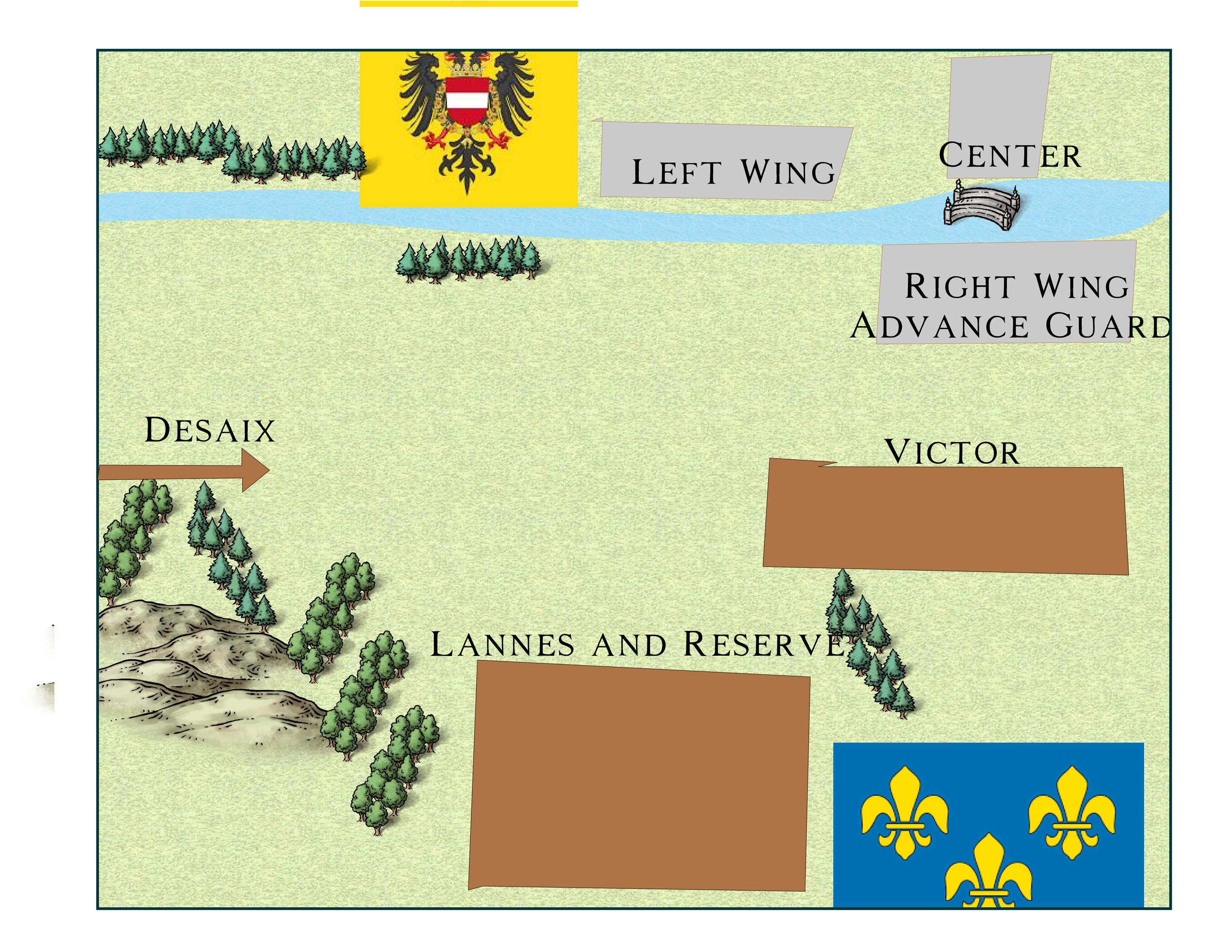
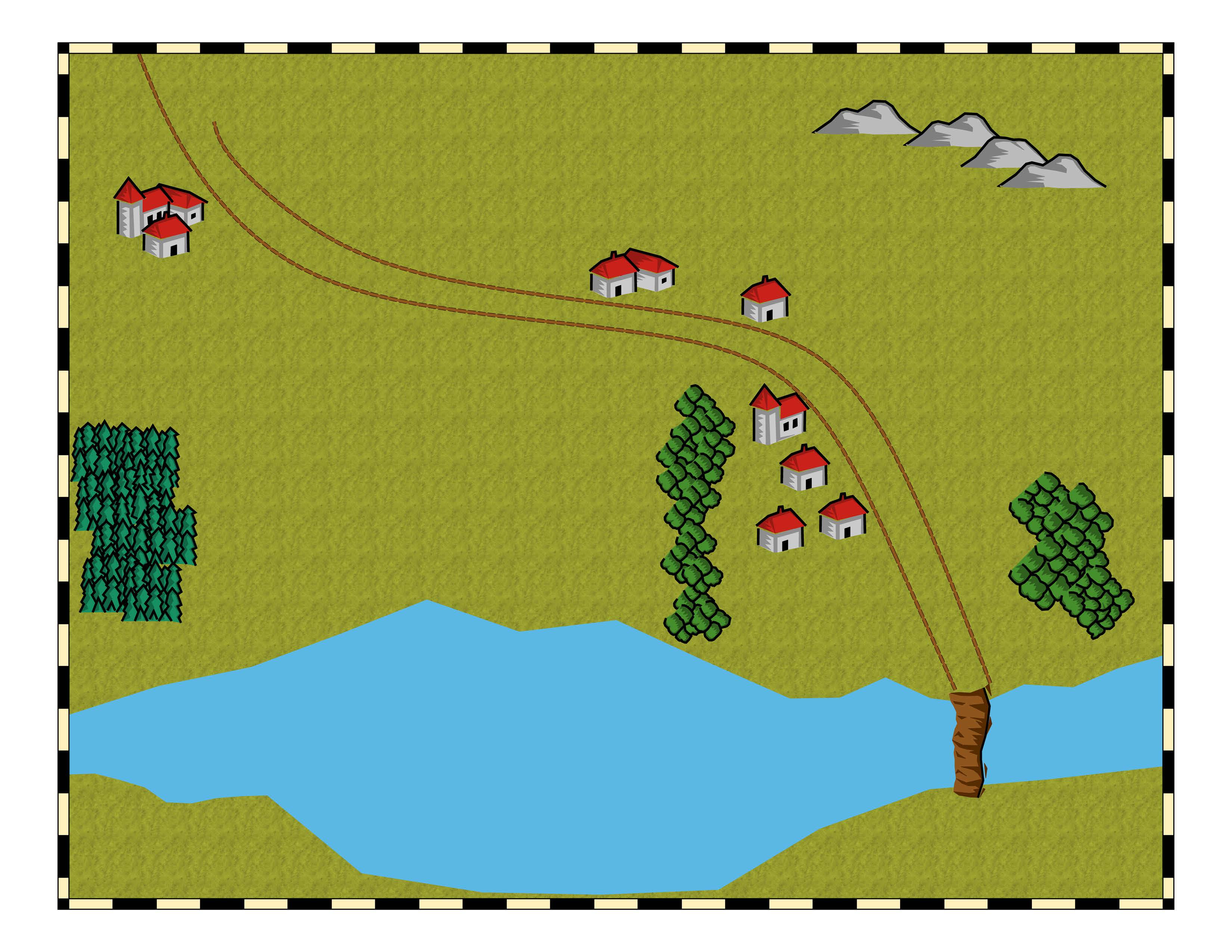
RuleSet Blackpower or Other similar Game Players 2 Austrians 12 Battalions, 2 Cavalry Squadrons, 2 Cannon Batteries, 2 Battalions Garrisoning the Town French 16 Battalions, plus 1 new battalion every other turn, 2 dragoon squadrons Set Up. See the map below. Table Size: 8×4
Deployment:
The Austrians were surprised by the maneuver and were not in an adequate position. Most troops should be stationed in the field to the south of the road in the center of the map between the two sets of trees. The French should have half their units across the bridge, with the rest crossing. It takes one turn to cross the water. Only two units at a time can cross. Additional French units should arrive every other round or turn (however, your rules describe both forces getting to act as one turn). So total if the French never lose a unit, there would be 16 battalions, 2 dragoon squadrons, and an additional 12 French battalions.
Objectives:
The Austrians are fighting a rearguard action to hopefully prevent the complete destruction of their army. By nightfall, they must keep the French from reaching the town on the top left of the map. The attack took place at 2:00, so the French have six hours to reach that point. This amounts to approximately 24 turns for most games. The French want to get the town and surround the Austrians. The French must have forced back the Austrians; if the Austrians are fighting to the city at nightfall, it is still an Austrian victory. Losses do not matter here.
Special Rules;
The Austrians can garrison any building with half a battalion. The building becomes fortified and difficult for the French to move past.
The fastest route of travel should be the road. The area around the road is heavily wooded.
3 Corps. 14000 pts. 5 days of battle. Field 6’x12′ using Kallistra Hex items as a base plus their hills and roads and other terrain. I also used Fog of War rules.
This was by far the largest battle I have ever fought solo. I used 6mm figures that I purchased pre-painted. The scenario was simple. The French wanted to cut off the British reserves and seize the nearby road. The French had two minor objectives, securing their own supply chain through the mountain pass and securing a key hill that overlooked two towns.
The British main objective was to keep their reserve lines open. Secondarily, they wanted to halt the advance near the towns. The hill was irrelevant to them as were the towns, they just did not want any further advances. They also wanted to hold a strong line near the supply lines to weaken future French movements.
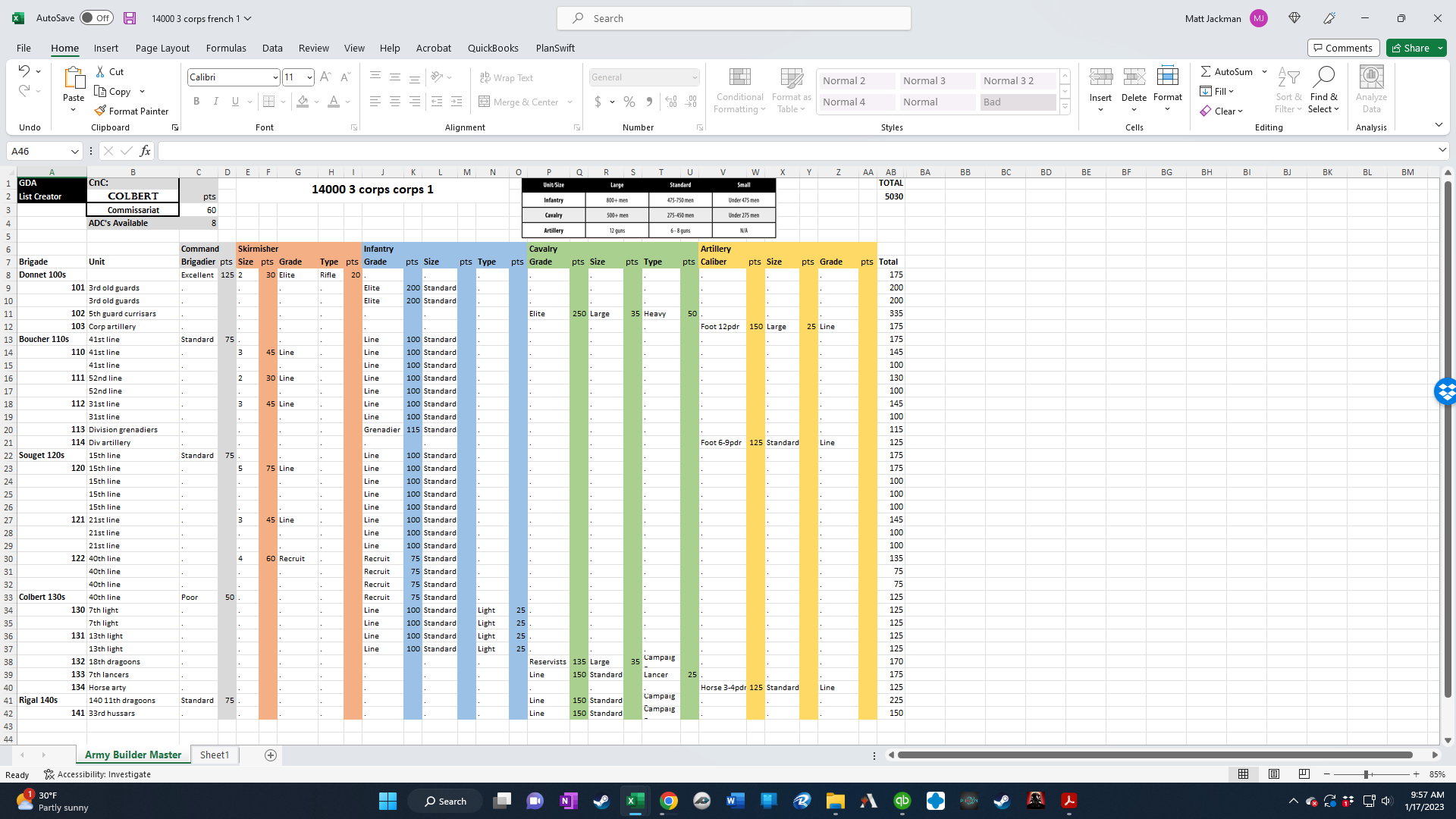
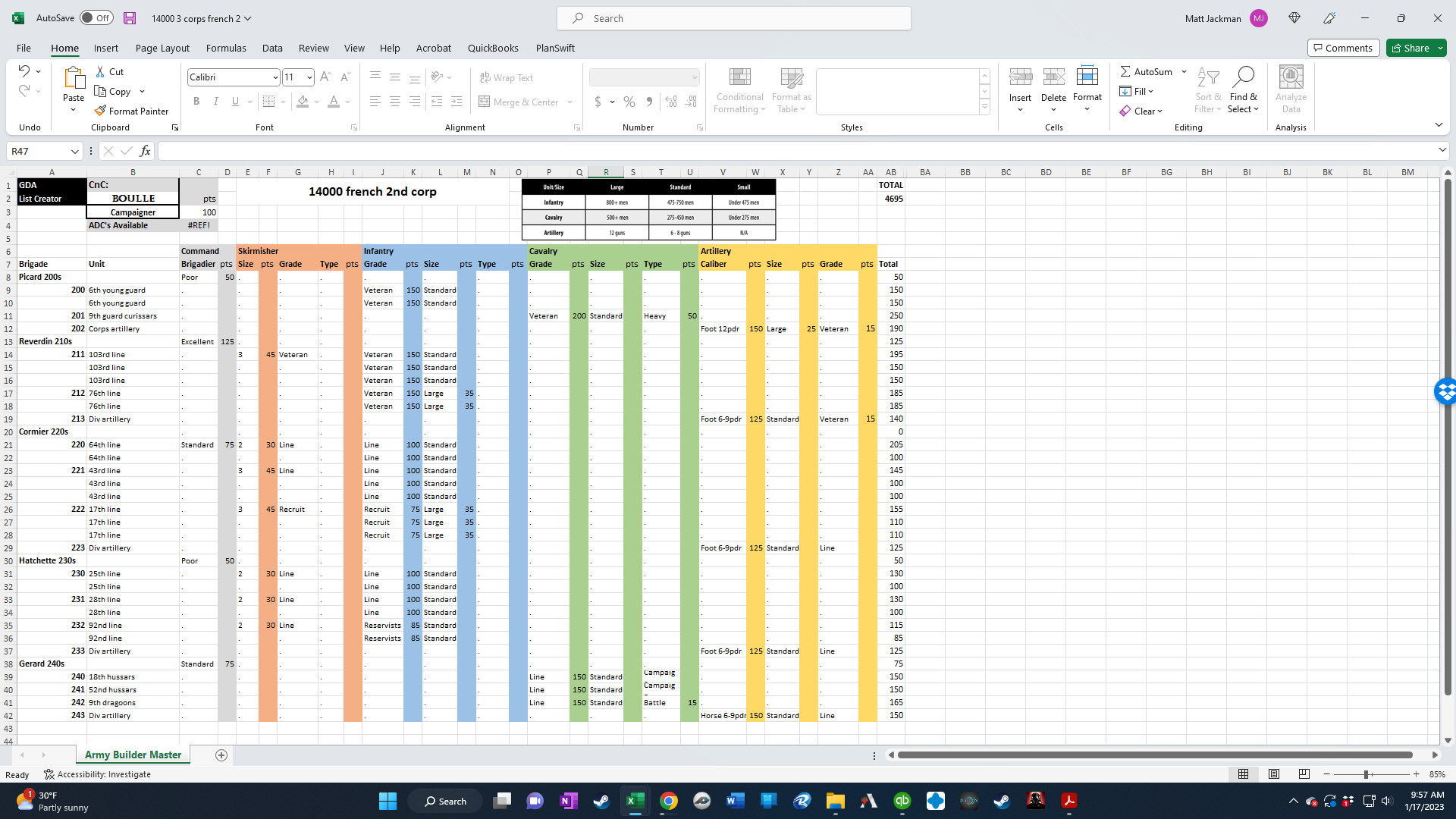
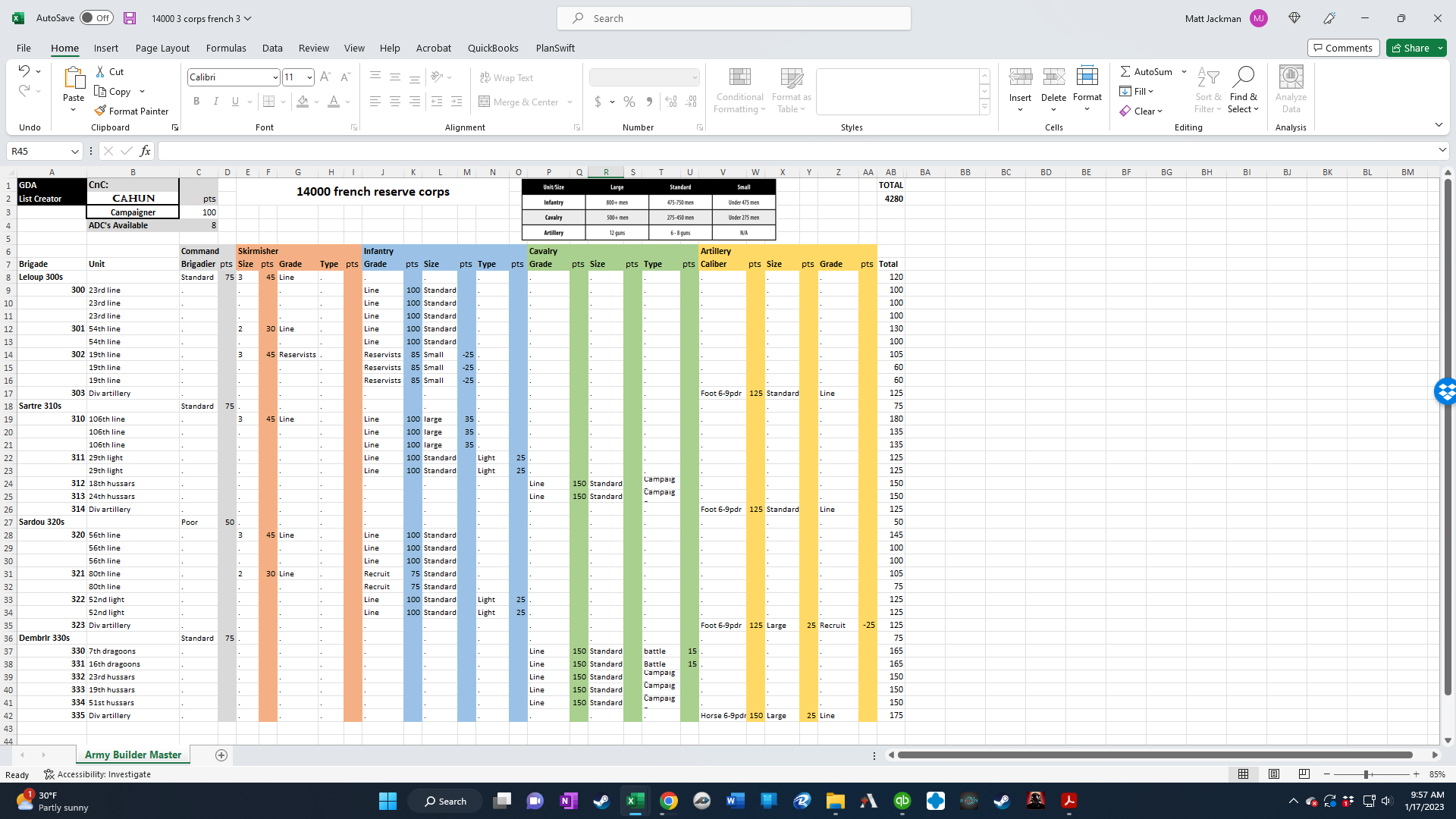
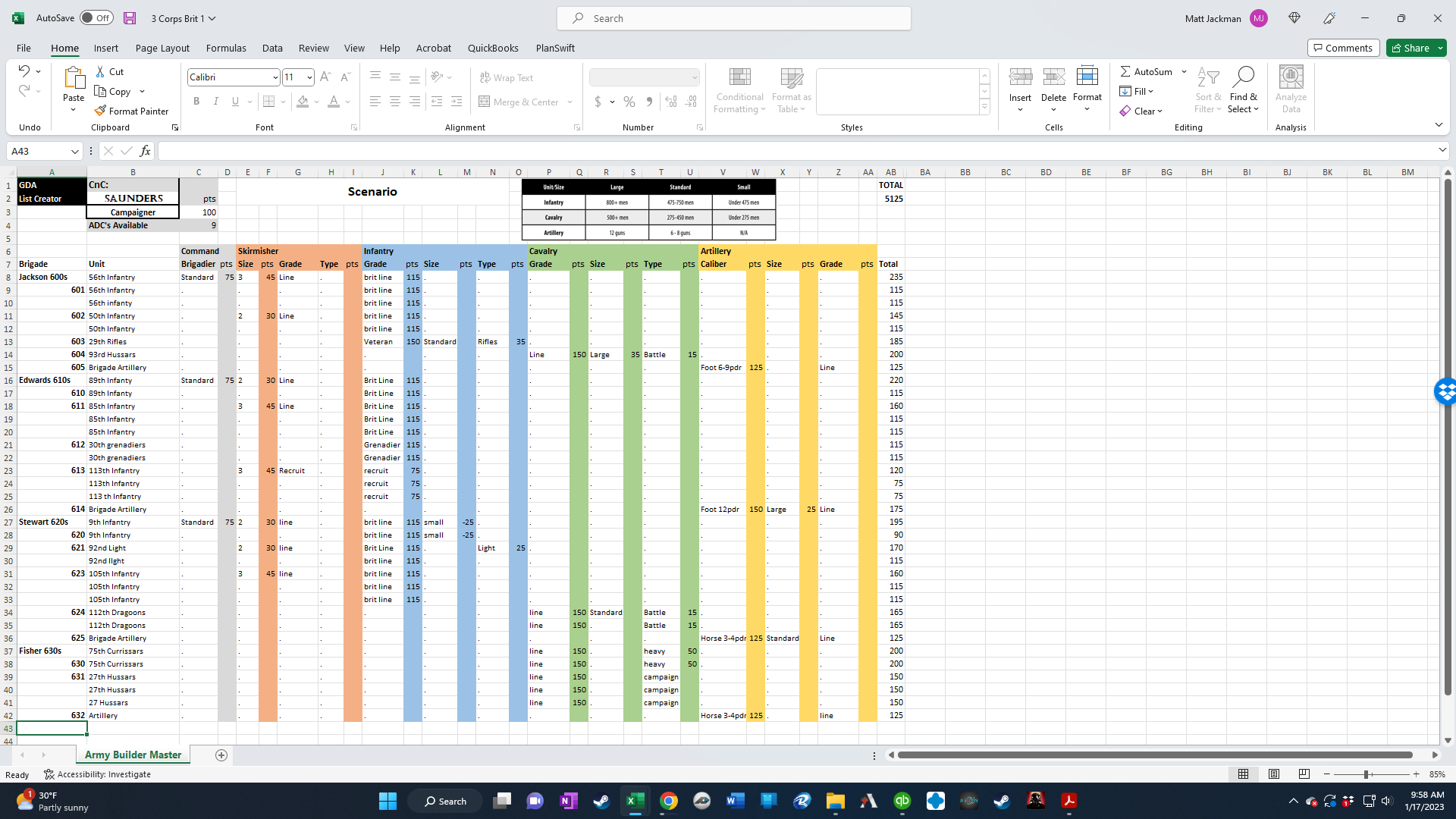
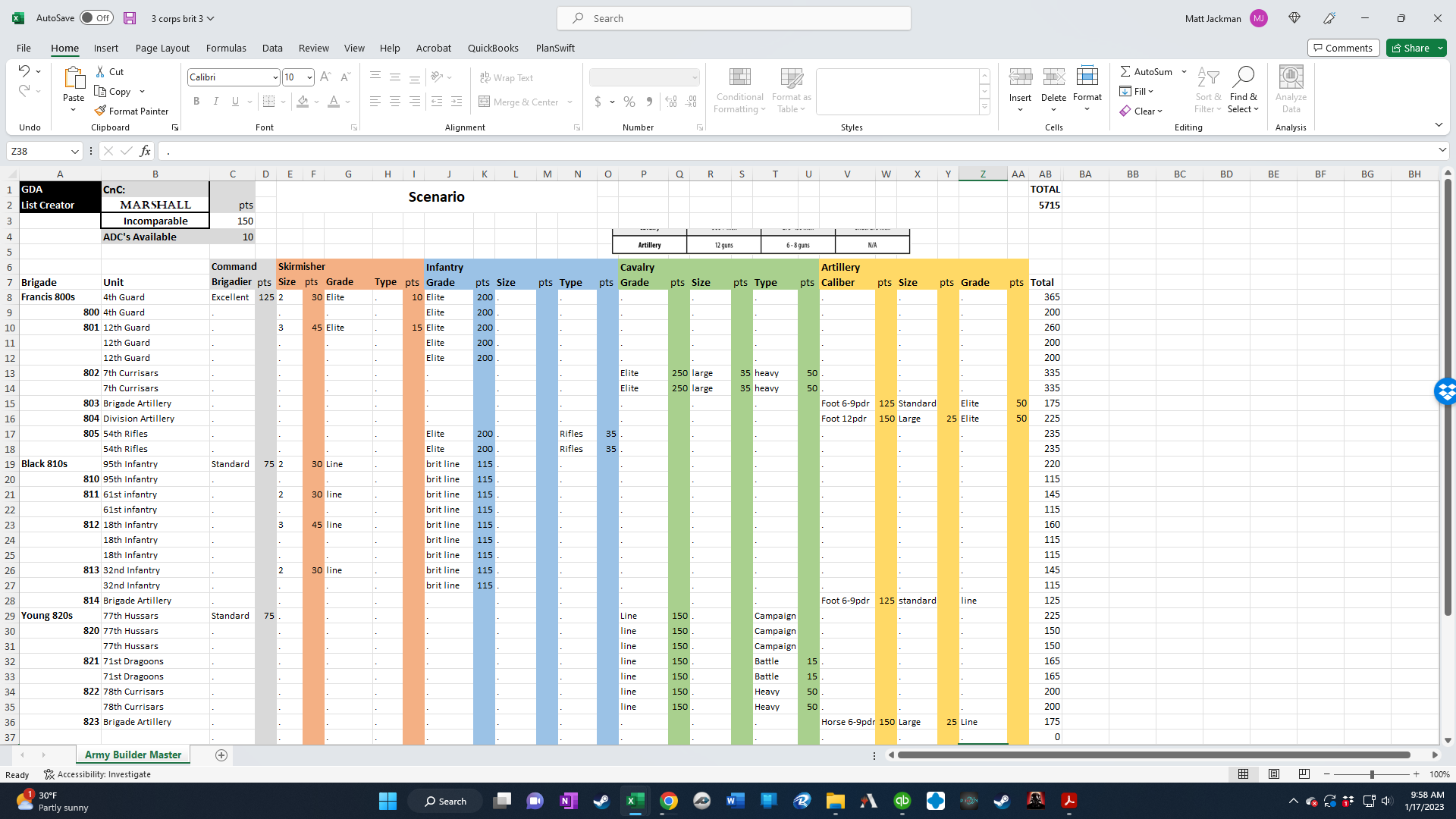
Below are the French Army Lists. I had to go with screenshots as I did not want to retype everything.
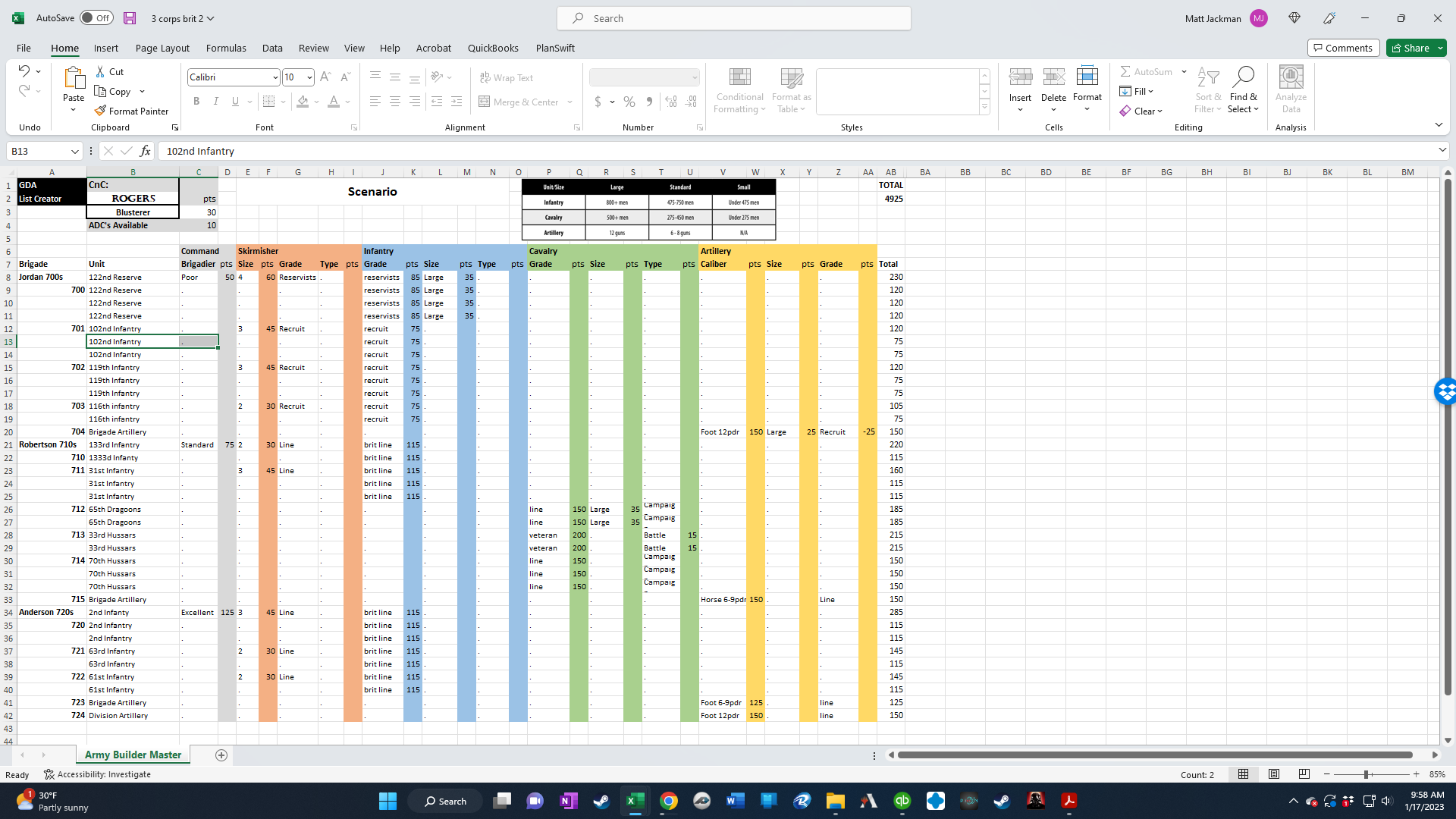
And the British Lists
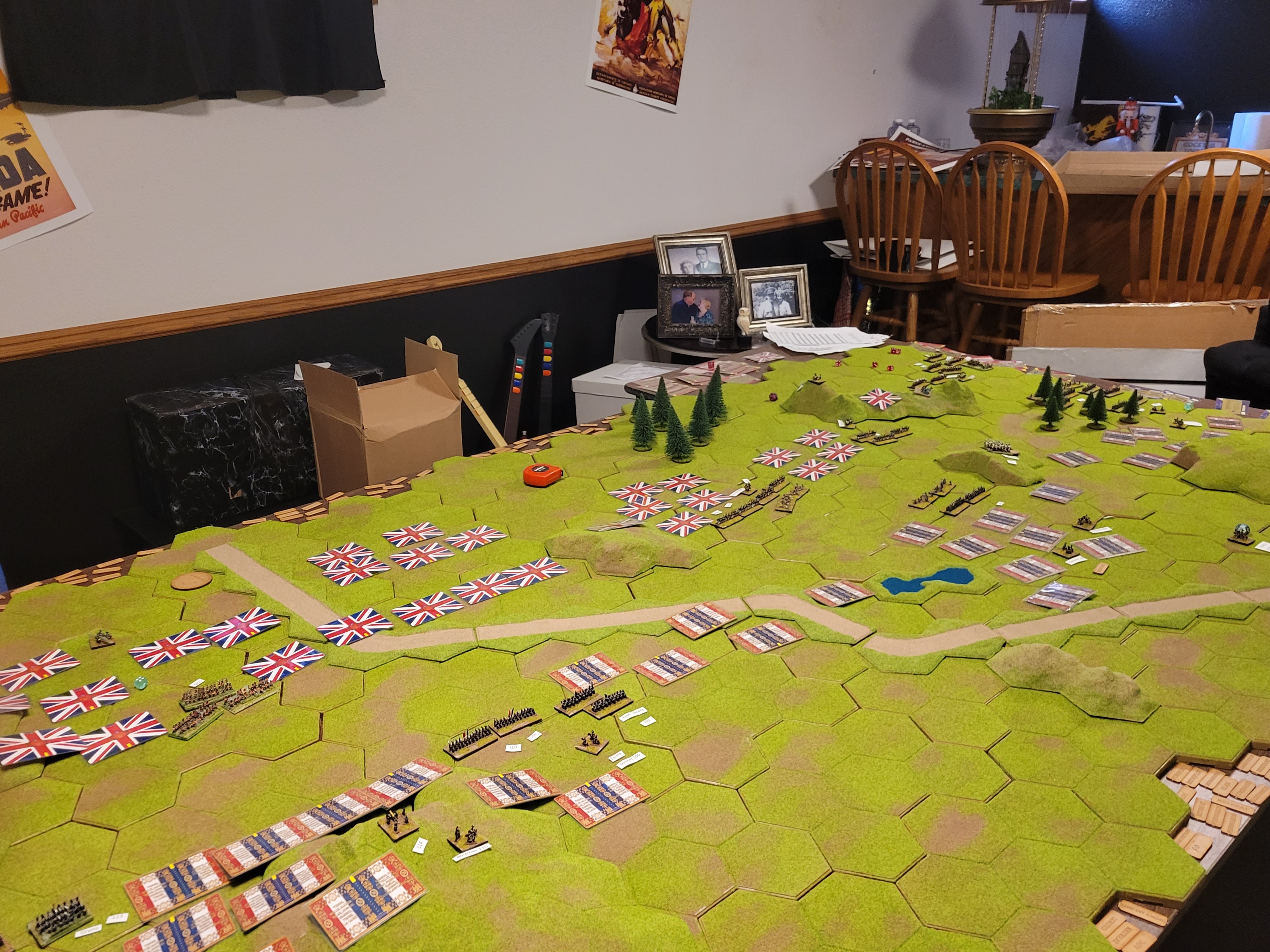
The initial deployment is below. I wanted the French to really push towards the flanks in a pincer style movement knowing the reserve Corps could begin to arrive turn 10. Below is the initial setup. I like using the hexes as it keeps me from having to measure every freaking attack and can just use the hexes instead.
Turn 3 the action got heavy quickly. Fierce fighting on the flank near the mountains with skirmishers and artillery hammering away. While the far-flank British Cavalry ran into a large unit of French conscripts.
Turn 5 the game turned. British scouts revealed a huge weakness in the french formation, there was essentially no infantry in the center. They moved their largest units to divide the forces and try and break the flank near the mountain pass as this was the weakest and farthest from potential French reinforcements.
By turn 6 it was nerve-wracking as the French elite units were under heavy pressure and began an orderly withdrawal. It didn’t help that turn 3 the British seized the initiative and continued to hold it. The French on the bottom of the picture had eliminated most of the British Cavalry and were pushing hard to seize the entire flank and sector.
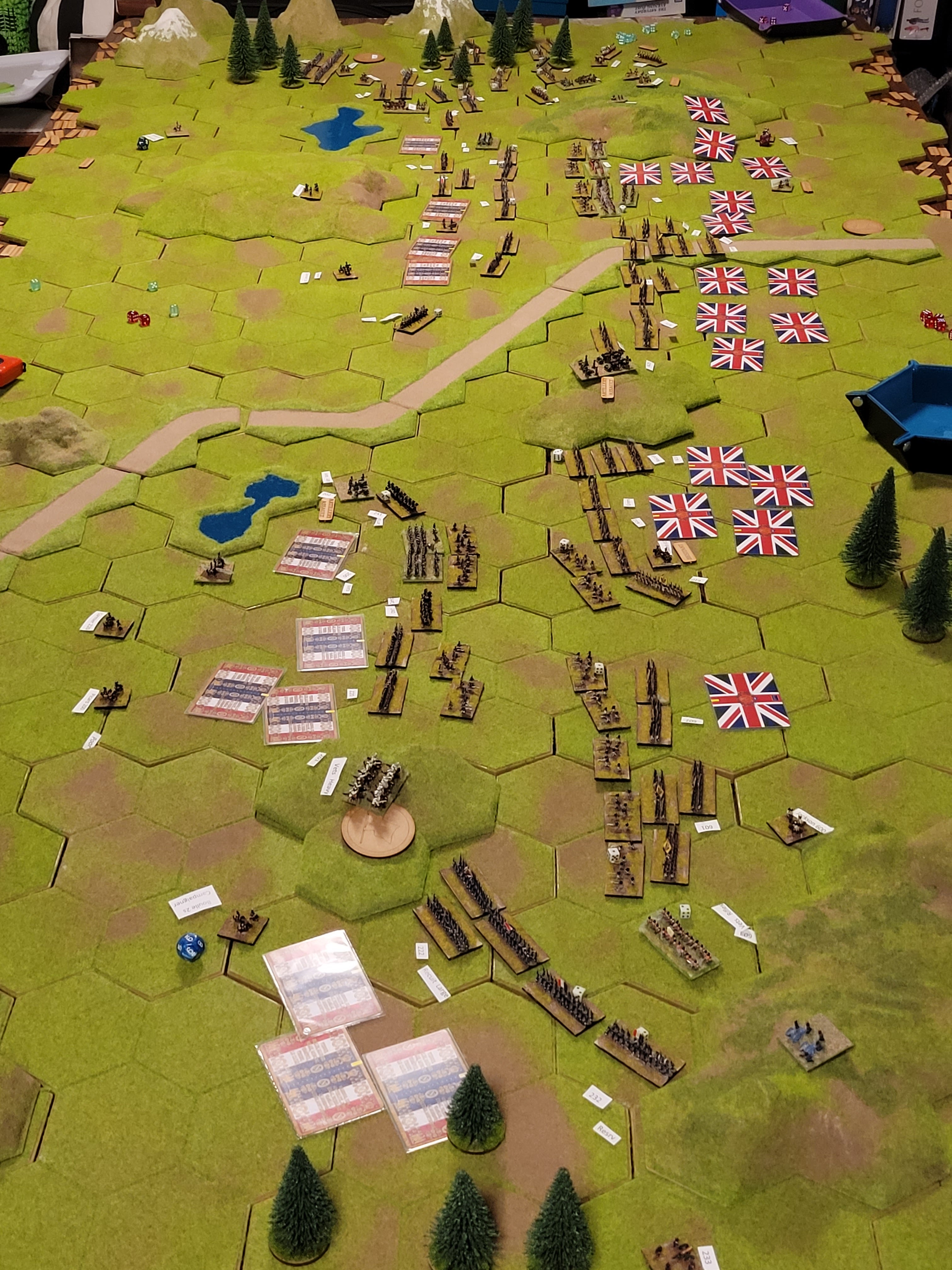
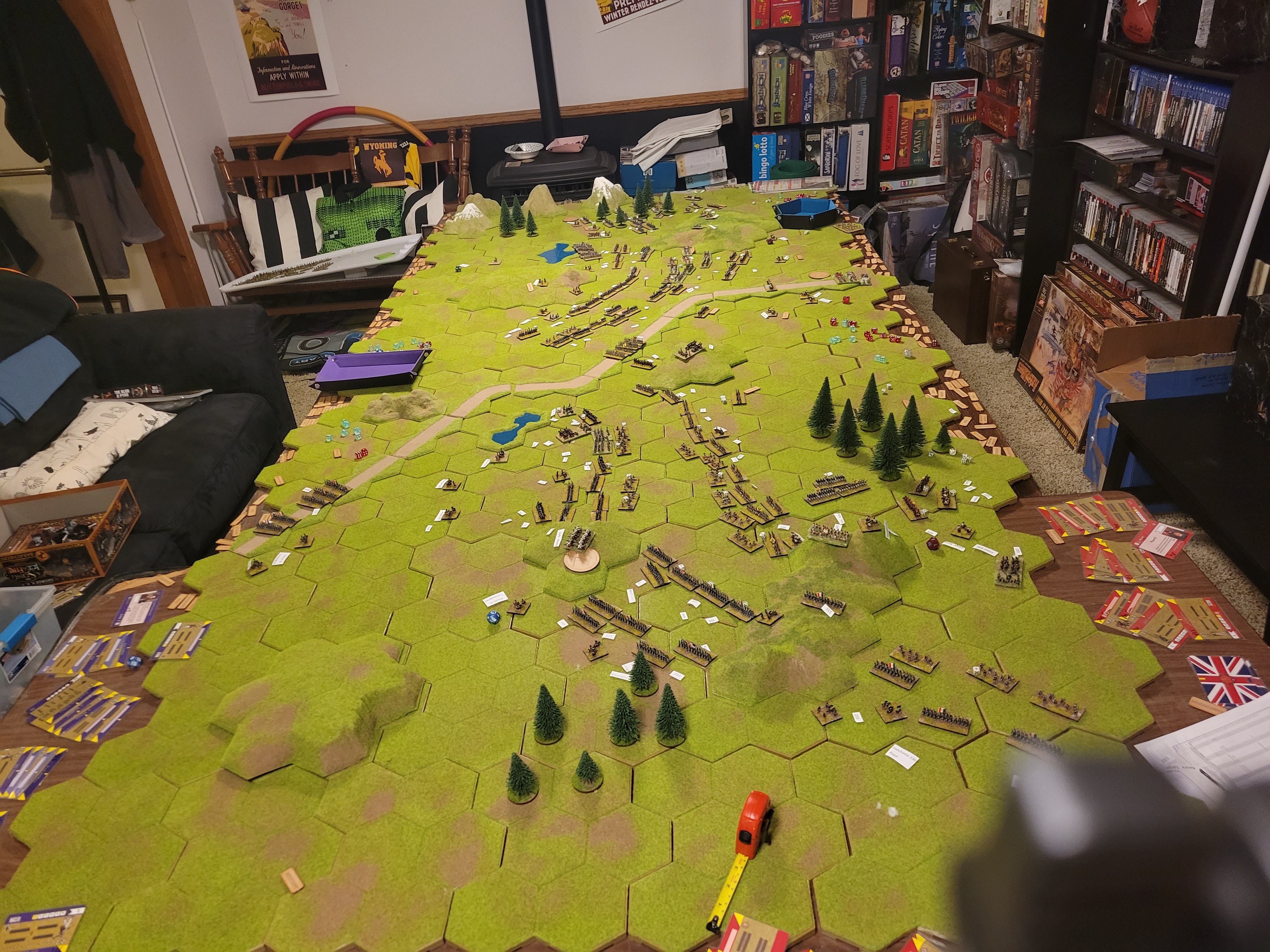
Turn 9 the Brits were pushing as many troops to the center as possible. Near the mountains to the top of the picture they were barely holding on and accepting those losses as this could be the end of the invasion. (I switched to a tripod here for more consistent images)
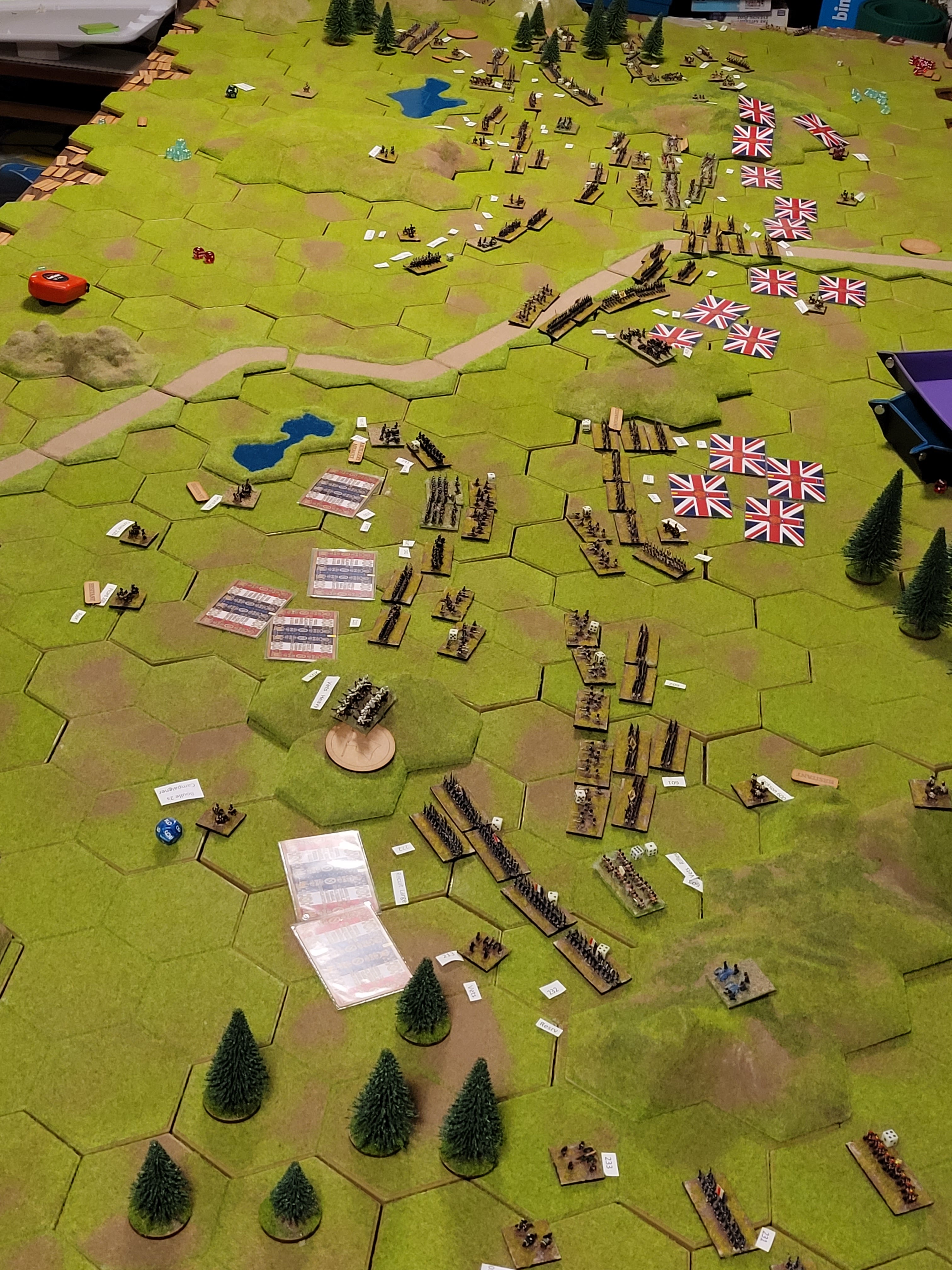
Turn 11. British troops fly up the center road preparing to cut off the French reserves. They are barely holding on to the flanks while their center continues to divide. the French diverted 5 battalions on the top flank towards the center at risk of losing the Mountain pass. The commanders to the bottom continue to fail in their rolls to advance giving the British some respite there.
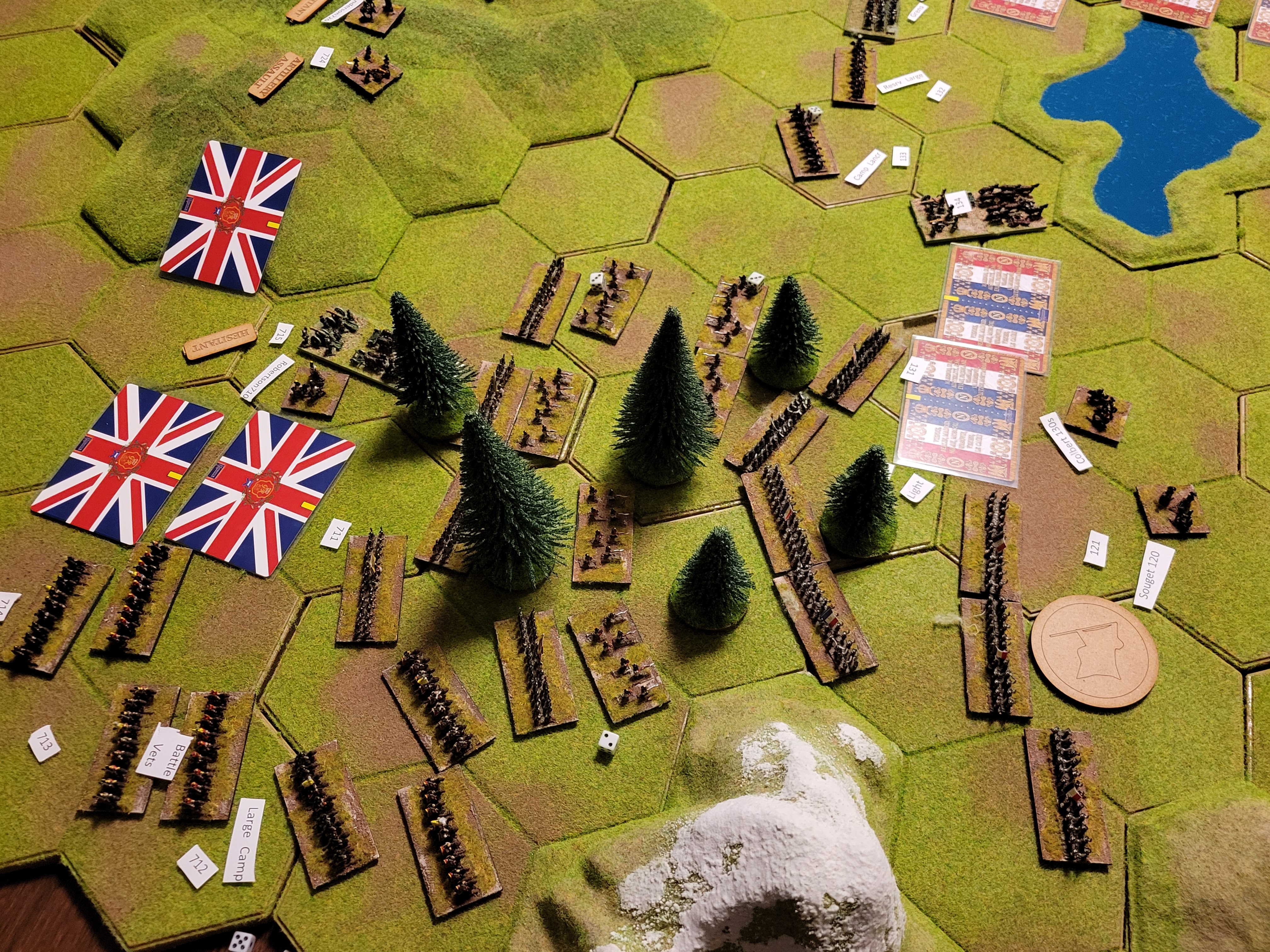
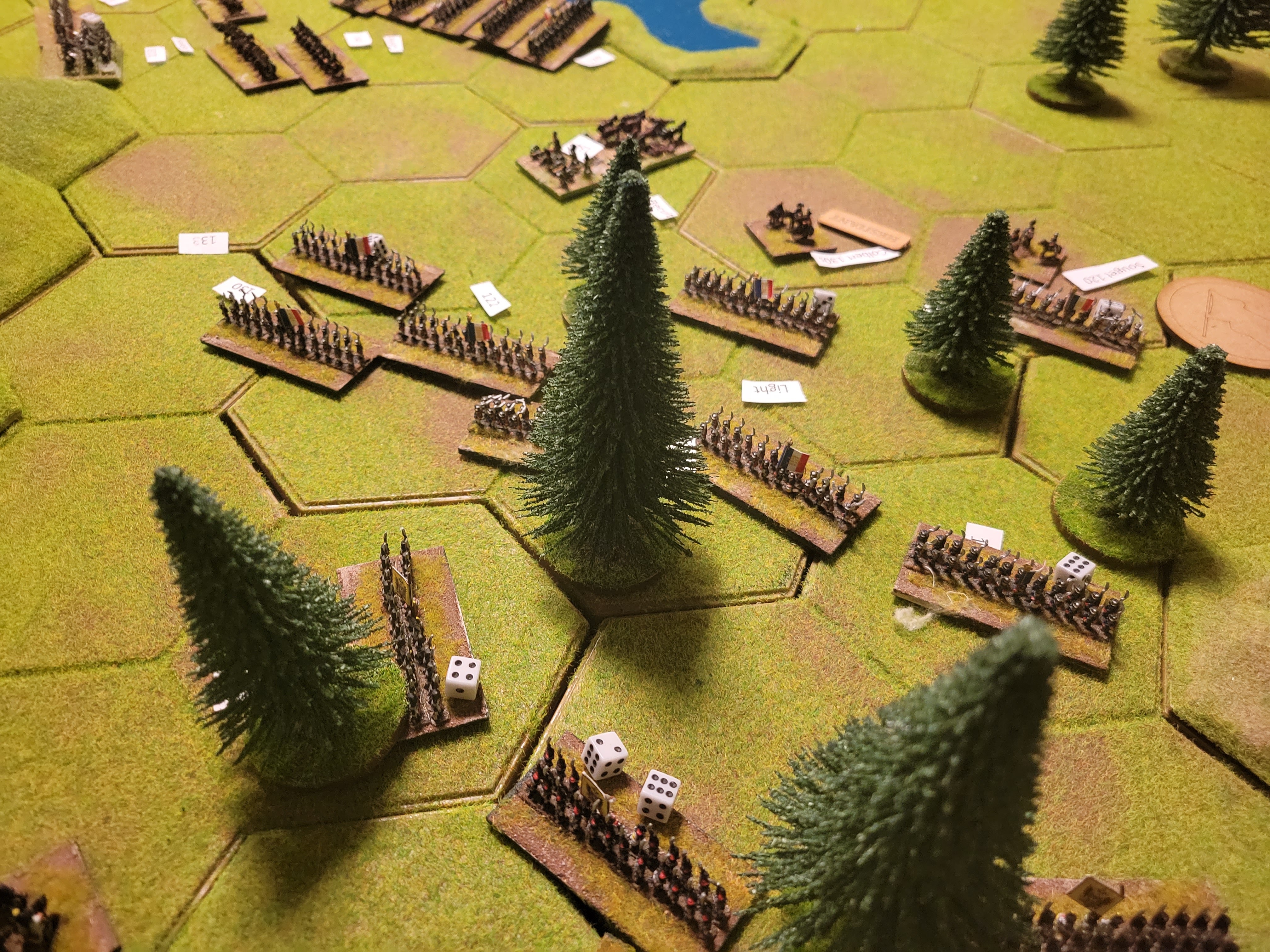
Here is a close up of some fighting near the mountains. The British have heavy casualties and are on the brink.
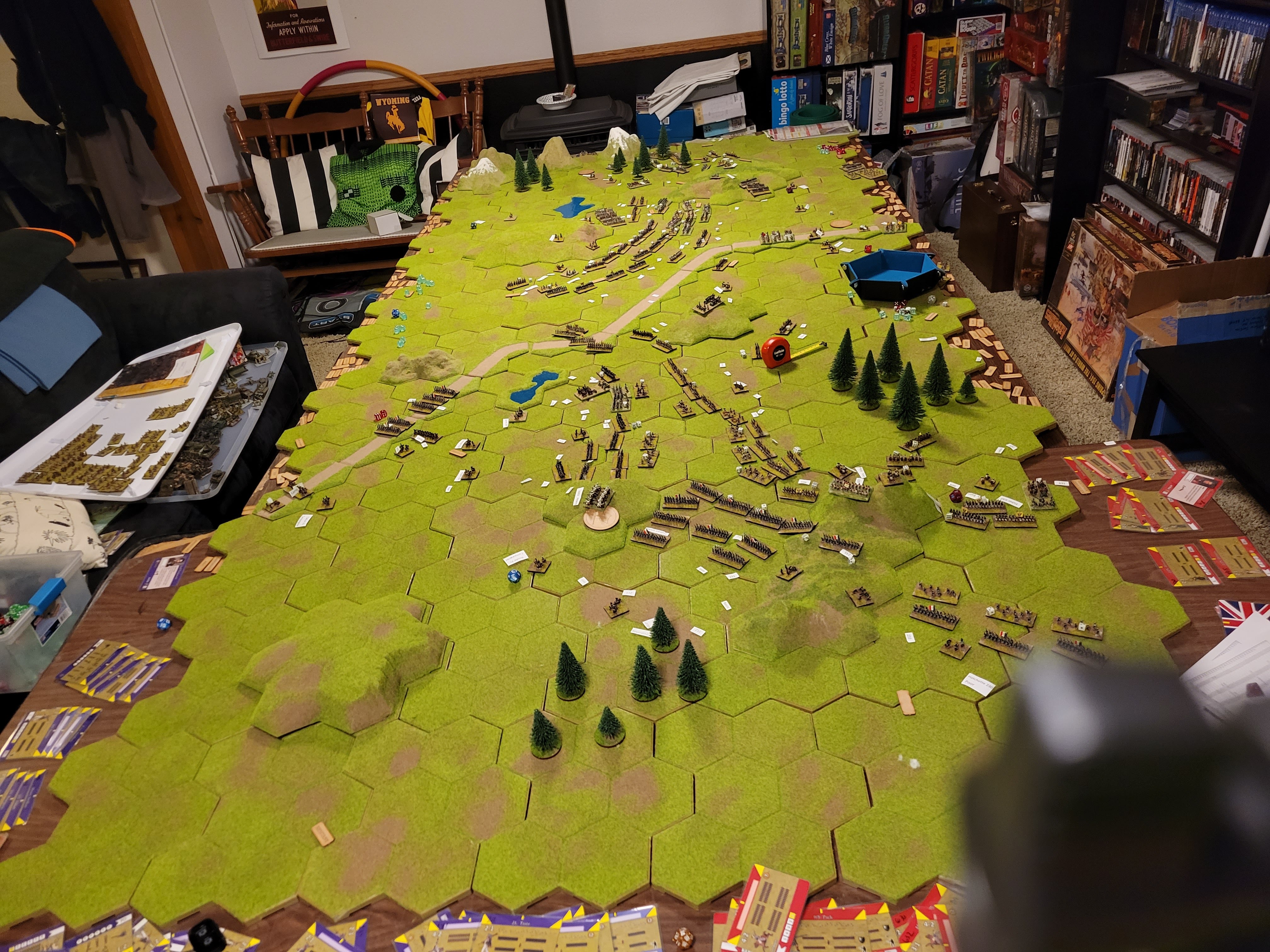
Turn 13 the reserves have flown up the middle of the table and engaged in the center.
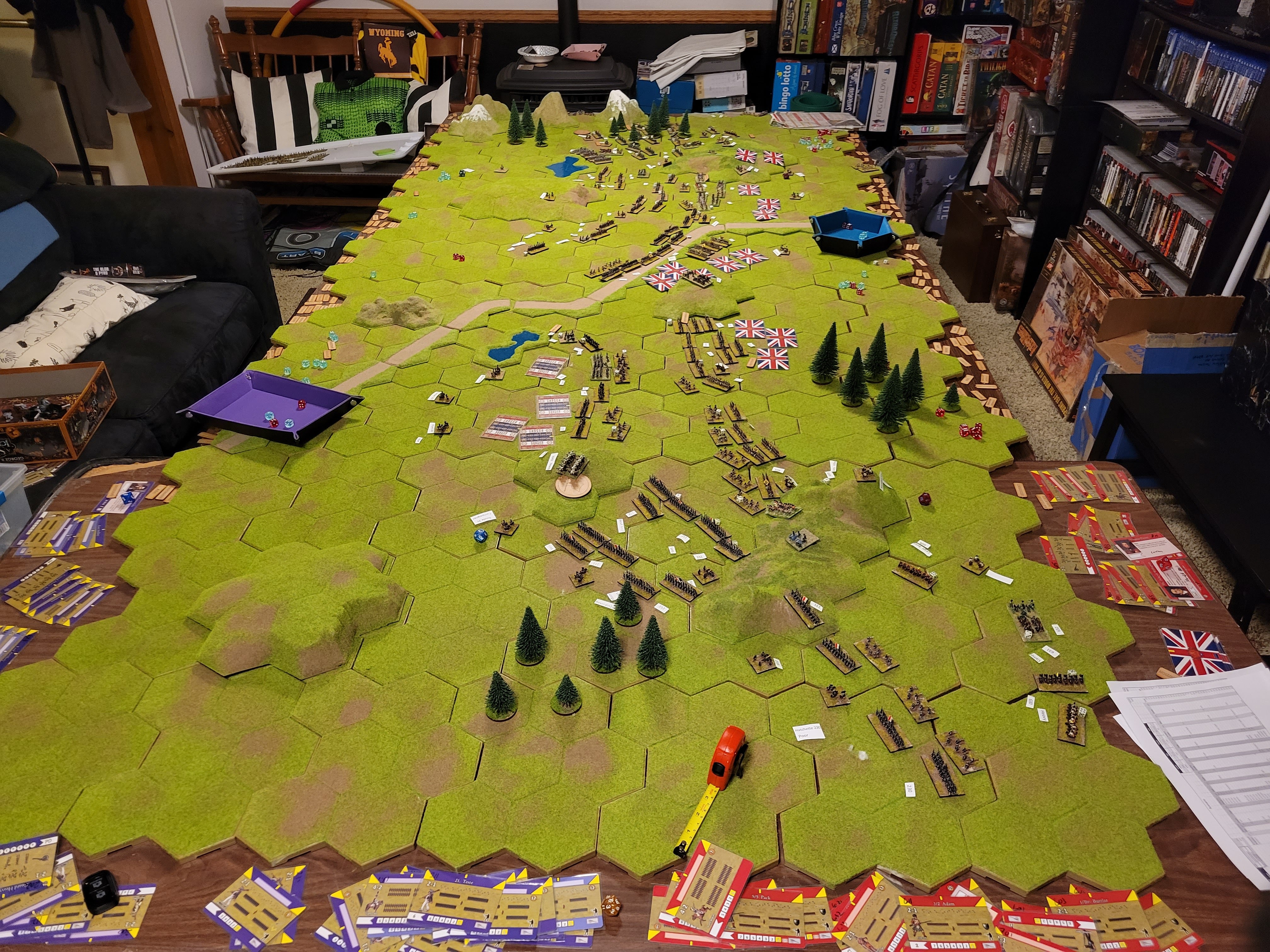
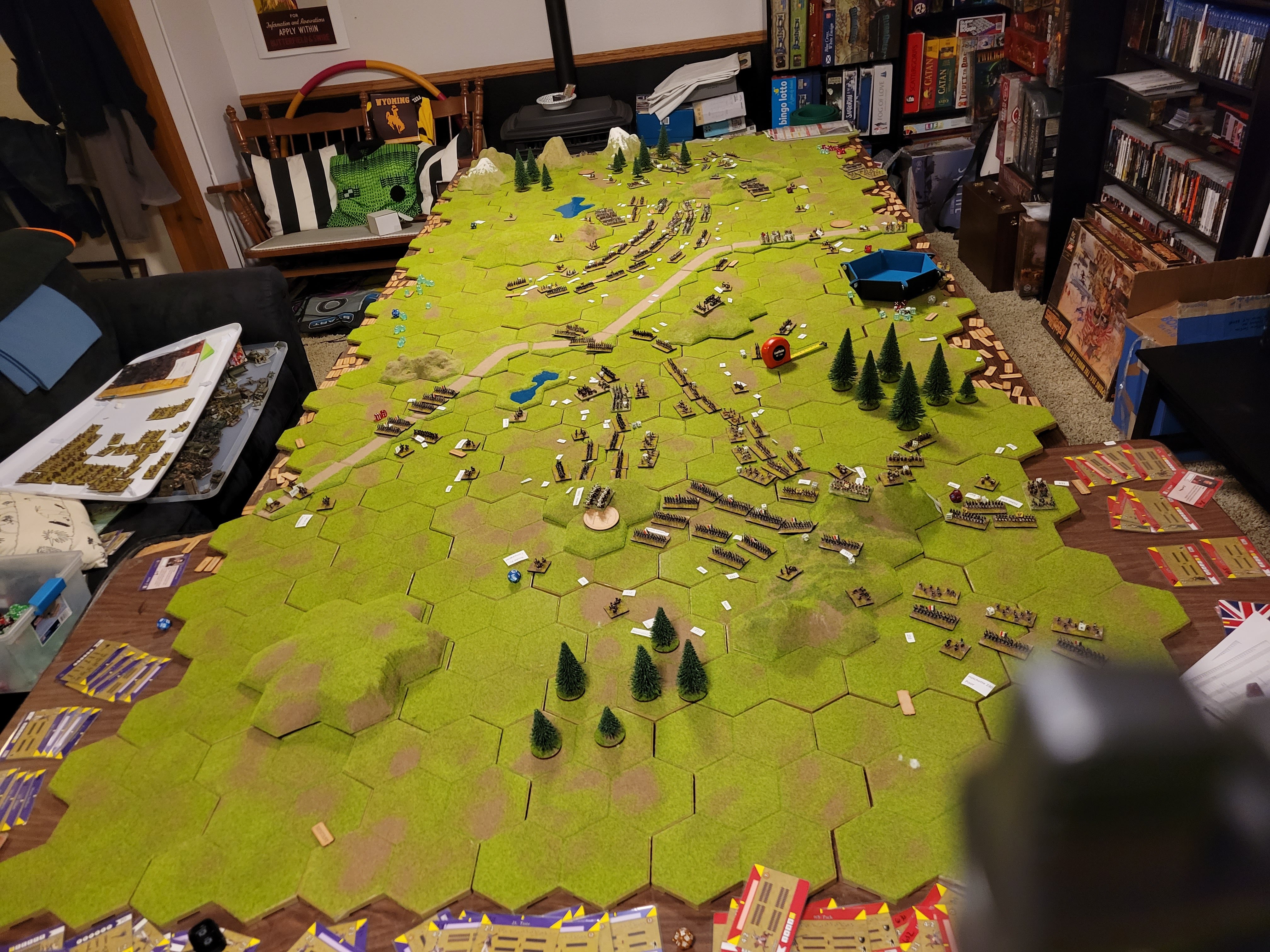
Turn 15, shit hit the fan. The British rolled 15, 11’s and 12’s to literally shatter the French’s bottom flank and center. I chose to call the game as this point. 12 French battalions left the field to only 1 British. An entire Corps was broken. I saw no way for the French to recover.
Overall Impressions
This was my 10thish time using the General D Armee system. Having a battle of this size the rules were semi cumbersome and I wouldn’t advise trying it yourself. I had a great time though and could feel the full actions. In the future, I will work on creating a ruleset for the use of dragons on the field. Based on the books His Magesties Dragon. Love the books, love Napoleonic wars, I think Dragons could be used in this system. Thanks for reading talk soon.

 stonewalljackman