P3 Master Series Paints Review

I recently received the P3 Master Series Paint Set. My box opening is available here.

I have been working with the paints for about two weeks and have painted 30 or so models using the paints. I did a variety of models, such as Star Wars Legion, Reaper Bones, Warhammer, Marvel Crisis Protocol, Lord of the Rings, 3D prints, and some Flames of War. I used the paints in several ways, direct from the bottle, thinned, airbrushed, and as glazes. I also used wet blending, layering, edge highlights, base coating, etc. There were no scientific comparisons, color matching, or very professional items; I just wanted to give my thoughts on the set.

When I started my hobby, I was almost mystified by the quality of the P3 paints and how hard they were to get. Professional painters swore by the paints. I had to have the Kickstarter to see what all the fuss was about.

Conclusion

As an amateur painter, I did not think these paints were for me. I would pass on rebuying them. I think I could see the appeal for a professional painter, but I don’t have the skill to maximize their potential.

As I stated in the unboxing, there were no mixing mediums, primers, or washes, so I would expect to come with a set like this.

The paints themselves were pretty thick. I mixed every paint in the bottle using a vortex mixer for about 45 seconds before using. Many paints broke on my wet palette after 15 or 20 minutes. When the paints were thinned too much, instead of just being thin and needing a second layer, the brush strokes were obvious and hard to hide, especially when wet blending.

I tried about 70 of the colors included in the box. They all had a lovely, rich hue and good coverage when appropriately thinned. The ratio to thin the paints differed with every color, and it took four or five tries to get the correct ratio. Many of the paints finished with a semi-gloss sheen. I prefer my paints to finish matte, but I could be incorrectly using them.

The P3 paints are a step below Army Painter and Vallejo, but a step up from Reaper and two steps higher than Citadel. I would still consider Two Thin Coats the top brand for amateur use.

First Experience

I first tried a DND Reaper Bones model I had already primed. I wanted to see what the paints could do directly from the bottle—no thinning, no wet palette, just paint.
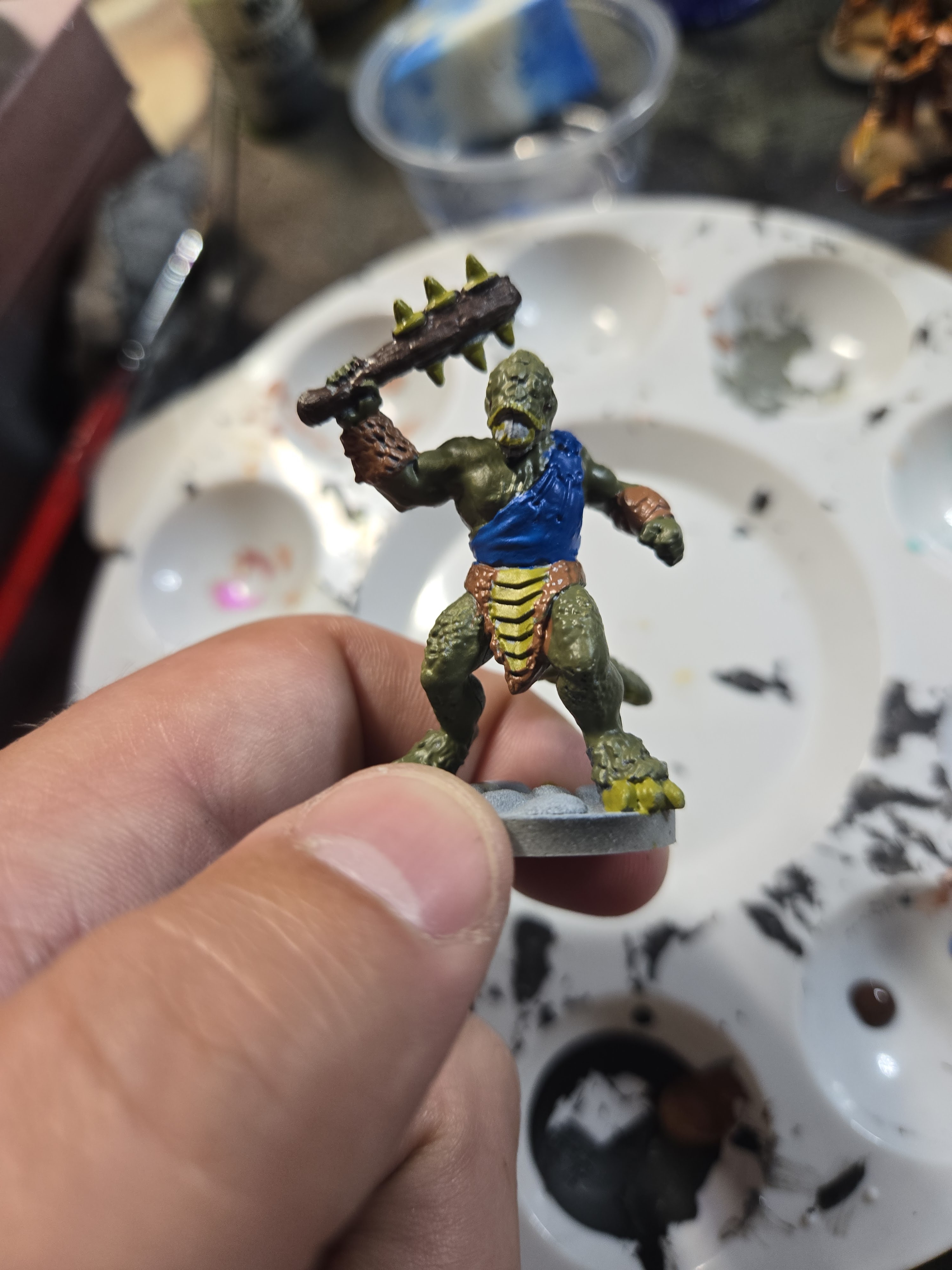
You can see the rich color and bright hues, but you can also see how thick the paint was when it came from the bottle and how it muddled many details.
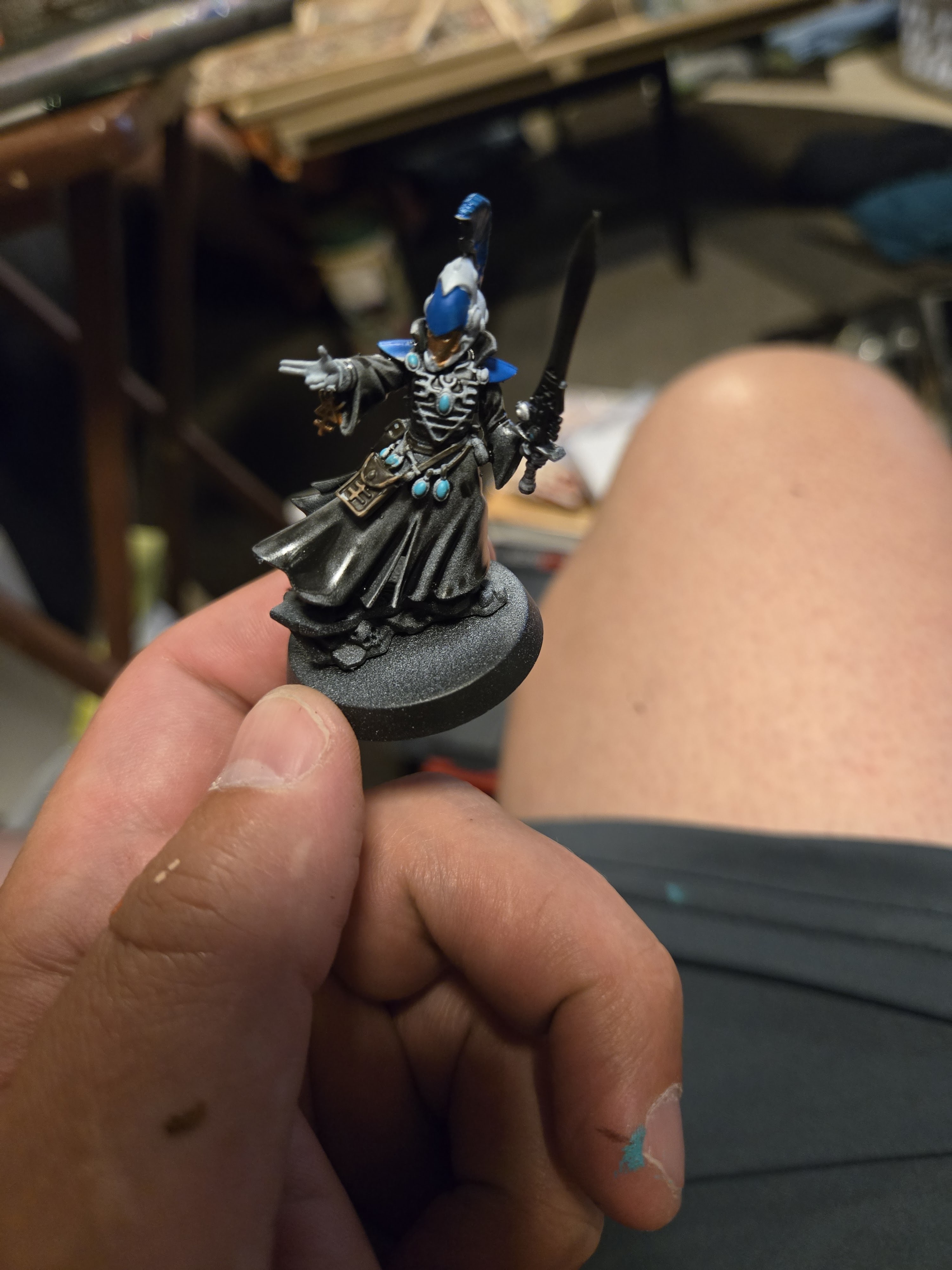
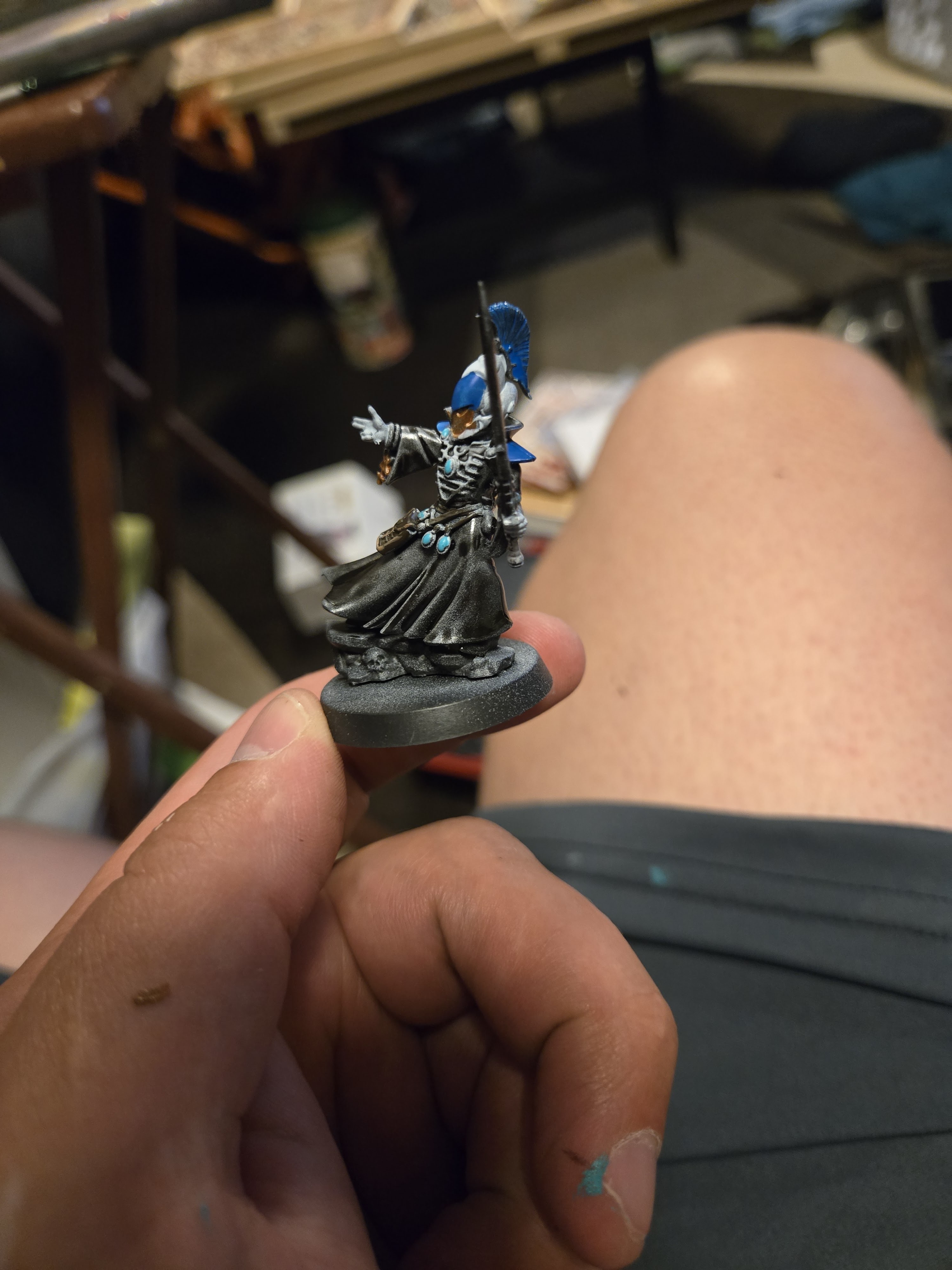
My next model was a simple Aeldari Warlock. This time, I thinned the paints and used the black as a glaze for the bottom robe, which turned out nicely. The unthinned paint made a very nice edge highlight. You can see it on the satchel and the model’s chest piece. The metallic visor didn’t work well; it was gloppy and hard to control.

You can see the stark difference between the unthinned and thinned paint. I don’t see much difference between thinned and unthinned in my usual paints like Reaper, Armypainter Air, and Vallejo Air. This was a big step in seeing so much difference.
My next model was Fulgrim, also for the Aeldari. (I am in a league and picked Aeldari as my army.) I had already done some airbrush work on the model, which you can see below. For my P3 test, I simply did detailed work.
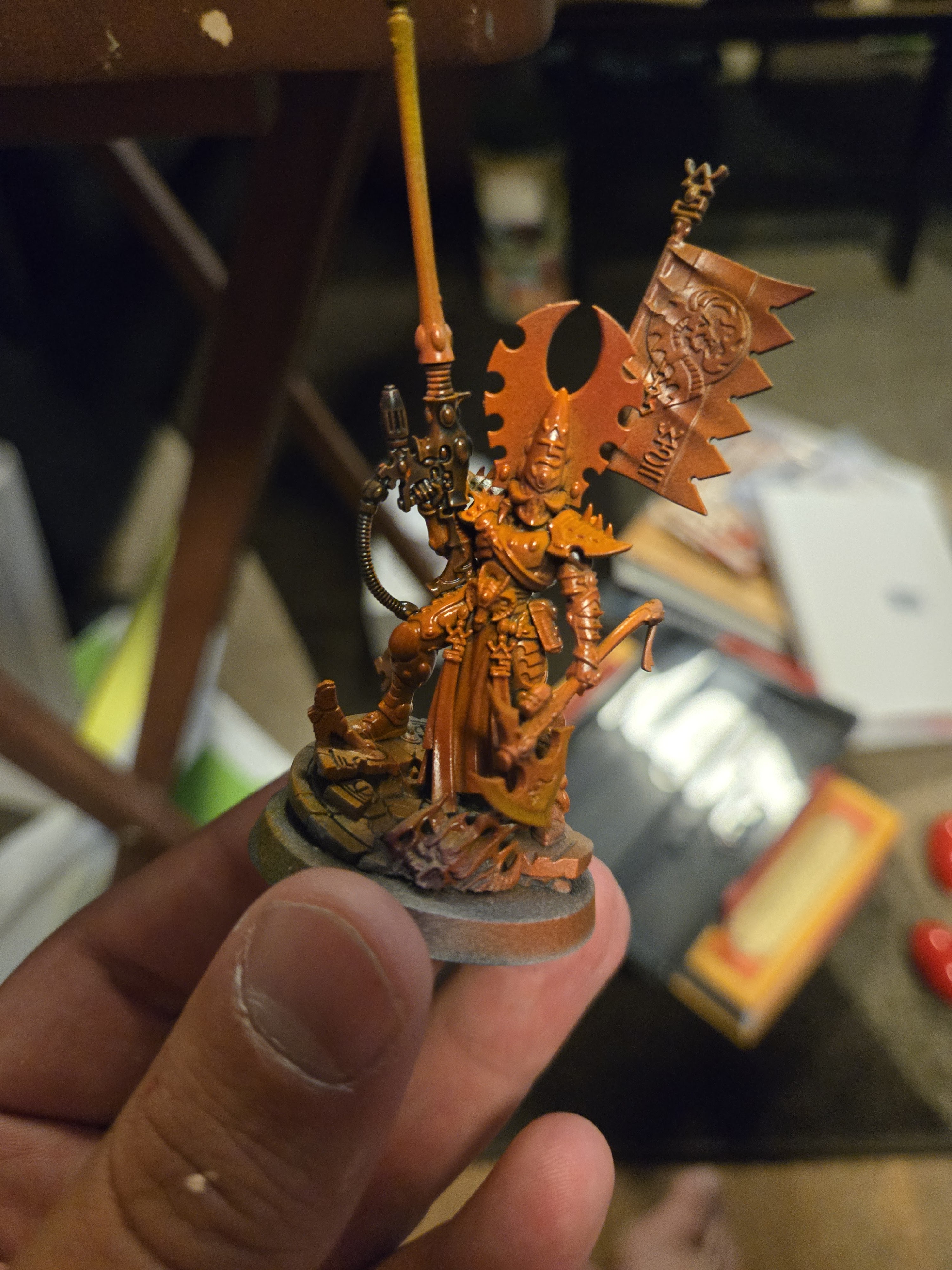
Below is the finished product after my detailed work. I won’t do bases until all models are ready.
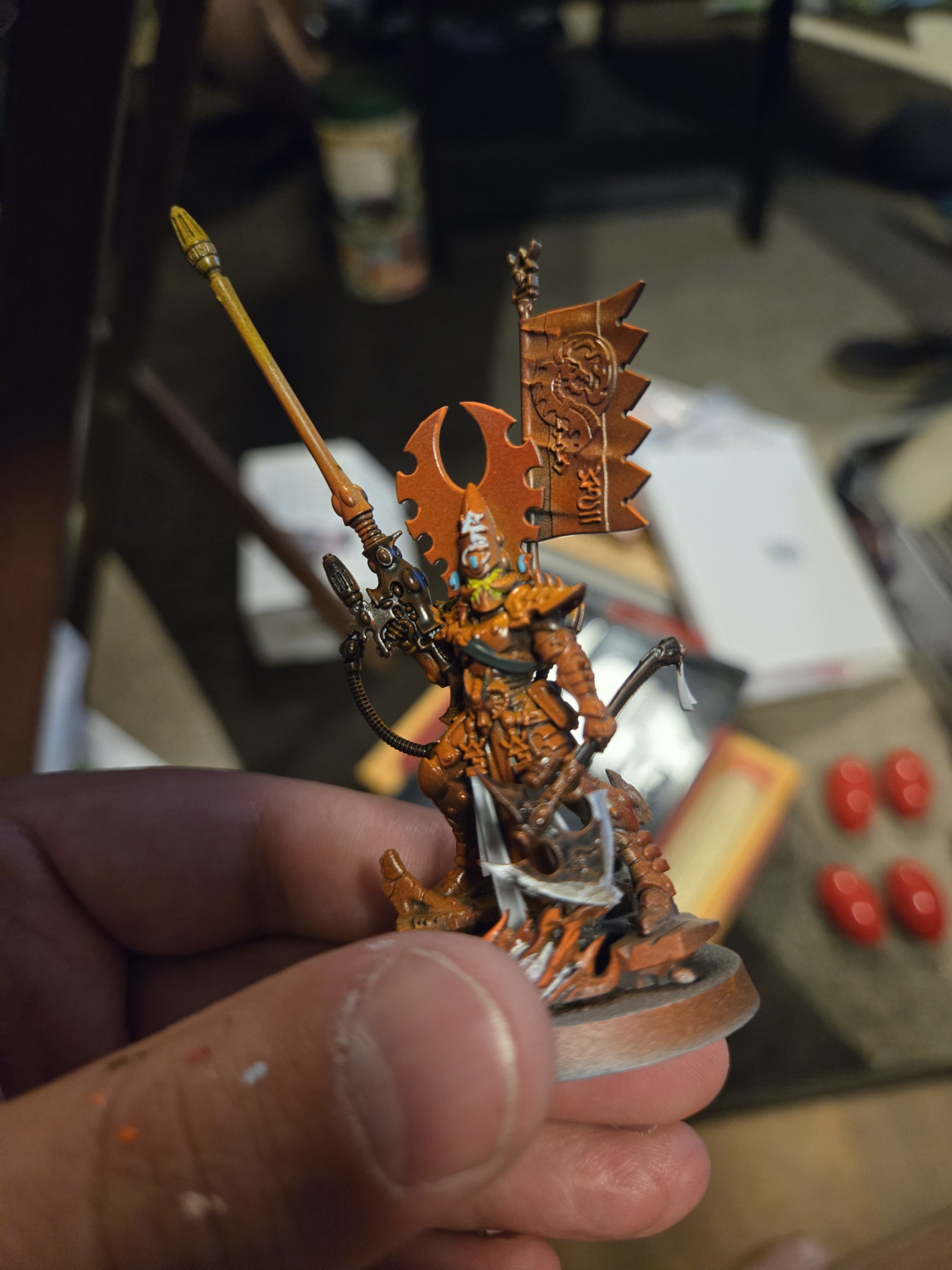
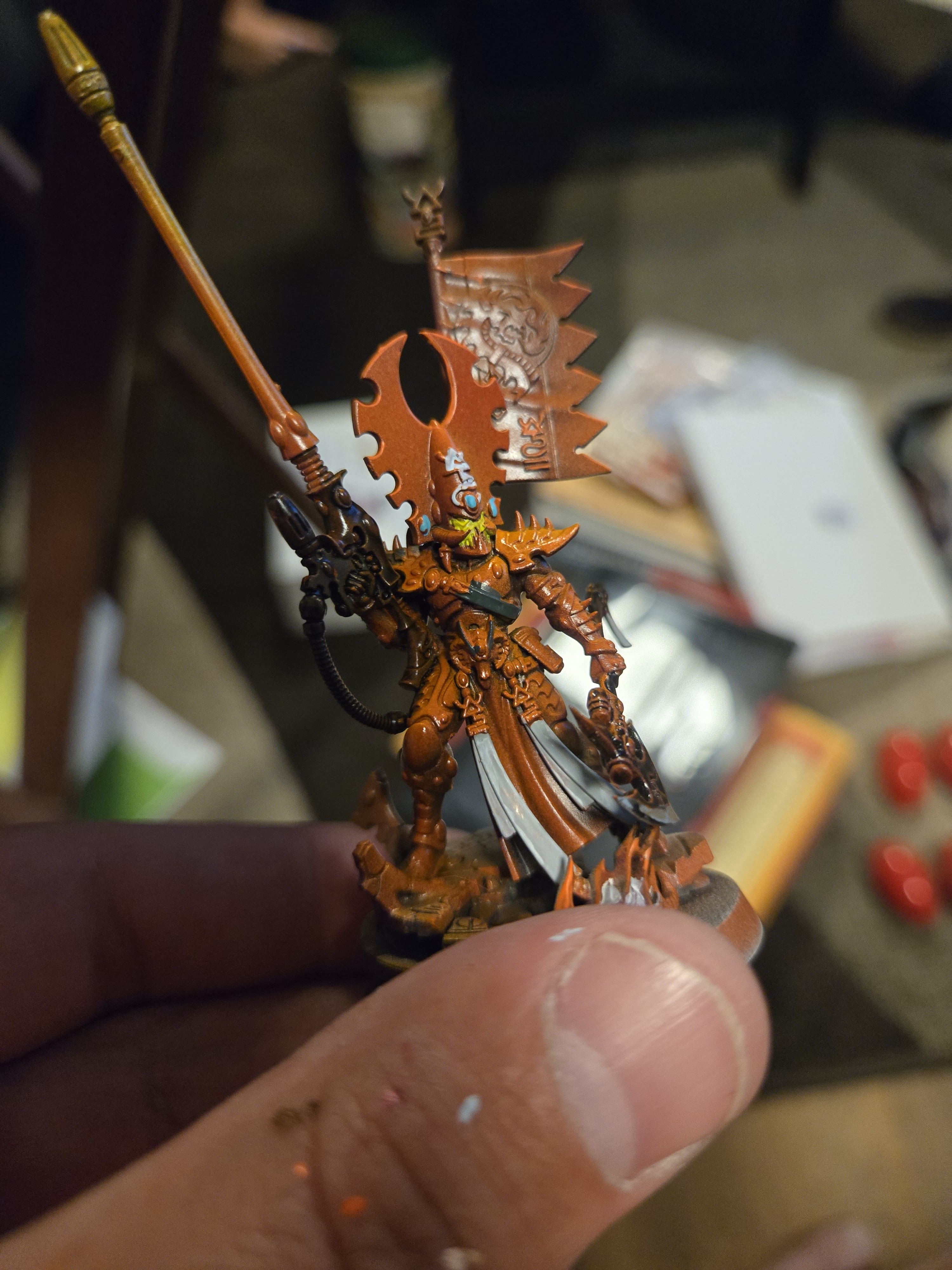
The paints were difficult to control in tight areas unless the mix was perfect, especially in the face area. This is just something to be aware of as an amateur painter.
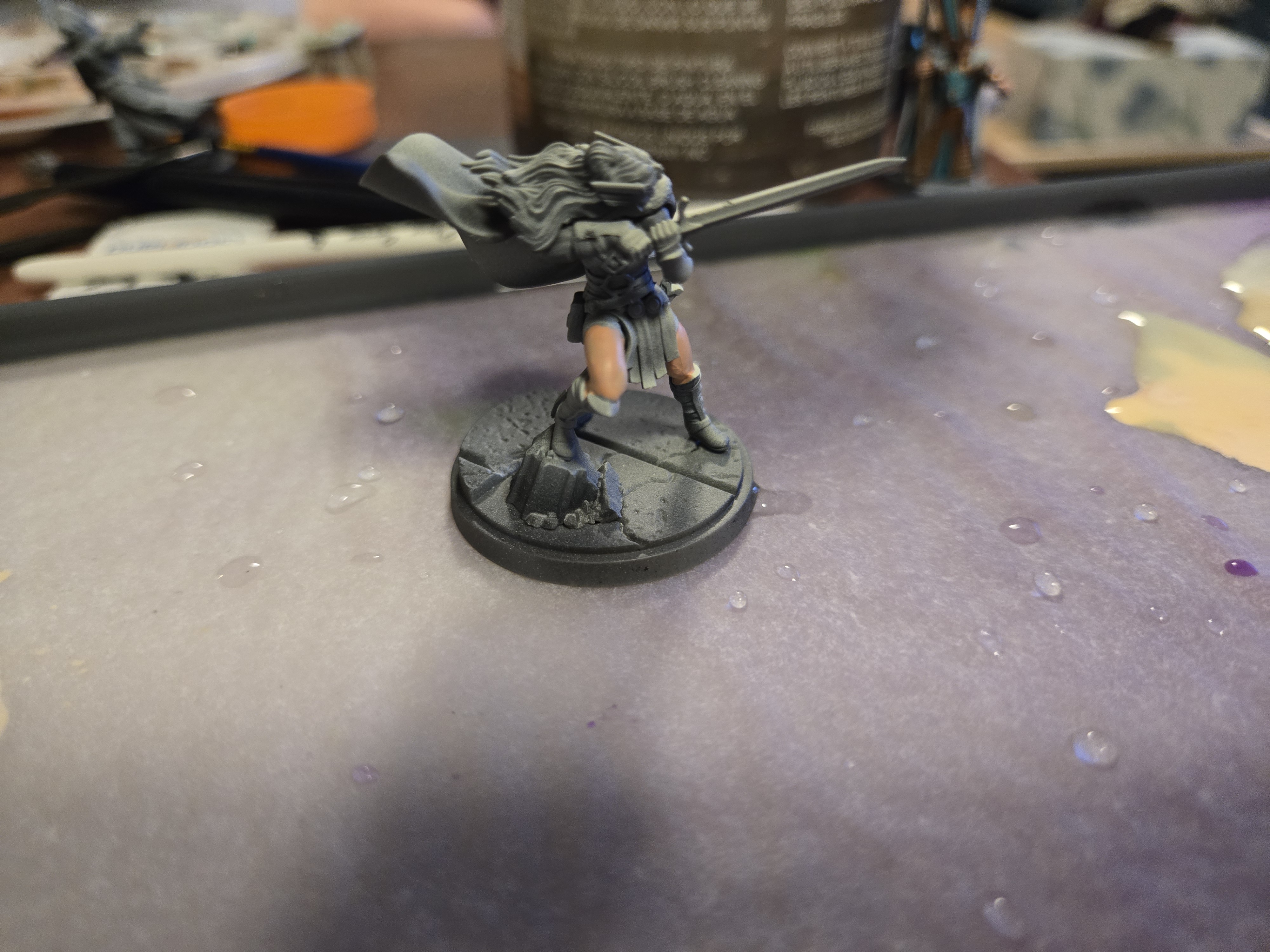
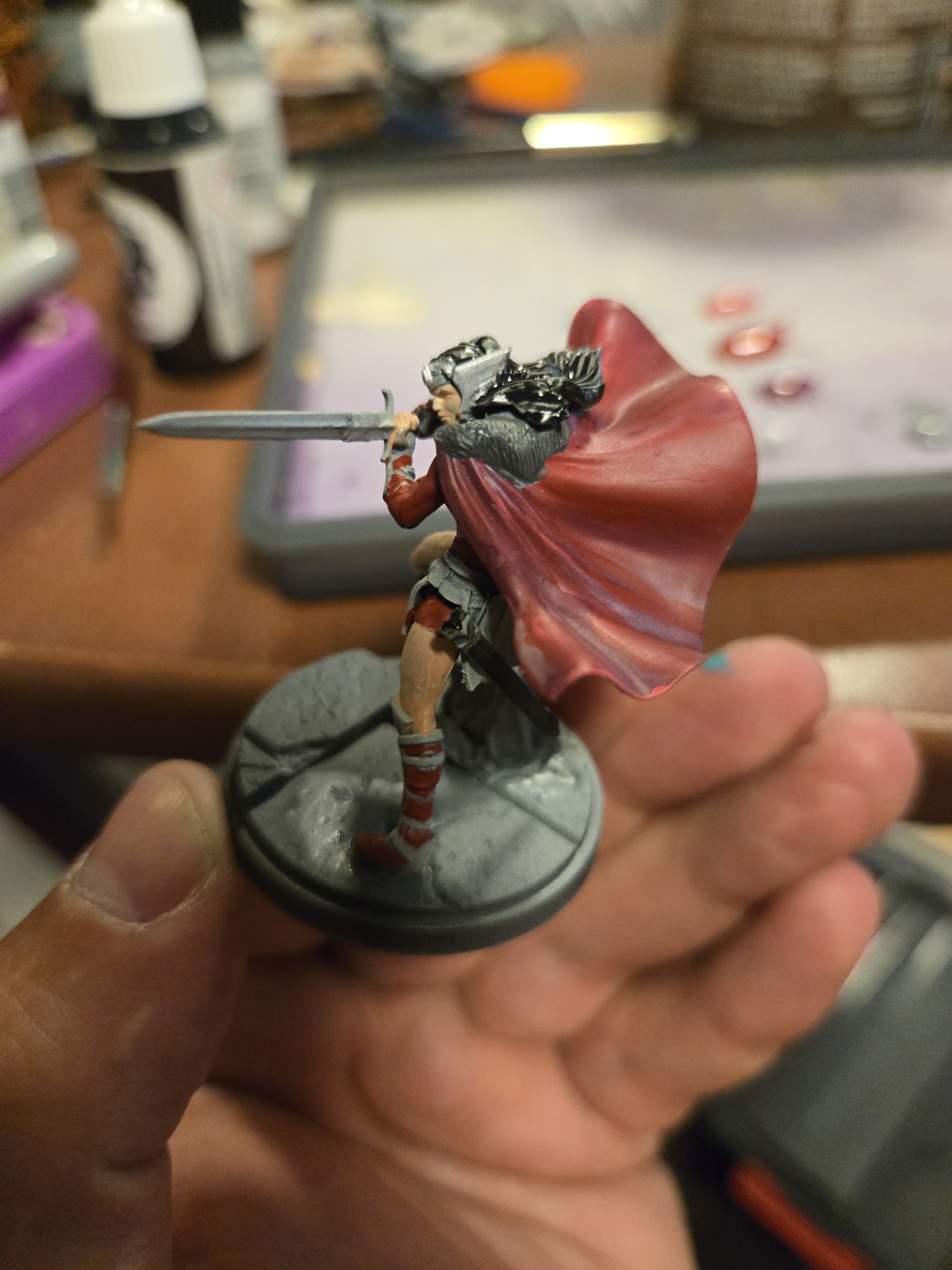
Marvel Crisis Protocol Lady Sif. Thinned paints, just base coated. I struggled to wet-blend the cloak. I will say I am not a good wet blender.
A zenithal primed phoenix guard captain.
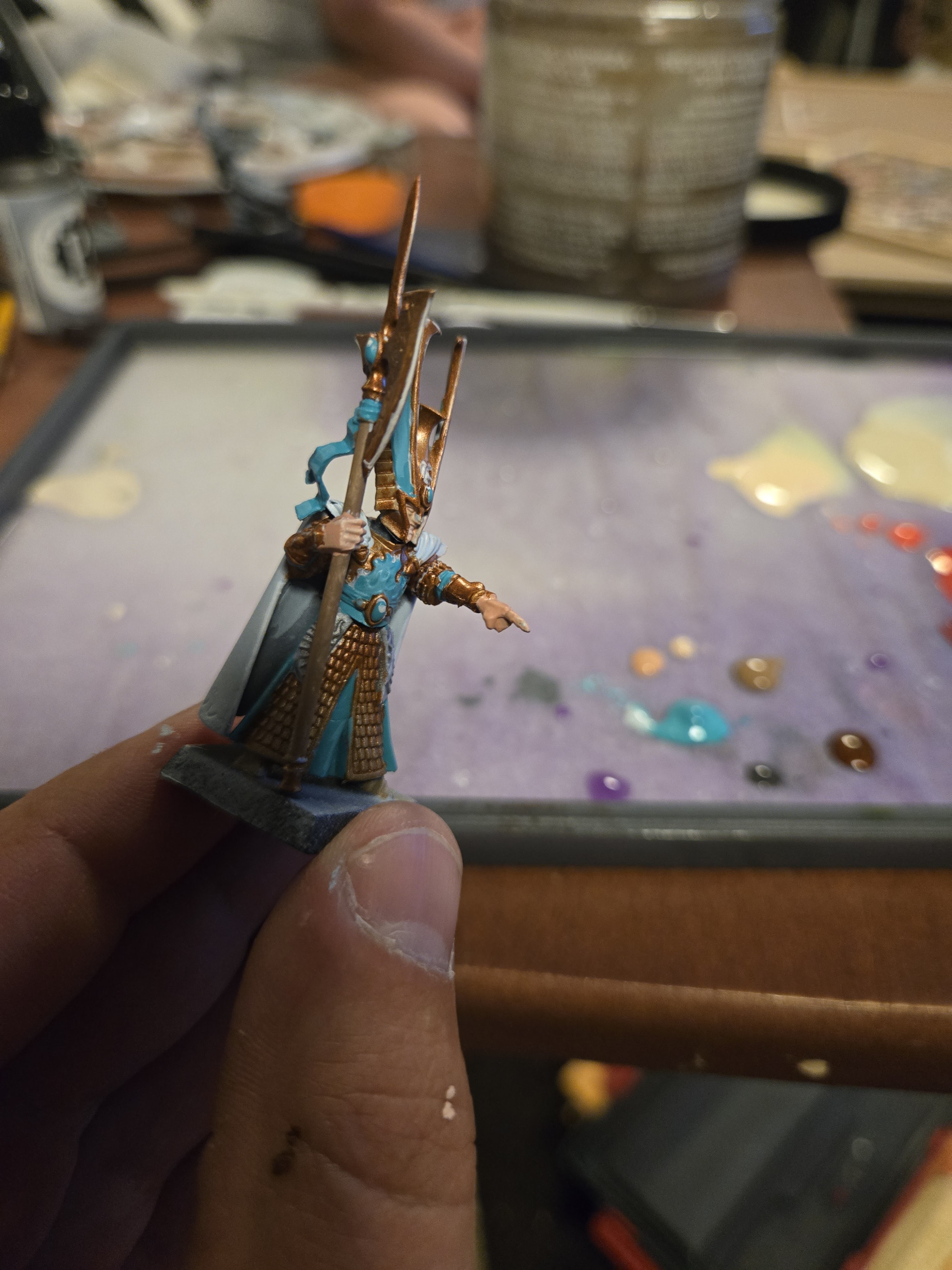
It is crazy how terrible a paint job can look zoomed in. At 3′ distance, I was happy with this model. The paints at times flowed too well, notably the flesh color around the hands. The metallic bronze and the blue did not flow nearly as well. You can clearly see the unpainted areas of the model in the zoomed-in photo.

My last test was a fully airbrushed Incredible Hulk for Marvel Crisis Protocol.

When properly thinned and mixed with an airbrush flow improver, the paints performed better than expected. In fact, I think they performed better than Citadel paints. They gave a nice, even flow with minimal pixelation. The pigments covered nicely; overall, they created a nice model with sound effects.

You can clearly see the folds in the trousers and many details. Again, this model was fully airbrushed. I only used a brush for the eyes and the nails.
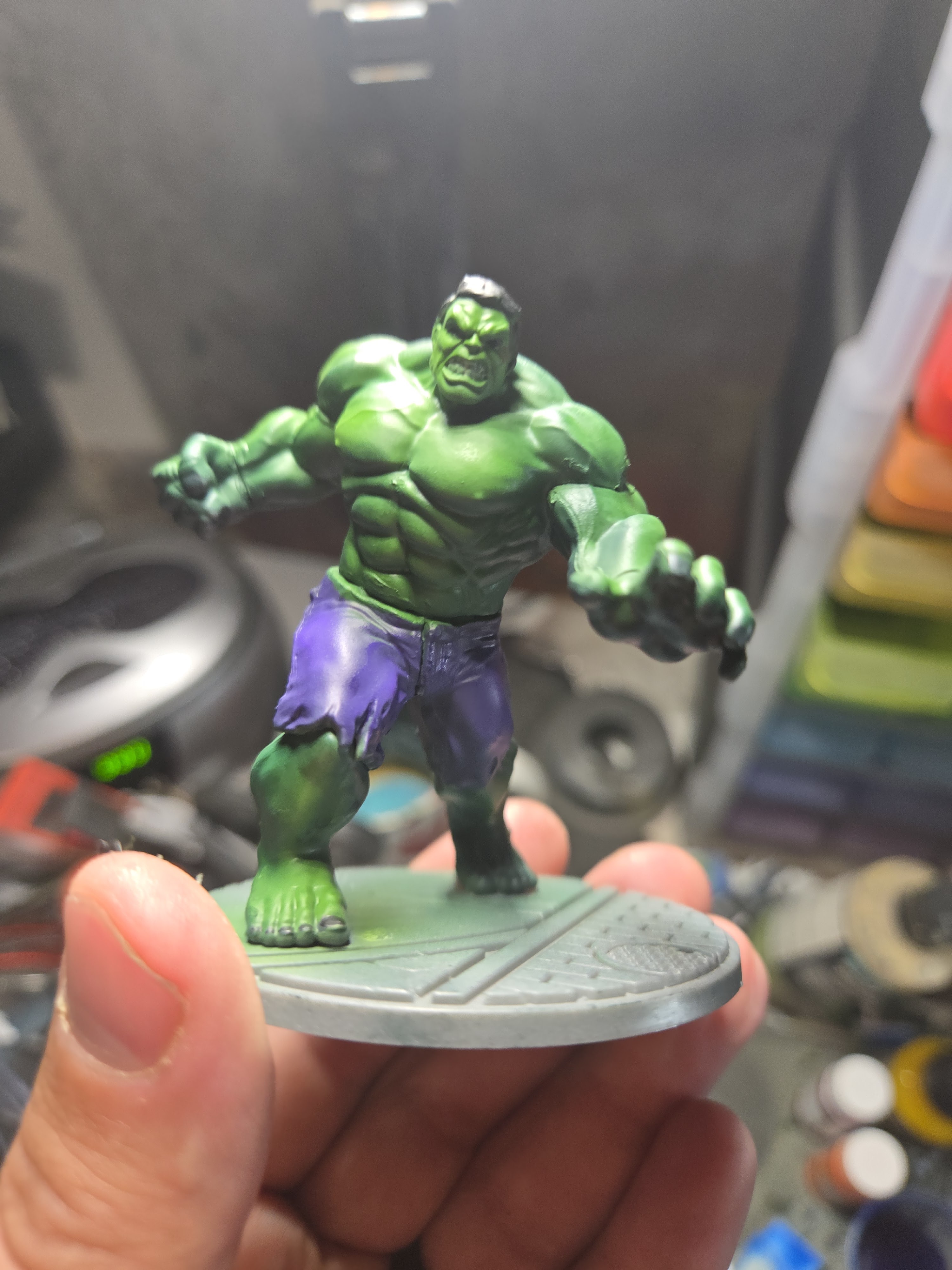
There are clearly defined shadows and highlights. My lines weren’t super clean. Again, I’m happy with how the paints were done with the airbrush. You can also see that there isn’t any spidering or splatter.
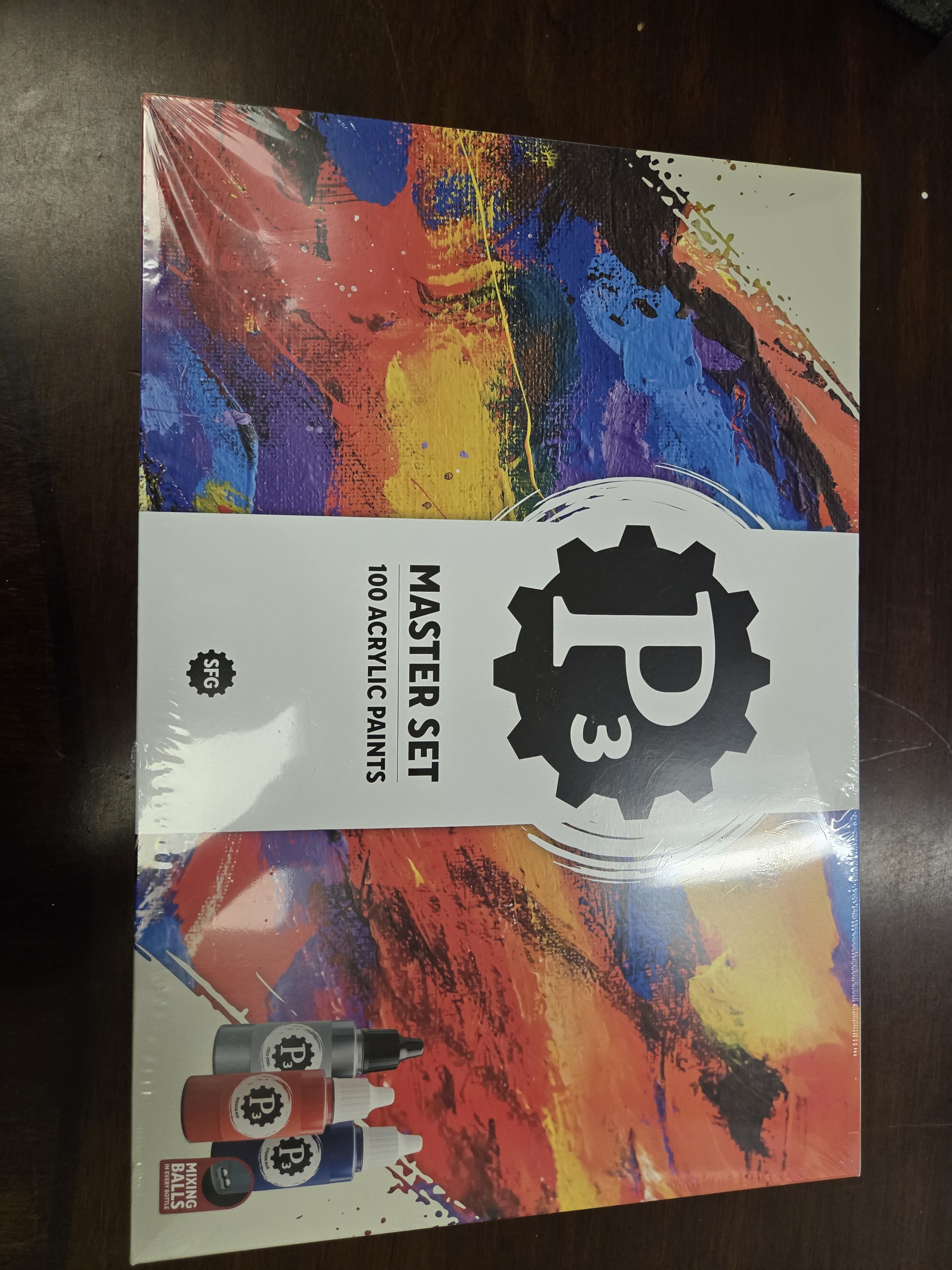
P3 Paints Master Set Acrylic Paints 100 Set Box Opening

The other day, I received a new set of paints from P3. I backed the Early Bird Kickstarter campaign, and purchasing the complete set cost me 256 BPD with shipping.

Conclusion

The P3 Master set is a decent paint set. It has an okay mix of colors. I think it’s a little heavy on the browns and potentially missing two reds, two greens, and a blue or two. You will be missing some items you would expect from Army Painter or Vallejo, where a brush, washes, thinner, primer, and paint mediums are often included with the set.

As I wrote this, I have not tested any of the paints, nor have I ever used P3 paints in the past. Based on reputation, they were the top paints on the market other than Coat d’ Arms. However, with Army Painter and Duncan Rhodes upping the game for paint quality, we will see if P3 can pass the test.

This set cost me 256 BPD, or $347 with shipping. The Army Painter Fanatic Wargamers costs about $300, and a Vallejo set with 76 paints costs $255, so this set is a little expensive. The Reaper set costs $154 and has 52 paints. It is cheaper than Dunca Rhodes Line, which costs $225 for 60 paints.

The Opening

I wanted to do a box opening of the Master Set. The box was a good value, but I haven’t tried the paints yet. That will take me a couple of weeks. I’d like to paint 10 or 12 models to see how they hold up and compare to other familiar brands like Vallejo, Duncan Rhodes, and Citadel.
There was one higher level on Kickstarter, which came with 10 paints and a paint stand. I didn’t feel like it was worth another $75.

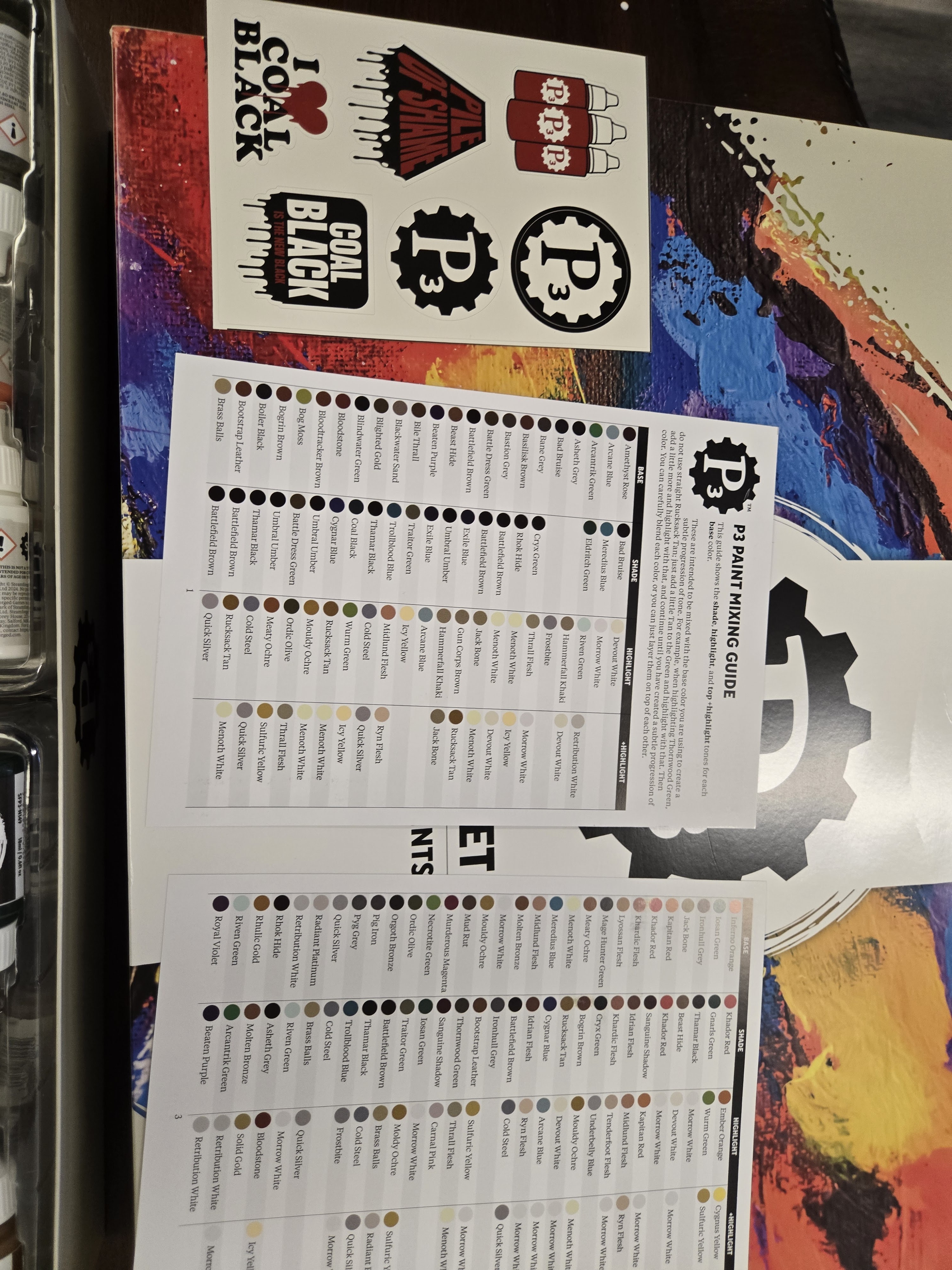
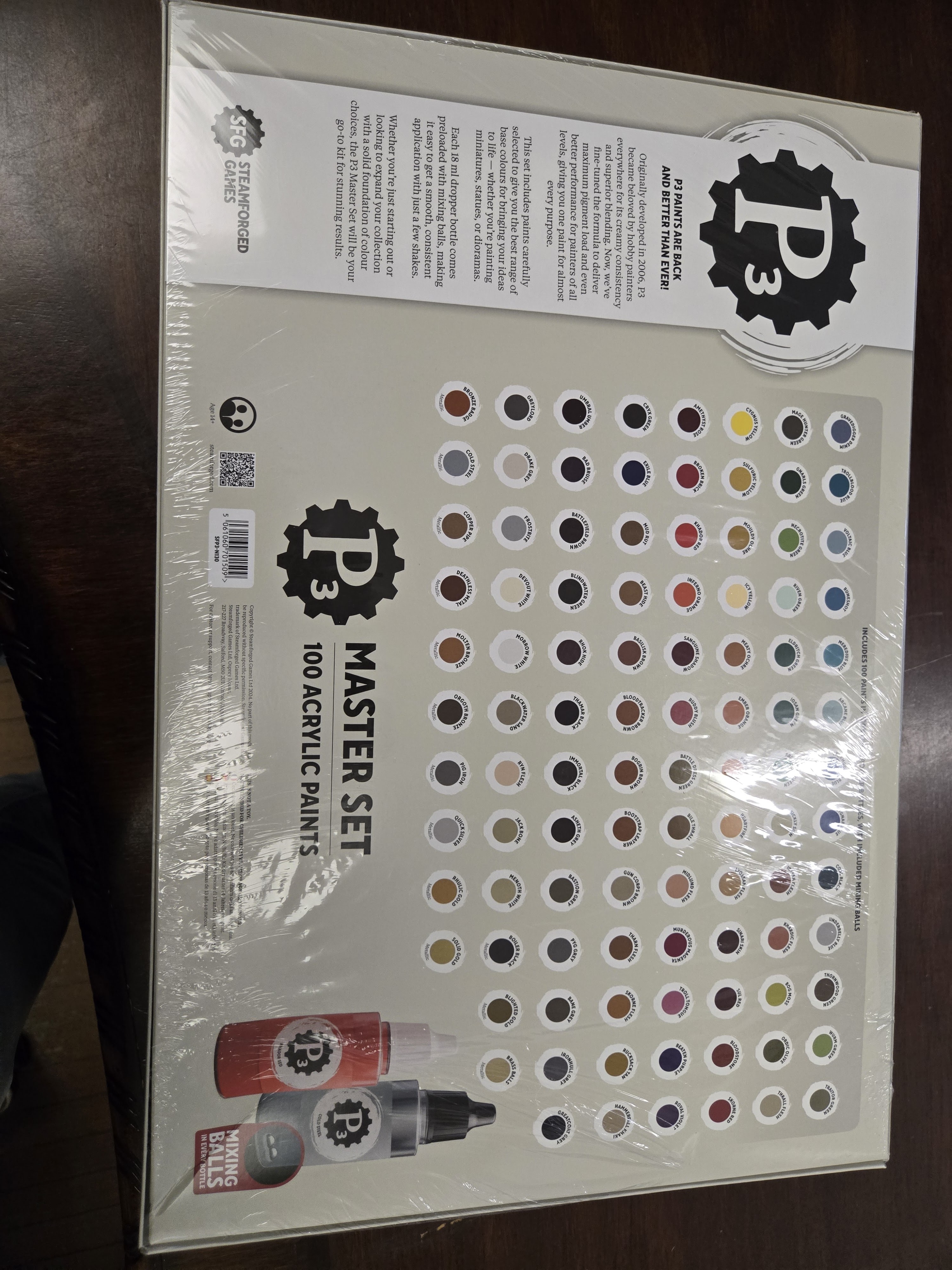
The box is very colourful, and the back clearly shows the paints and colours you will get. I like the organization of the color chart on the back. However, the box itself felt a little flimsy, and I wouldn’t recommend it as a long-term storage solution.

As is typical with paint sets like this, when I opened the box, the paints were no longer in their plastic organizers.

Nothing was damaged or spilled. The box also contained some stickers and a couple of handy charts for paint mixtures and correct layering, which has become typical with brands like Reaper, Duncan Rhodes, and Army Painter.

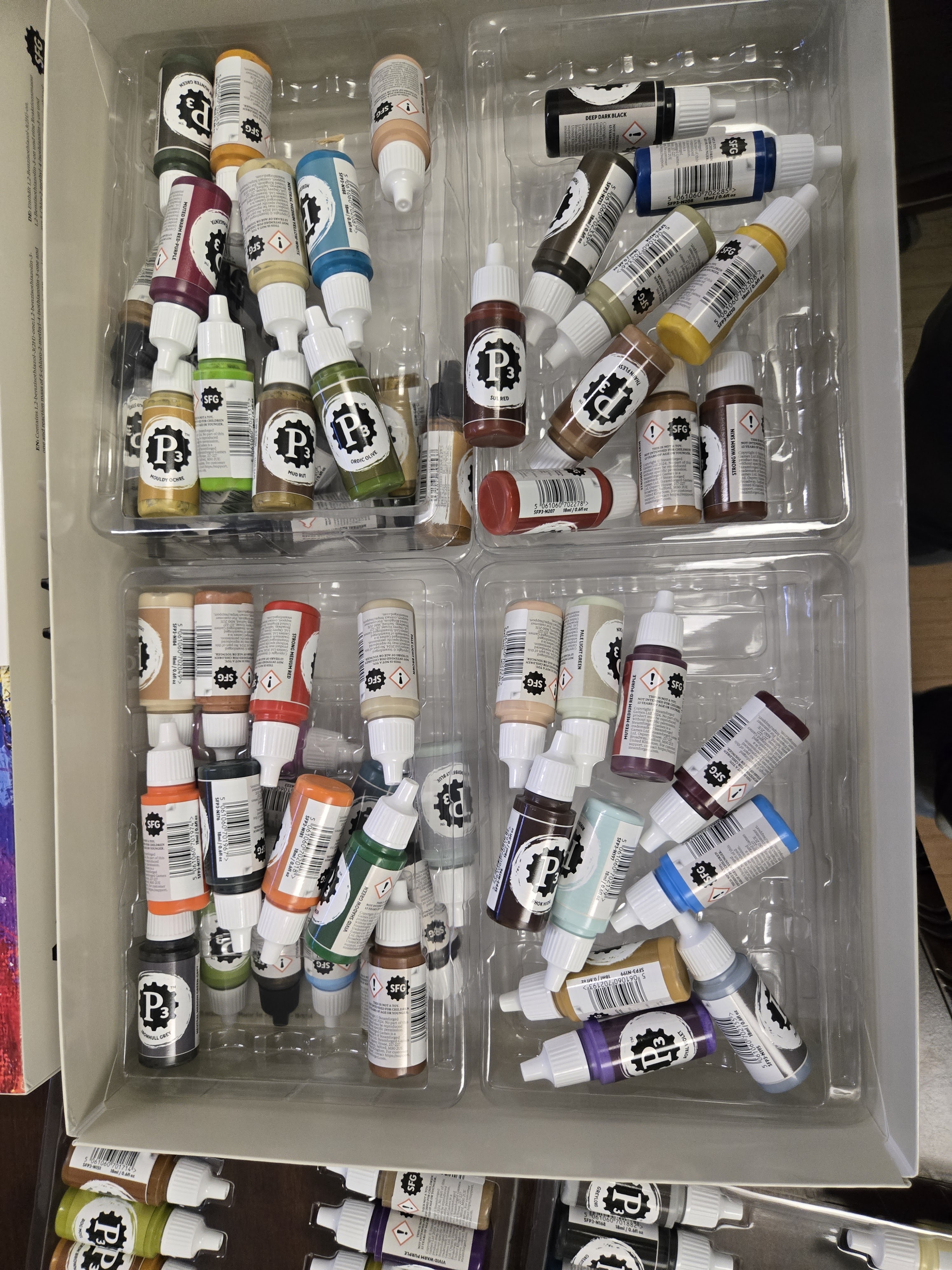
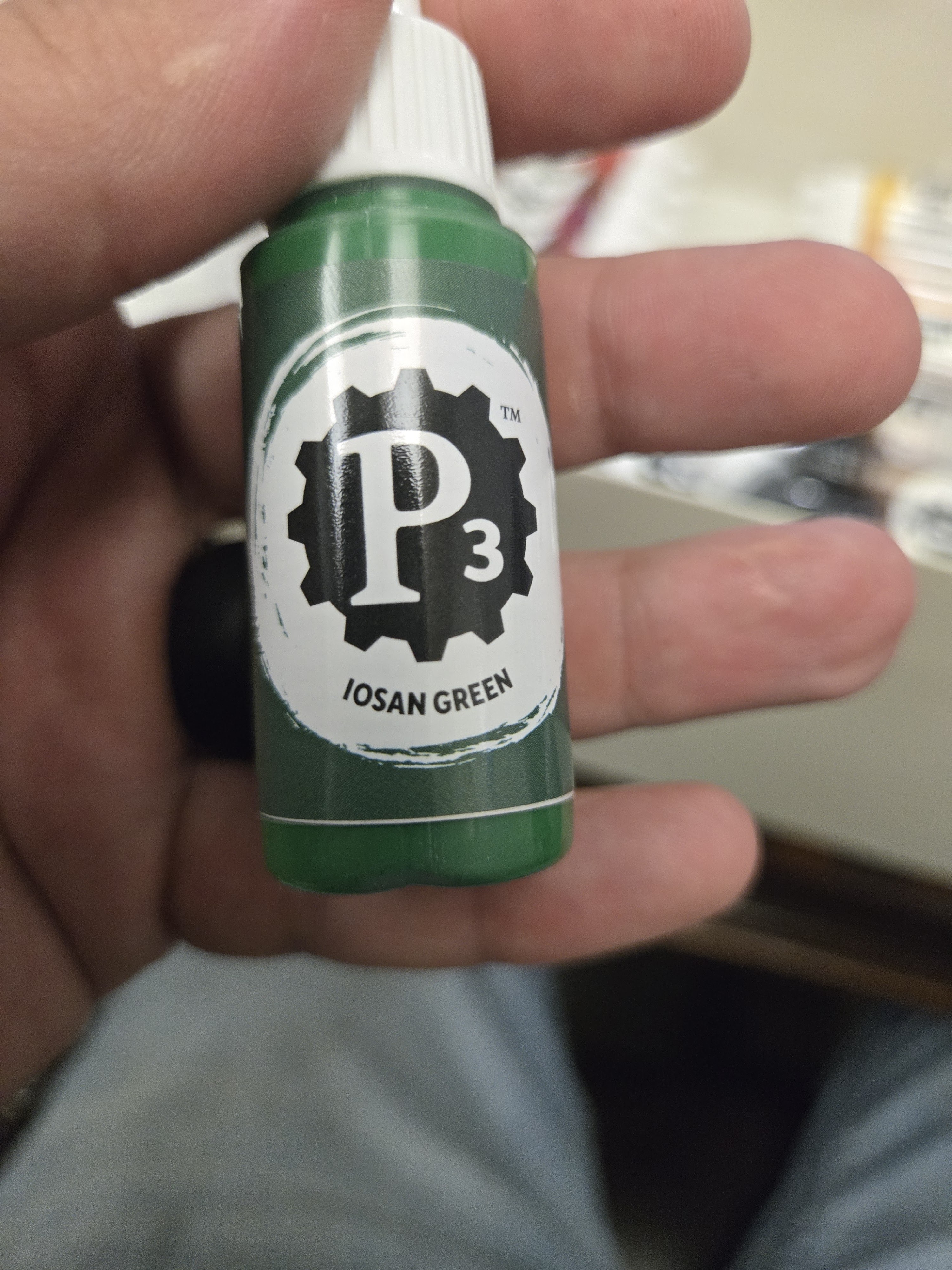
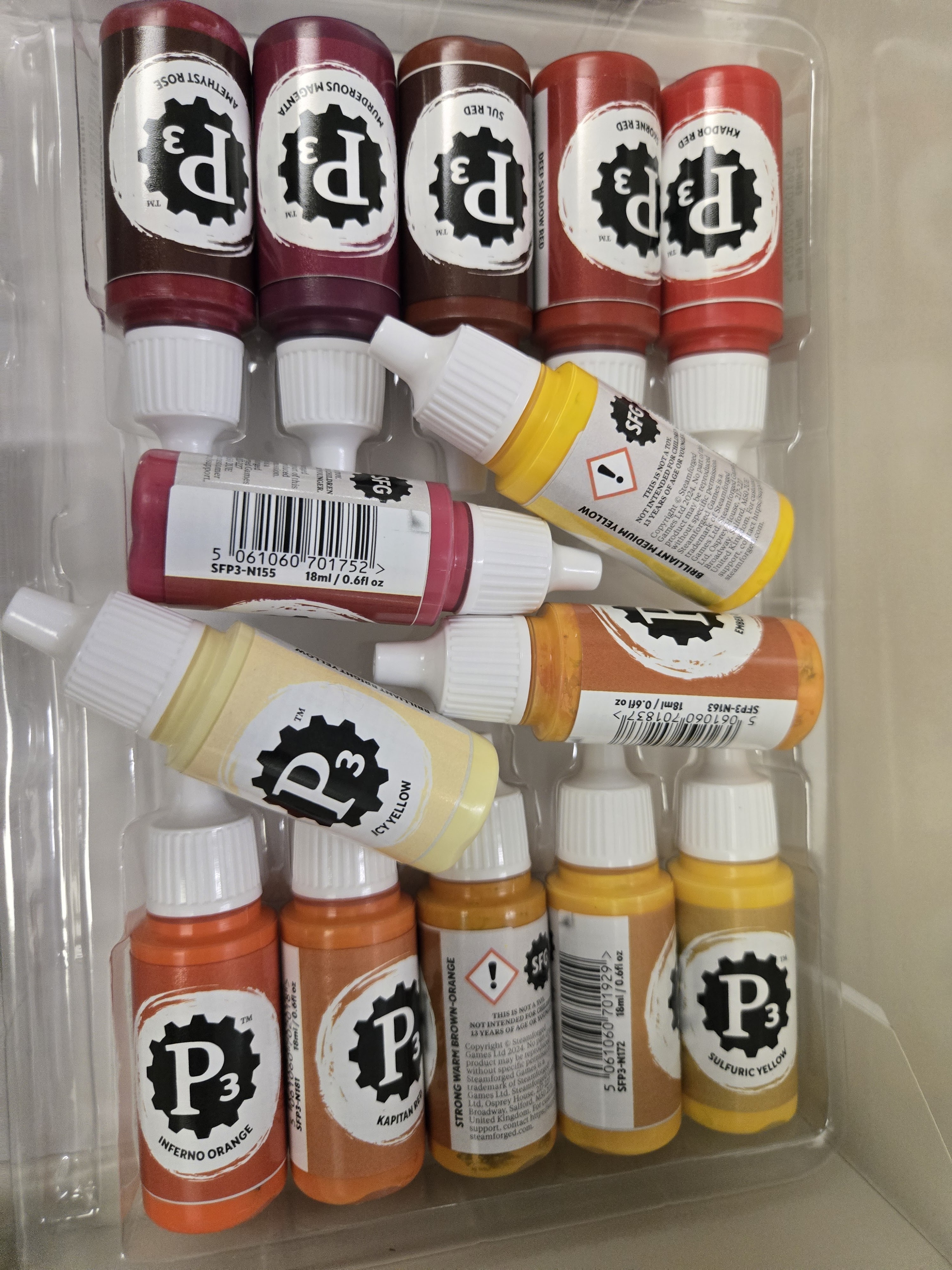
Each paint label was solidly applied, and you could easily see the tone of the paint through the bottle. The mixing balls weren’t obvious except with some vigorous shaking.

There is a nice variety of colors in the box. However, there were no mixers, such as medium or thinner, primers, or shade paints. Those items are a bit of a miss and are expected in most paint sets I have purchased.

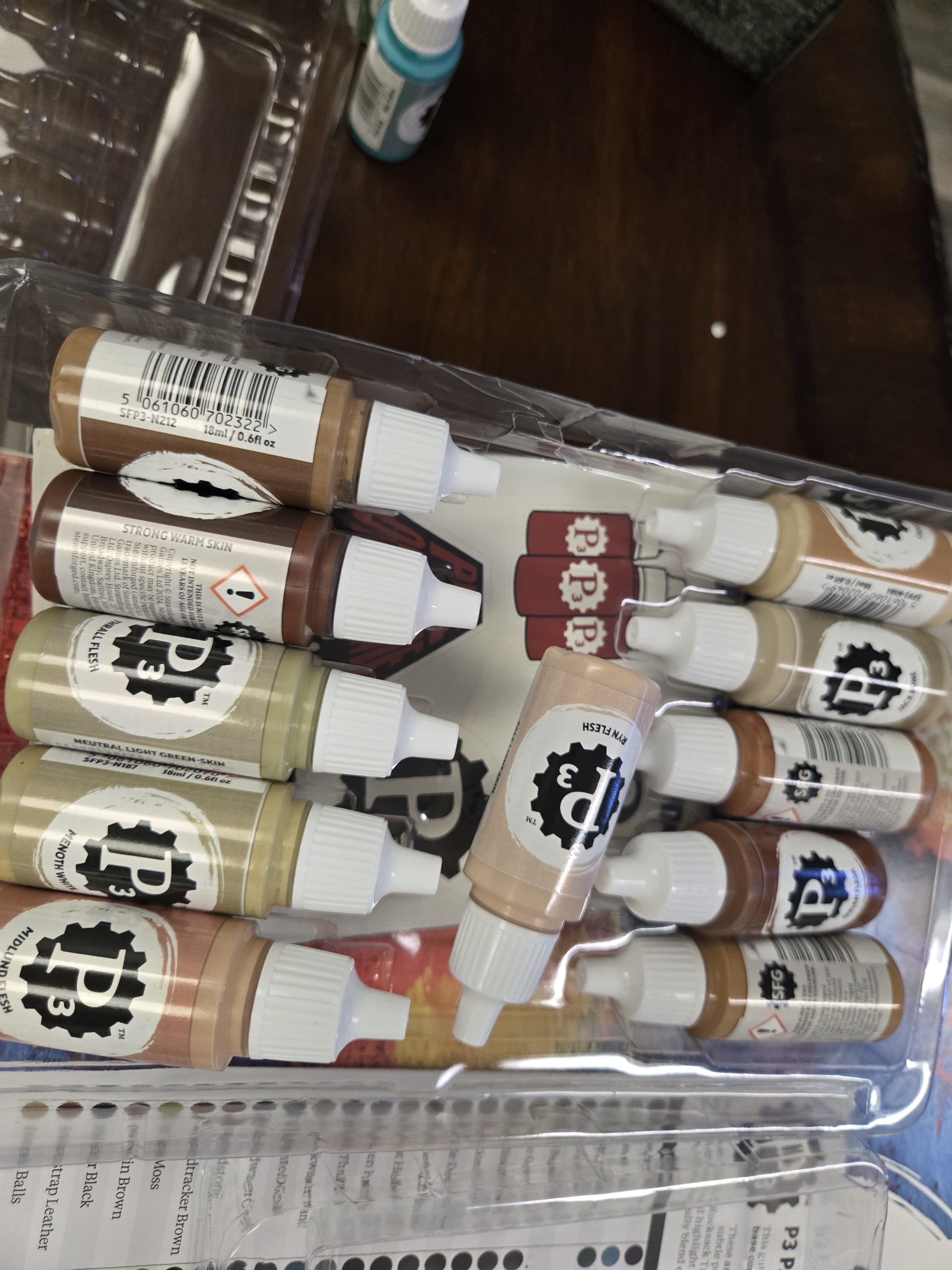
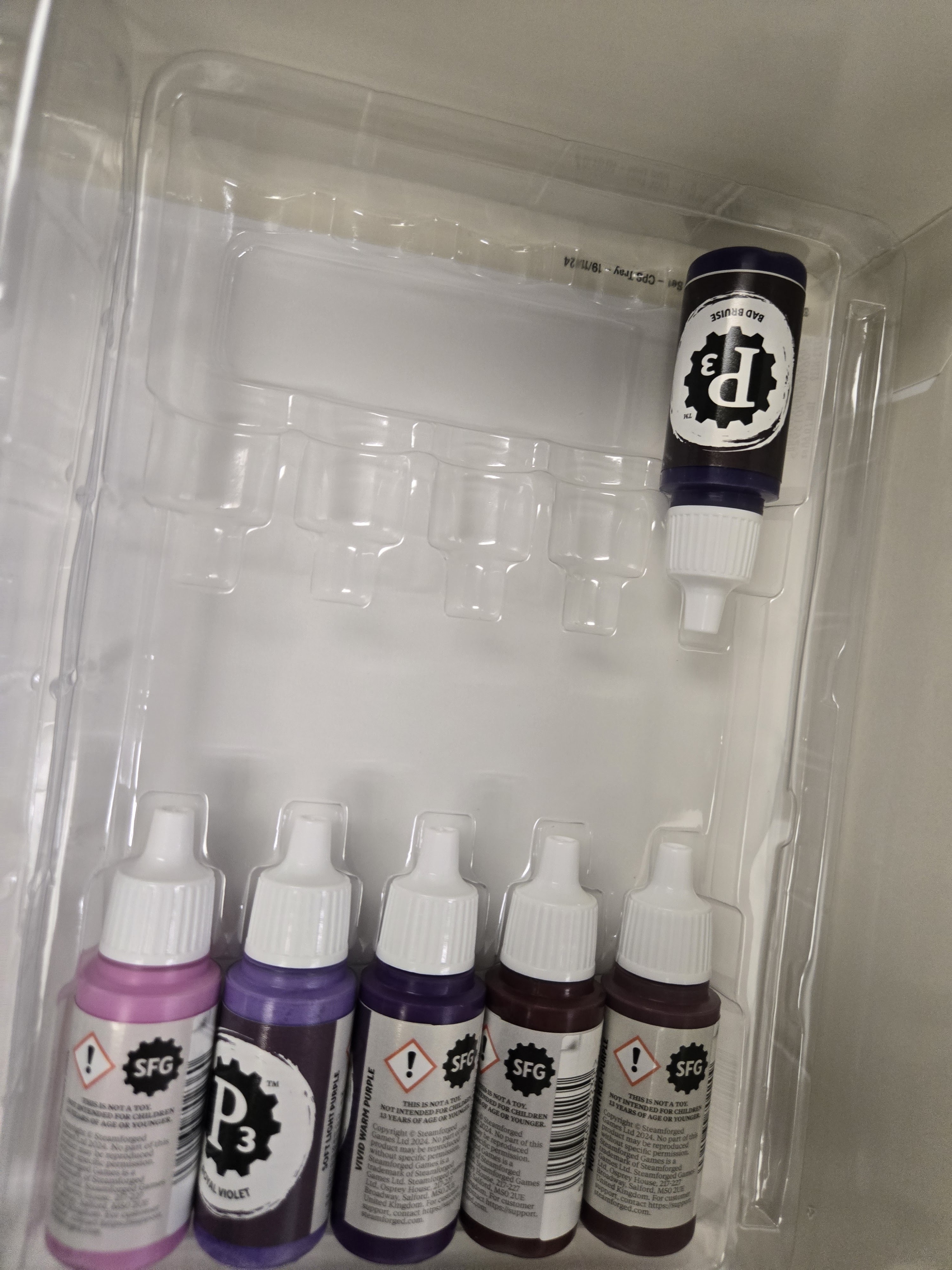
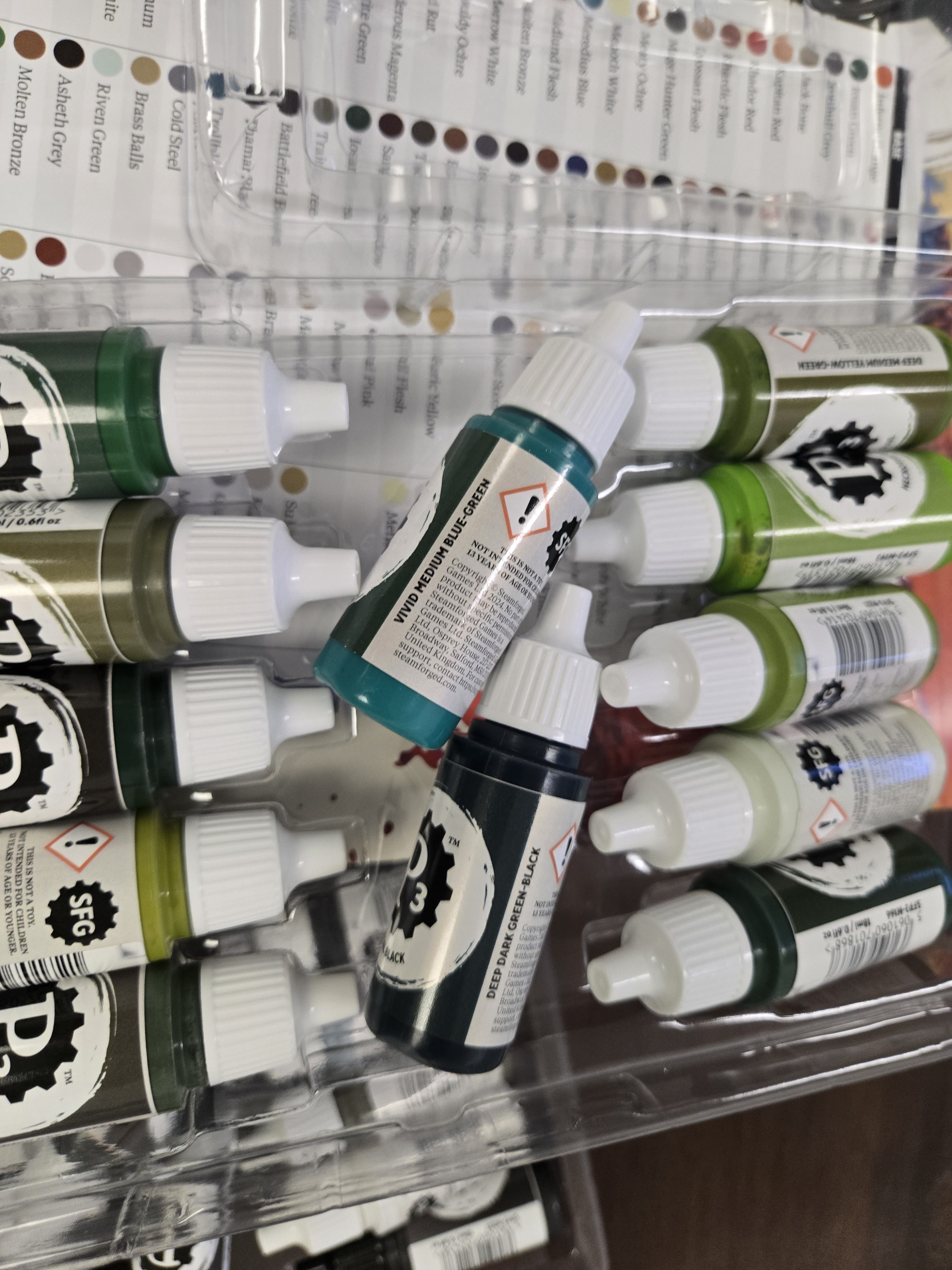
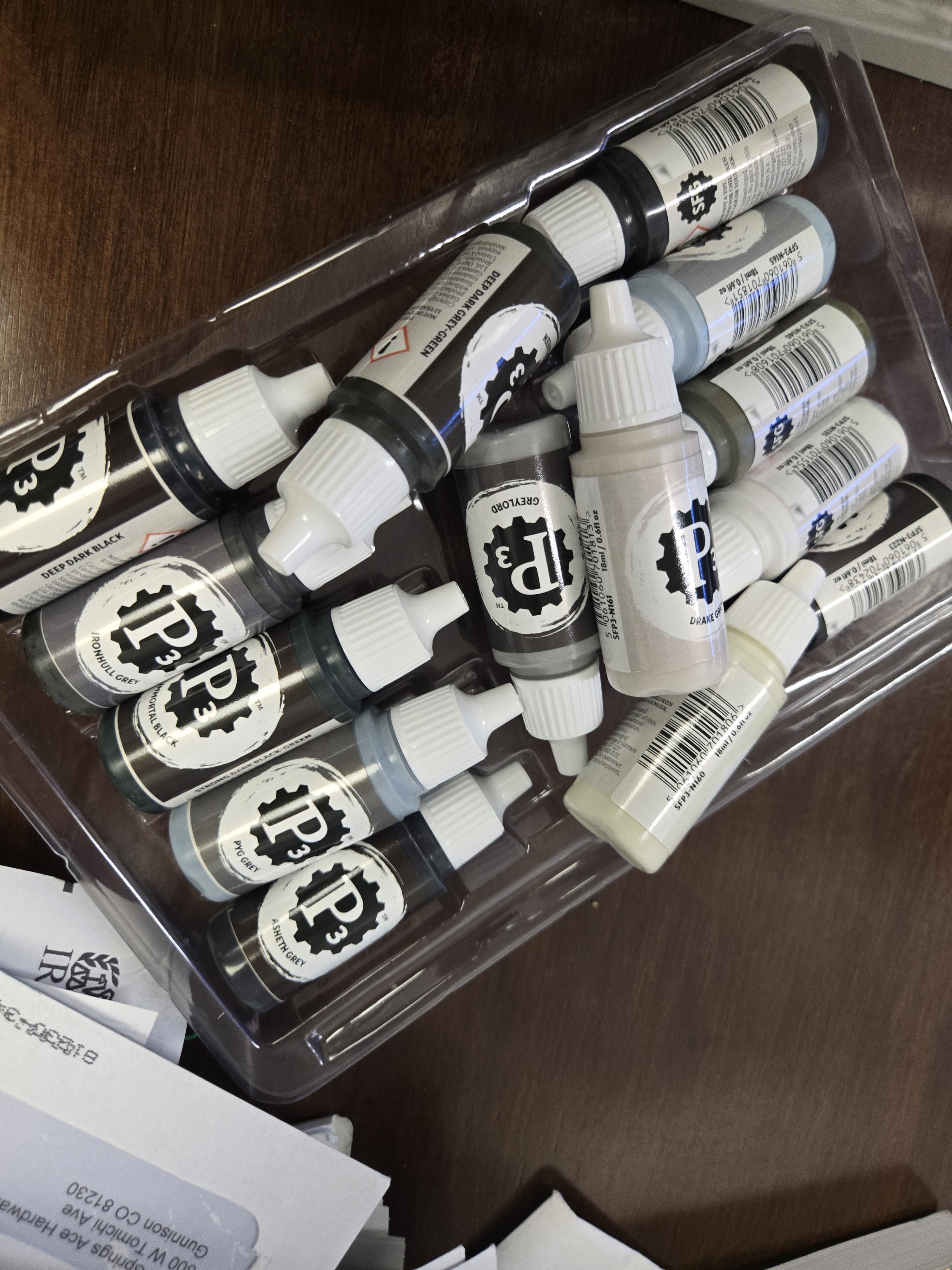
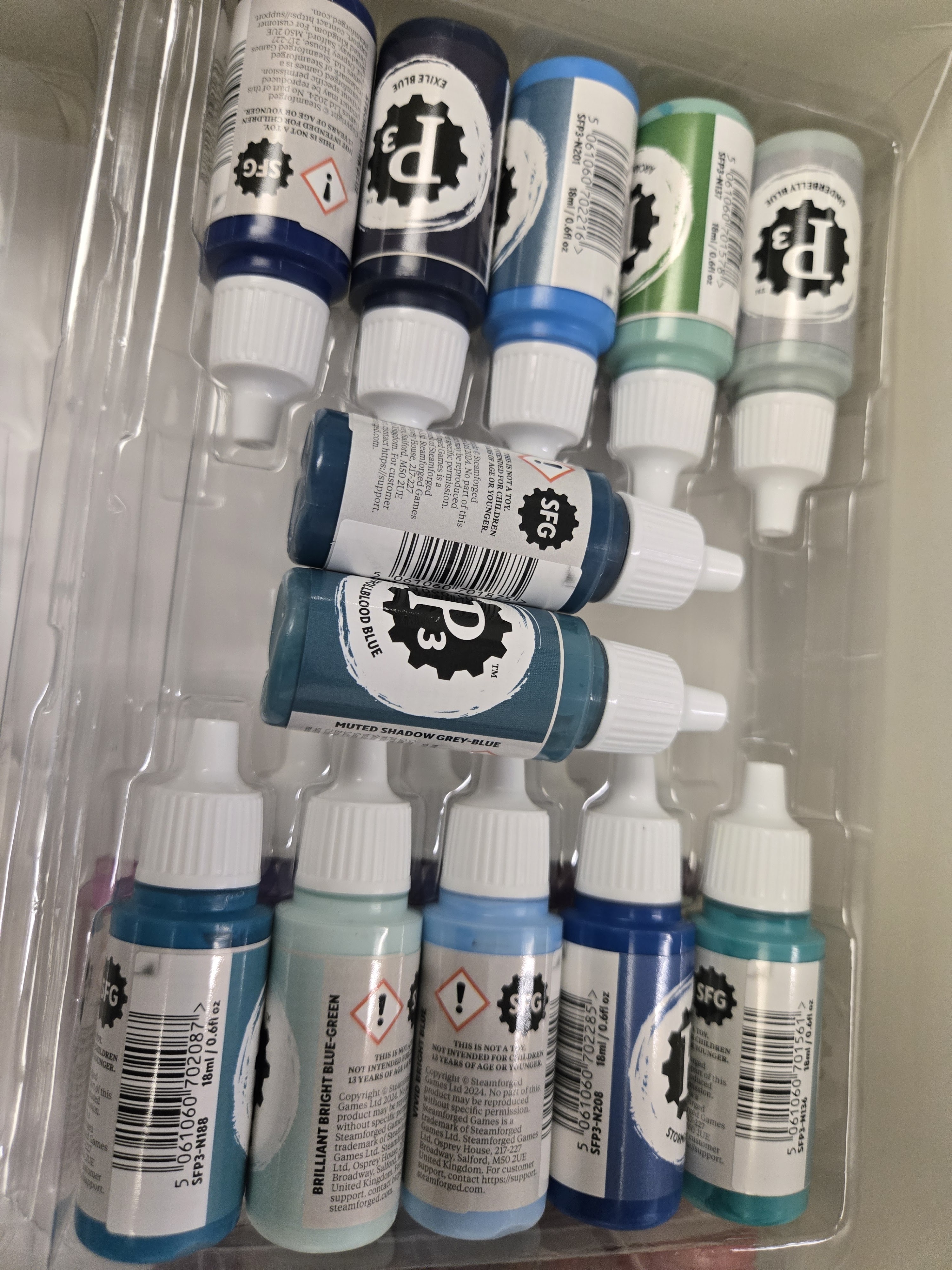
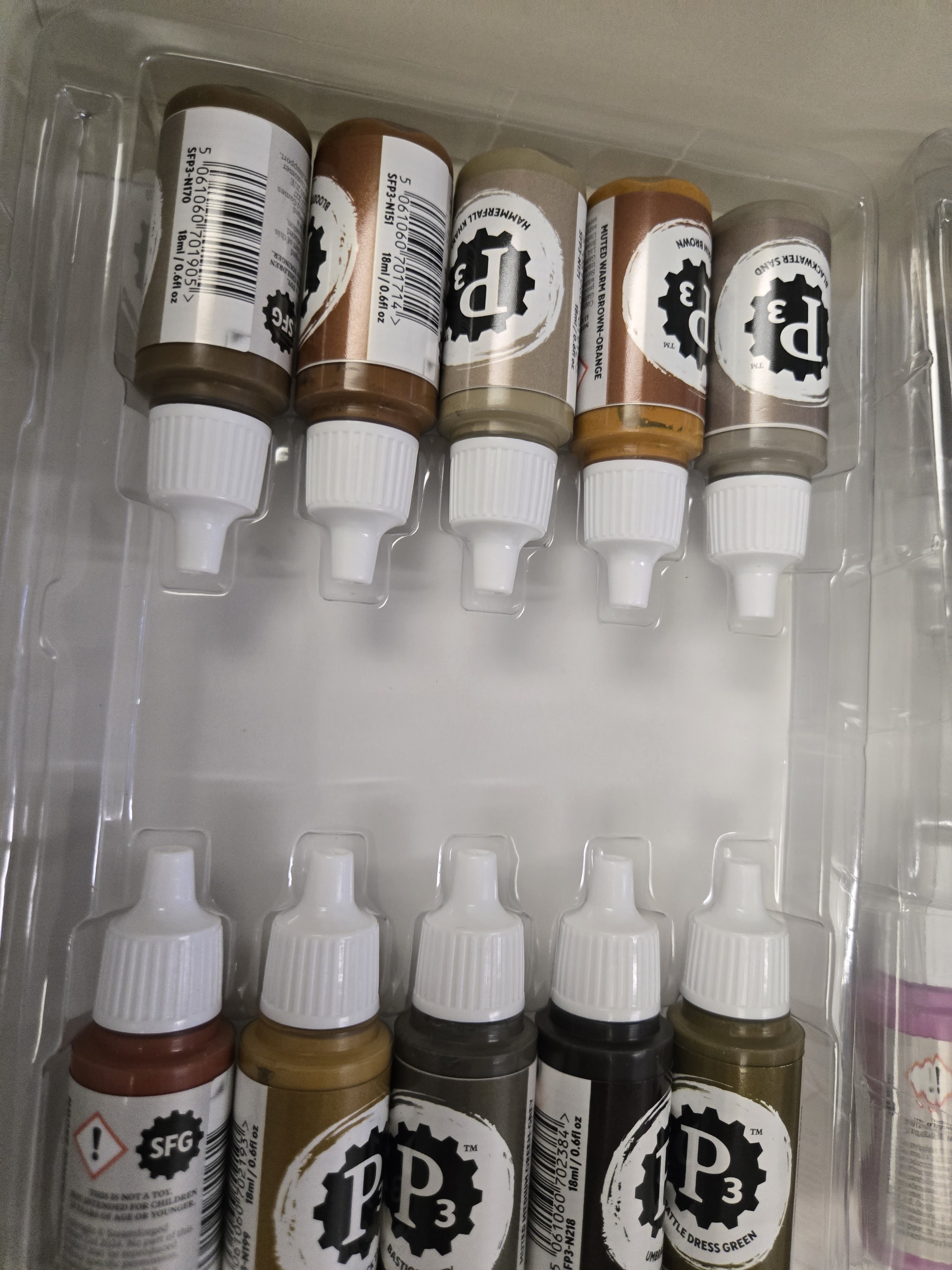
The box contained 12 metallics, 14 oranges and reds, 11 flesh tones, 6 violets, 12 Greens, 14 greys and whites, 12 blues, and a whopping 19 browns, for a total of 100 paints.

“Review of General D’ Armee 2”

This is my very informal review of General D’ Armee 2 rules just published. You can purchase the rules through Two Fat Lardies. I have yet to play with the rules but I am very familiar with the first edition with well over 100 games in my belt and most of the review will be a direct comparison.

Conclusion
The rules are better laid out and organized for play. 2nd Edition is superior in almost every way.

The original ruleset was written by an engineer I think. An example;

Evading the following units must evade a charge.

1…..2…..3…….4…….

Procedure

Step 1….2….3…4…5…6…7…8….ect

In 2nd Edition the rules while functionally the same is easier to follow along and allows more nuances to be accounted for.

This basic change is similar across the entire scope of the book and might push General D Armee above many other Napoleonic rulesets.

Slightly More Depth

The rulebook is high-quality, with great color photos and decent organization. The font is a little more excellent to read. The basics seem far superior to the first version. Esspecially for beginners, what do I need to play, basing scale, etc. They are quickly introduced and nicely laid out compared to 1st edition. I absolutely hate the basing advice for cavalry. I still have no idea how I should be basing my cavalry regiments, how many bases a regiment should be, there are good details for infantry and artillery just cavalry is lacking.

The troop types and formations are clearly laid out and easy to find. Small tables are abound throughout the rules. I also like the example blurbs being easy to find as well. When I first started I remember the allocating brigadiers step was just a little confusing.

I enjoy the new setup for Corps Battles vs Divisional Battles. I do wish there was a set of rules for army battles as I really enjoy playing with more than one Corps.

In general all of the chapters are just better laid out for player use. The deployment chapter is a prime example where it clearly follows what players actually do. The first edition rules struggled to have relevant information where you actually need it. The 5th chapter is similarly helpful and laid out with references to the chapters for more depth. I do wish the PDF was hyperlinked to the same sections.

Chapter 6 hasn’t changed much in function just more clearly laid out.

Chapter 7 is not new persay. It sure feels new. There are some nuances that are different, but again love the layout, love being able to follow along clearly the steps.

Chapter 8 is where the rules do get quite dense. The basic steps are clearly outlined, but the 6 or so pages of extenuating circumstances and tables are a bit tiresome. I am glad the supporting units section was made more clear. I also like the new evade rules.

Chapters 9 to 17 follow the same formula as above. Some variations to the rules are of course going to happen, but as a whole much easier to follow.

Chapter 19 is welcome as an appendix. First edition had something similar, but this seems superior.

The last major thing I want to talk about is the cheat sheet or quick reference sheet. The rulebook is 118 pages long, the creator made everything fit on 4 pages. There is a ton of information that is clearly laid out and much easier to follow than first edition.

Basement Remodel/ Hobby Room Progress

Or lack thereof.

The entire basement has been fully painted. We do want to paint the stairwell going down. Most items are in the rooms they are supposed to be in. The Library is 100% complete, the Den is 95% complete (need a TV), the Bathroom is 100% and the Laundry Room is 100%. We are working on the guest bedroom, which needs all its stuff moved out, and then my disaster of a hobby room.

Wow, I have a lot of items. Working hard on whittling down what I don’t need. Two loads to the landfill so far of misc boxes, broken things, things I’ll never use. Filtering out single-use terrain vs more generic terrain. It’s a lot of work. Hopefully end of this week first of next week we will be complete, but soccer season is in full swing. I will probably take pictures to show everyone what I am talking about. One of my biggest hurdles is slimming down the MTG collection. I have been playing since Shards of Alara. I have 116,000 cards in my inventory; at least another 20,000 are not inventoried. Until Brother’s War, I maintained 4 of every Pioneer Legal card. The work and the amount of storage it required was too much. I am going down to 10 ish decks and hopefully 20,000 total cards in the inventory for use in EDH, Legacy, Vintage, Ect.

The worst part is over the years my organizing has gotten lazy. As it stands, all Pioneer cards are organized based on set, then set order. Each in a 1000 count box. Everything else is in 5,000 count boxes, one box for each color, plus one for gold, colorless, and non-basic lands, all cards alphabetized. I only use one type of sleeve, KMC Hyper Matte Reds. Every card gets double-sleeved. It makes it easy to move cards from one deck to another, and I try very hard to keep sets of 4 of each card. The problem is I wasn’t planning on Pioneer when sets like Theros came out. All the cards up to Amonkhet were mixed in with the general collection, plus things like trading. I have stacks everywhere……. I am alphabetizing my piles, then going through letter by letter and removing Pioneer Legal cards to go in their respective boxes. The blues took about 8 hours. Black (will be the hardest), Red, Green, Grey, Gold, Lands. At least another 45 hours……

My games this weekend.

I was fortunate enough to officiate a couple of MLS Next matches. As a whole, they went well for my first experience. The pace of the U17s really surprised me. It took absolute focus and pushed my abilities as an AR to the limit. I wish I had footage of three decisions. I am confident I missed where a player was trekking back, but it didn’t amount to anything. Another on a shot where I was 90% he was offside, luckily the shot went over the bar so my decision didn’t actually matter, had the ball gone in I would have flagged the player. The third resulted in a corner but I had the player onside hitting the line at full speed. Immensely difficult as a referee to get those correct.

I was happy with my performance, not my pace. It has been a long winter, and I am not yet in form to make explosive runs for 4 hours. Something the two matches really required. I wish I had pre-gamed with the center referee a little better. I think we could have had better communication to help on-field issues. I apologize for being very vague. But for these games, referees are frowned upon for commenting or putting anything in writing or on social media.

For the future, I need to push my sprint workouts a little harder. My Achilles has been bum since at least October, and I have been trying to rest it. It felt decent, and once warmed up, it didn’t bother me until the 2nd half of match two.

Bolt Action Stalingrad Box Review

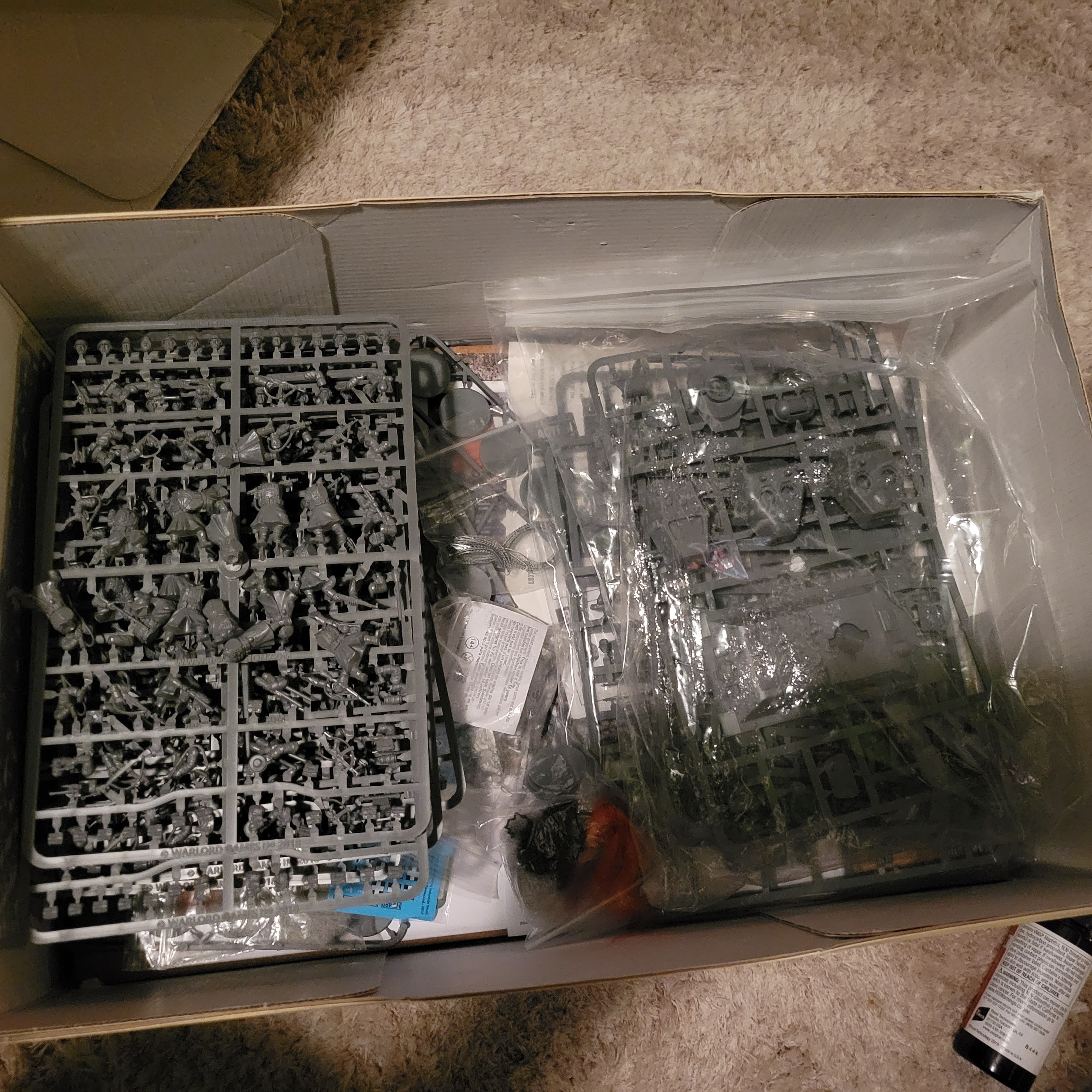
Yesterday, I received a massive haul of miniature plastic from Amazon. The Stalingrad 2-player set from Bolt Action. Wow, there is a ton of toy soldiers in this box. Here is what Warlord Games includes.

  • Ruined MDF factory
  • Barmaley Fountain
  • 5 resin craters/shellholes
  • 3 resin barricades/rubble
  • 3m of barbed wire
  • Sd.Kfz 139 Marder III
  • T34/76
  • Soviet Sniper team
  • 56 plastic Soviet infantry
  • 42 plastic German Army infantry

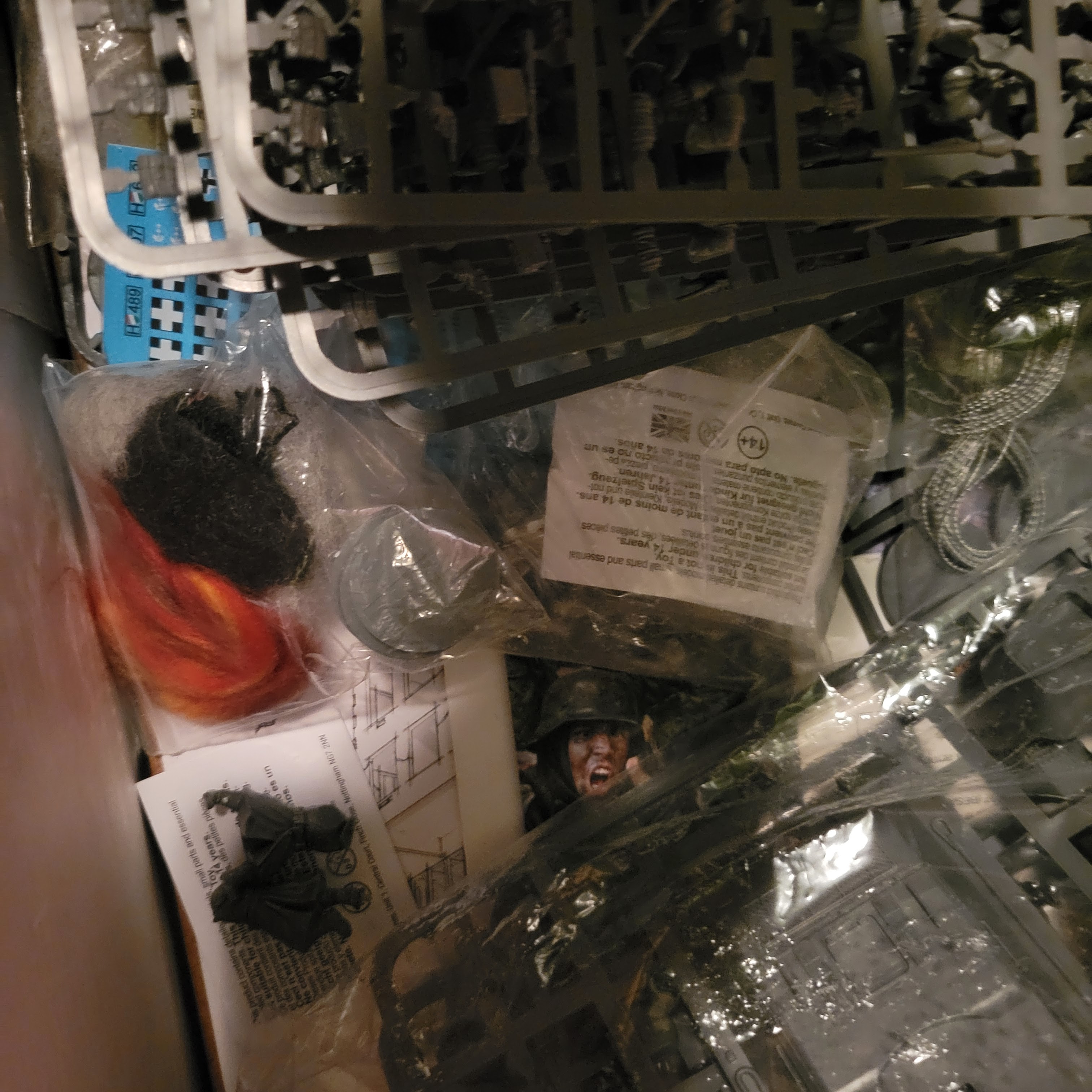
Also included were a couple rule and scenario books, build instructions and some unit cards to ease play, some decal sheets and damaged vehicle markers.

The contents of the box were as advertised. Although the sprews were not bundled together and my German and Soviet troops were thoroughly mixed together. The resin pieces were nicely covered in bubble wrap for protection. The MDF securely covered the bottom of the box. My biggest complaint came from the items in the box not fitting tightly. Part of the mixing of factions but it also caused several torsos for the German winter troops to fall from the sprew and just be loose in the box. I was a little annoyed that there were 6 sets of winter Germans but 4 sets of Winter Soviets and 2 sets of regular.

One of my favorite parts of Warlord Games models is the clearly labeled sprew. Each section had German Infantry (winter) or Soviet Weapons clearly stamped into the sprew. Something very consistent across all Warlord Games lines. Compared to a Games Workshop or Atomic Mass Games this is really helpful when leaving a project and returning to it weeks or months later.

Best Parts of the Box

Terrain. The MDF ruined buildings are way more sturdy than you would think. The resin barricades are nice, and the fountain is cool. I wish there was a little more elevation or platforms in the buildings.

The scenario book is nice and unexpected. The scenarios are designed to be used with the box and is a nice touch.

Worst Parts of the Box

German unit variety, no HQ’s or MMGs, or Flamethrowers. A huge miss here that I think really hurts the new player. Especially the lack of a machine gun when that is a German special rule.

Soviet Winter/Summer split. I get having all German units as winter garb, but the Soviets should have followed suit instead of being split.

Building instructions. I play a ton of Games Workshop, and their instructions are typically easy to follow. These were not especially for the infantry.

Packing quality. The items need to be secure in the box. They just do.

Who is This Box For

While typing this review, I have to say this is my biggest question mark. It is not good for the New Hobbyist; the instructions are far from clear and instead of saying piece one glues to piece two etc it gives you a sprew with torsos legs, arms and weapons and says glue together. I think someone brand new to the hobby would really struggle with this product. It kinda seems designed that way as well because it is a battlefield in a box and the included scenarios are very simple.

The Stalingrad box set is also not good for new players. On the Bolt Action website, you are encouraged to build a platoon with MMGs, Snipers, Anti Tank teams, mortars etc. This box doesn’t include any of those. No artillery, no HQs it is just infantry. I think this is a real miss for Warlord because it seems like this is a box that is designed to be open and play for two players.

Stalingrad is also not a great box for returning veterans of Bolt Action. Generally you buy two boxes of 30 troops each, a tank and the weapons teams when you are starting out. I have I think only needed more than 60 infantry twice playing Bolt Action. One was a simulation of D-Day on a 20ft long table with 10 players and 3,000+ models. The other time a friend wanted to do a Thin Red Line style game where half the Soviets didn’t have guns and they simply rushed the German entrenched lines. Long story short, most seasoned players don’t need gobs of riflemen.

Verdict

I have a tough time recommending this box to anyone. If you want the MDF buildings and could use the troops or have someone split them, go for it. If you are really into Stalingrad, by all means. Otherwise, I would have to suggest a pass. There are better options for your money. Even the terrain, you can just go on Etsy and buy what you need fully painted for less.